Ahmed al-Ahmed hailed as Bondi hero after tackling gunman in deadly Sydney Hanukkah shooting
Ahmed al-Ahmed, 43, tackled a gunman at a Hanukkah event on Bondi Beach on December 14, 2025, was shot multiple times and remains hospitalized after an antisemitic mass shooting that killed at least 15 and injured over 40.
Key takeaways
- Victim-turned-rescuer: Ahmed al-Ahmed, 43, tackled a gunman at the Bondi Beach Hanukkah event, was shot several times and remains hospitalized; footage is central to understanding the attack (video reporting, eyewitness footage).
- Casualties and motive: At least 15 people were killed and more than 40 injured; New South Wales Police have declared the incident a terrorist act motivated by antisemitism (video reporting).
- Suspects and weapons: The attackers were a father-and-son pair; police fatally shot one and arrested the other; one suspect had legally acquired six guns over the past decade (video reporting).
The scene and al-Ahmed’s action
Chaotic footage from the Bondi Beach car park and nearby bridge shows people fleeing as gunfire erupted during a Hanukkah celebration. Reporters reviewed video footage that captures bystanders scattering and others confronting the shooters.
In the footage, Ahmed al-Ahmed is seen crouching behind a car, then darting toward one of the assailants and tackling him to the ground. Witnesses and family members say his move helped wrest the weapon from the gunman and forced the shooter to retreat amid continuing fire from multiple positions, including a bridge.
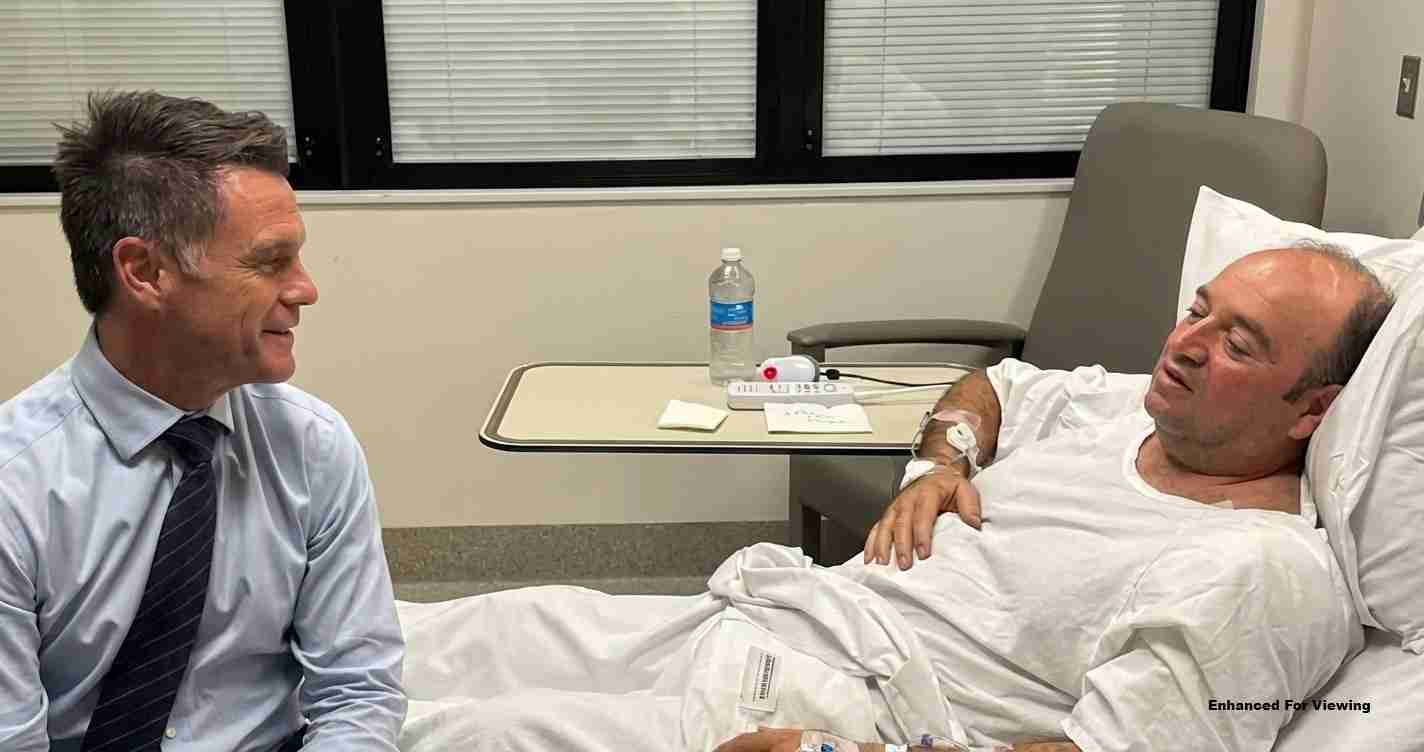
“What can I even say? I went through a tough time [that] only God knows about,” al-Ahmed said from his hospital bed, asking for prayers and sending positive messages as the city mourned.
Al-Ahmed remains at St George Hospital with bullets still lodged in his body; doctors and family members described him as having acted on instinct and conscience to protect others (eyewitness footage).
Victims, suspects and police action
New South Wales Police quickly labeled the December 14 attack a terrorist incident and said investigators were treating the shootings as driven by antisemitism. Authorities reported at least 15 dead and more than 40 wounded in the shooting and related chaos near the beach and at the Jewish community event.
Police say the two assailants were father and son; one was shot dead by officers and the other was taken into custody. Reporting notes a troubling detail: one suspect had legally acquired six firearms over the past decade despite Australia’s post-1996 gun reforms, prompting renewed scrutiny of licensing and acquisition rules (video reporting).
Family, witnesses and official praise
Family members described al-Ahmed as someone who “could not stand by” after seeing people hurt. Witnesses called him “incredibly strong and very brave”, and some labeled him a national hero. Officials echoed those sentiments.
Prime Minister Anthony Albanese called the attack “an act of pure evil, an act of terror, an act of antisemitism” and praised those who intervened. Home Affairs Minister Tony Burke and NSW Premier Chris Minns also lauded first responders and civilians who acted, and the prime minister pledged to pursue stricter gun laws in response to what he described as the nation’s deadliest mass shooting in decades (video reporting).
Questions raised by the attack
Investigators and policymakers face immediate questions: How did a suspect legally amass multiple firearms in a country with strict post-1996 laws? What gaps in licensing, storage or review enabled those purchases? Could intelligence, community reporting or policing have prevented the attack?
Video and eyewitness accounts are central to both the criminal probe and the public debate, as footage showing civilians running toward gunfire while others fled helps explain how many survived.
Community response and support
Local Jewish organizations and community leaders called for unity and increased protection for places of worship and gatherings. Hospitals mobilized to treat dozens of wounded, while community centers, faith groups and volunteers began organizing support for survivors and affected families. Solidarity and grief events are being planned as the investigation continues (video reporting).
Implications for San Luis Obispo, California
Economic impact: Large community events in San Luis Obispo may face higher security costs — screening, staff training and coordination with law enforcement could increase expenses and affect attendance.
Political consequences: The Bondi Beach attack could reignite gun-policy debates in California, prompting calls for tighter checks, more enforcement funding and reviews of emergency response plans.
Social effects: The antisemitic motive highlights the need for stronger protections and outreach for Jewish and other minority communities; schools and faith groups should consider hate-crime education and bystander-intervention training.
Cultural relevance: The attack underscores vulnerabilities at open public spaces similar to SLO’s downtown and beaches; planners should balance hospitable public spaces with practical safety measures.
Practical applications for residents
- Event organizers: Review security plans; consider bag checks, trained stewards, clear entry/exit routes and emergency medical plans.
- Law enforcement & emergency services: Run mass-casualty drills and strengthen communication with hospitals and community groups.
- Community groups: Coordinate with officials to identify safe spaces and support networks for affected residents.
- Individuals: Learn basic active-shooter response steps and establish family reunification and communication plans.
Sources and further reading
Video reporting and eyewitness footage used for this article: video reporting (Kr9kIYnKeog) and eyewitness footage (yLGHMwtiGr0).
Authorities continue investigating motives, weapon acquisition and timeline; journalists and officials are using available footage and witness interviews to piece together events and community responses.