Jeffries Spars With CBS Over “Rigged” Midterms, Defends Push Against GOP Maps and Backs California’s Proposition 50
House Minority Leader Hakeem Jeffries challenged CBS over claims of “rigged” midterms, arguing Republican-led redistricting — especially in Texas — threatens fair representation and defending Democratic responses, including support for California’s Proposition 50, as corrective measures.
Key takeaways
- Jeffries warns Republican-led redistricting in states like Texas seeks to “rig” congressional outcomes and says Democrats must respond — a stance detailed in the Jeffries office statement.
- He defends backing for California’s Proposition 50 as a corrective measure rather than a mirror of GOP tactics.
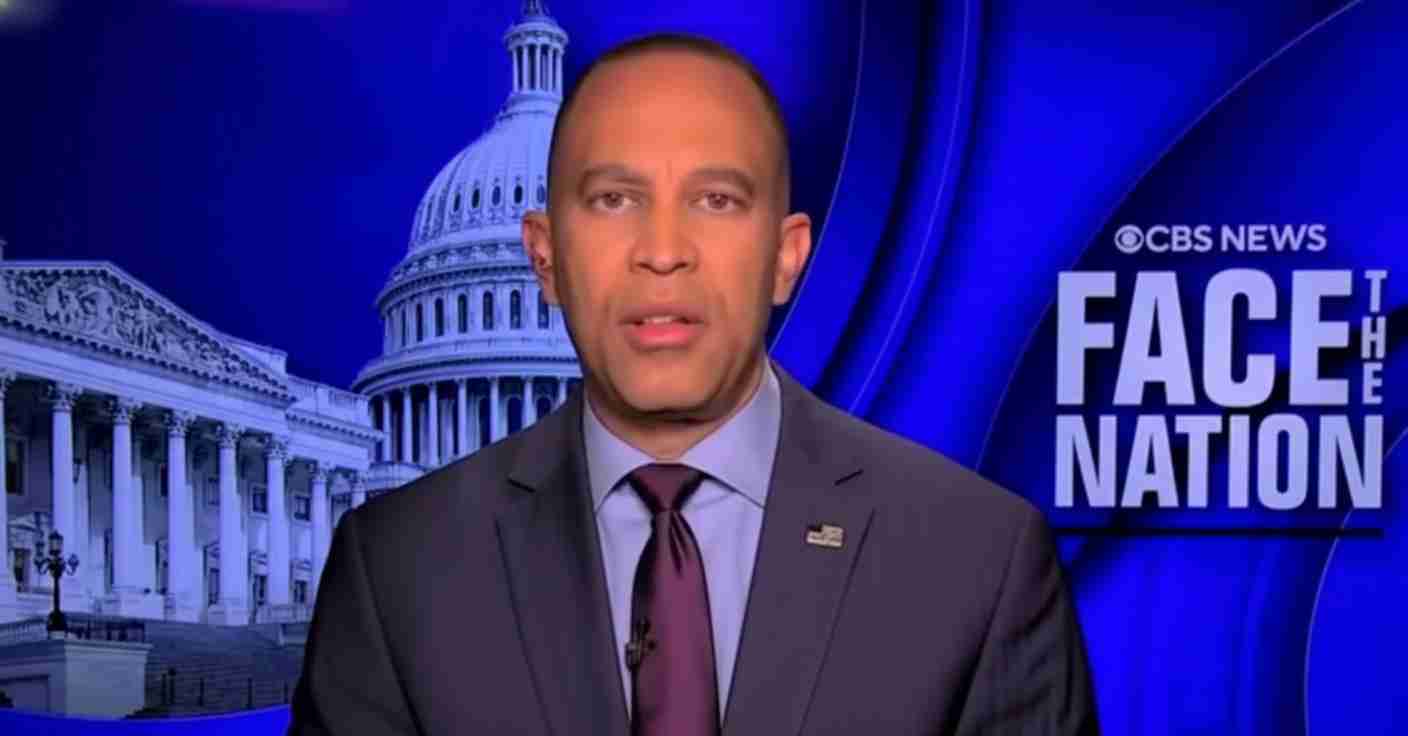
- Media pushback: CBS hosts pressed Jeffries on whether Democratic moves amount to the same “rigging” he criticizes — coverage is available in the CBS coverage.
- Local stakes: Changes from Prop 50 could shift representation and funding priorities in San Luis Obispo and the Central Coast.
What Jeffries says and why he says it
Jeffries has framed the fight over maps as a battle over democracy itself. In a statement he warned Democrats “are going to respond from coast to coast and at all points in between” to what he described as efforts to “steal the midterm elections” through partisan redistricting. See the Jeffries office statement for the full text.
On television, Jeffries argued some Republican-led map changes — notably in Texas — are intended to lock in partisan control and dilute minority representation. He contends Democratic responses, including support for California’s Proposition 50, aim to restore balance and protect voters’ voices, not to “rig” outcomes for partisan gain. Video of his remarks is available as a full clip and a short clip.
How CBS and other media pushed back
CBS reporters asked Jeffries to clarify where the line lies between correcting unfair maps and engaging in the same mapmaking he condemns. Hosts pressed him on wording and whether Democrats are mirroring GOP tactics; that exchange is documented in the CBS coverage.
“There is a difference,” Jeffries said, arguing GOP maps dilute minority votes or lock in majorities while Democratic measures seek to correct distortions and ensure fair representation.
The “election denier” label and the 2016 comments
Republicans have labeled Jeffries an “election denier,” citing moments when he raised concerns about foreign interference in 2016. That characterization has been used by figures including Senate Minority Leader Mitch McConnell and the Republican National Committee. Media analysis, however, notes a key distinction: Jeffries’ remarks targeted documented foreign interference, not the rejection of certified domestic results. See the Time analysis for context.
What Proposition 50 would do
Proposition 50 would allow the California state legislature to redraw congressional maps. Supporters say it is a necessary response to aggressive GOP redistricting in other states; opponents call it a partisan power grab. Critics label it a “Democratic gerrymander”, while supporters — including statements echoed by Jeffries — describe it as a countermeasure to protect fair maps and communities at risk of disenfranchisement. See background on California Proposition 50.
What experts and nonpartisan voices say
Nonpartisan experts urge caution about rhetoric that undermines voter confidence. Rachel Orey of the Bipartisan Policy Center warned that “casting unfounded doubt on the outcome of an election is irresponsible when either party does it.” Scholars and reform groups are split: some argue remedies are needed when maps heavily favor one party; others warn that partisan redistricting invites retaliation and escalates tit-for-tat cycles that can erode public trust.
The broader redistricting battle and national stakes
The fight over maps extends across states, courts and Congress. Both parties have pursued legal and political avenues to shape districts after recent cycles. Jeffries framed his remarks as a warning that Trump allies and other Republicans are “trying to rig” the midterms by reshaping districts; Republicans say their maps reflect state population shifts and legitimate political preferences. The result is a charged debate with legal, political and civic consequences.
Media’s role and public confidence
Coverage of the dispute highlights how reporters frame claims about rigging. Critics worry that labeling actions as “rigging” without clear evidence can alarm voters; supporters of Jeffries counter that his language describes tactics designed to entrench power. Both sides call on the media to ask tough questions while avoiding flattening distinctions among different threats to election integrity. See the Time analysis for media context.
Implications for San Luis Obispo
Economic impact: San Luis Obispo County and nearby Central Coast communities could see shifts if Proposition 50 or similar measures change district lines. New maps can alter which federal representatives serve the region, affecting federal grants, infrastructure funding and disaster relief priorities.
Political consequences: Redrawn maps could change competitiveness for seats covering San Luis Obispo, affecting local influence in Congress and the attention given to voter priorities.
Social effects: Representation changes may affect advocacy on water management, wildfire preparedness and public lands — issues central to the Central Coast. Communities that feel diluted may pursue local organizing or legal challenges.
Practical advice for residents: Voters should watch local ballot language and state decisions like Proposition 50 closely. Changes to maps can shift polling places, outreach and how local issues are prioritized. Check official county election resources and the California Secretary of State for updates.
Sources and where to learn more
- Jeffries office statement
- CBS coverage of Jeffries interviews
- Jeffries full video remarks and short clip
- Time analysis on “election denier” claims
- Background on California Proposition 50
Reporting from Washington shows that the debate over “rigged” midterms, redistricting and measures like Proposition 50 will continue to shape national and local politics as the midterms approach. Voters in San Luis Obispo and across California face choices that could change who represents them and how their voices are counted.