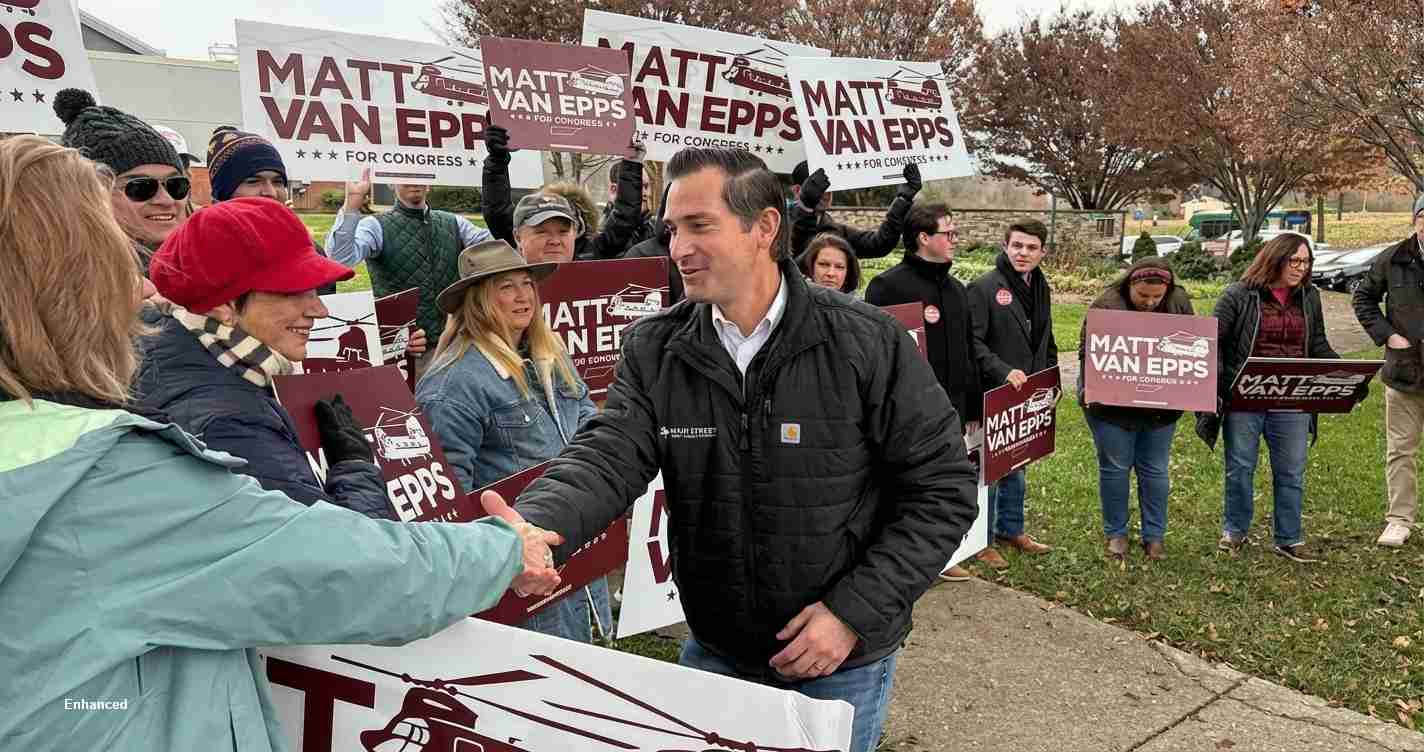
Trump-backed Republican holds Tennessee seat in special election; Matt Van Epps defeats Aftyn Behn in race seen as 2026 barometer
Republican Matt Van Epps won Tennessee’s 7th Congressional District special election on December 2, 2025, defeating Democrat Aftyn Behn and holding the seat vacated by Mark Green; he will serve through Jan. 3, 2027, notably.
Key takeaways
- Winner: Matt Van Epps (Republican) — 96,988 votes (53.9%). Source: 2025 Tennessee’s 7th congressional district special election
- Runner-up: Aftyn Behn (Democrat) — 81,044 votes (45.1%). Margin: 8.9 percentage points. Source: 2025 Tennessee’s 7th congressional district special election
- Why the race happened: The contest filled the vacancy after Rep. Mark Green resigned on July 20, 2025. The winner will serve the remainder of the 119th Congress through Jan. 3, 2027. Source: 2025 Tennessee’s 7th congressional district special election
Main content
Results summary
Matt Van Epps secured a decisive victory on December 2, 2025, with 96,988 votes (53.9%), while Aftyn Behn received 81,044 votes (45.1%). The Republican margin of victory was 8.9 percentage points, preserving GOP control of the district. Source: 2025 Tennessee’s 7th congressional district special election
A closer look at the results
Primary and general dynamics: Van Epps, a former commissioner of the Tennessee Department of General Services (2024–2025), won the Republican primary on Oct. 7, 2025, with 51.56% of the primary vote (19,006 ballots for him). In the general election he carried 12 of the district’s 14 counties, building a broad map advantage that produced the final margin.
Fundraising and outside help: Van Epps’ campaign reported raising $992,716 in total and drew support from national conservative groups including the Club for Growth and the With Honor Fund. Behn outpaced him in fundraising, reporting $1,230,629, and concentrated support in population centers such as Montgomery and Davidson counties. Source: 2025 Tennessee’s 7th congressional district special election
Polling vs. outcome
A late Emerson College poll (Nov. 22–24, 2025) had Van Epps leading 48% to 46%, with 2% for others and 5% undecided. Van Epps exceeded that narrow lead on Election Day, expanding his margin and confirming GOP hold in a district Democrats targeted as competitive. Source: 2025 Tennessee’s 7th congressional district special election
Why this race mattered nationally
Party leaders and outside groups treated the Tennessee 7th as an early test ahead of the 2026 midterms. For Republicans it was a successful defense of a vacated seat and a maintenance of House margins; for Democrats, Behn’s performance in suburban counties suggested targeted investment can narrow GOP advantages in conservative-leaning districts.
“The race highlighted how outside spending, rural turnout and targeted suburban outreach together determine outcomes in closely divided districts.”
The contest illustrated the continuing influence of national groups: Behn’s fundraising advantage amplified her reach in population centers, while conservative outside spending consolidated turnout in rural areas, producing the margin of victory for Van Epps. Source: 2025 Tennessee’s 7th congressional district special election
Background: Why the seat was open
Resignation: Rep. Mark Green resigned on July 20, 2025, to take a private-sector job; the special election filled the short-term vacancy for the remainder of the 119th Congress through Jan. 3, 2027. Green’s departure followed contentious votes in Washington and required rapid mobilization by both parties. Source: 2025 Tennessee’s 7th congressional district special election
Campaign dynamics and themes
- Messaging: Van Epps emphasized conservative credentials and alignment with Trump-aligned voters; Behn ran as a moderate focused on local economic concerns, health care access and accountability.
- Geographic split: Behn’s strength in populous counties (Montgomery, Davidson) narrowed the GOP margin, while Van Epps’ dominance in rural counties delivered the victory.
- Outside groups: National conservative organizations, including the Club for Growth and With Honor Fund, invested heavily in Van Epps’ campaign. Source: 2025 Tennessee’s 7th congressional district special election
What this means for the Aftyn Behn campaign and Democrats
Behn’s relative success in population centers and her fundraising edge provide a blueprint for Democrats targeting similar suburban-leaning districts in 2026. Her campaign demonstrated that focused outreach and strategic messaging can move voters, even if outside GOP spending and rural turnout remain decisive factors.
Implications for San Luis Obispo, California
Economic impact: Direct effects are minimal — this was a Tennessee federal special election — but national donor flows and spending patterns shaped by races like this can shift where political money goes in 2026. Local groups in San Luis Obispo may see increased outreach if parties view California districts as competitive.
Political and social consequences: The Van Epps win signals how national parties may allocate resources in 2026. For moderate voters in San Luis Obispo, the race underscores turnout importance in suburban precincts. Civic organizers should note Behn’s targeted suburban outreach and prioritize voter registration and earned media.
Practical takeaways for local campaigns:
- Map precinct-level strengths and prioritize dense neighborhoods for outreach.
- Balance fundraising with grassroots organizing; money helps but doesn’t guarantee victory.
- Use nonpartisan voter engagement to boost turnout among moderates and independents.
Sources and further reading
Primary source: Wikipedia — 2025 Tennessee’s 7th congressional district special election