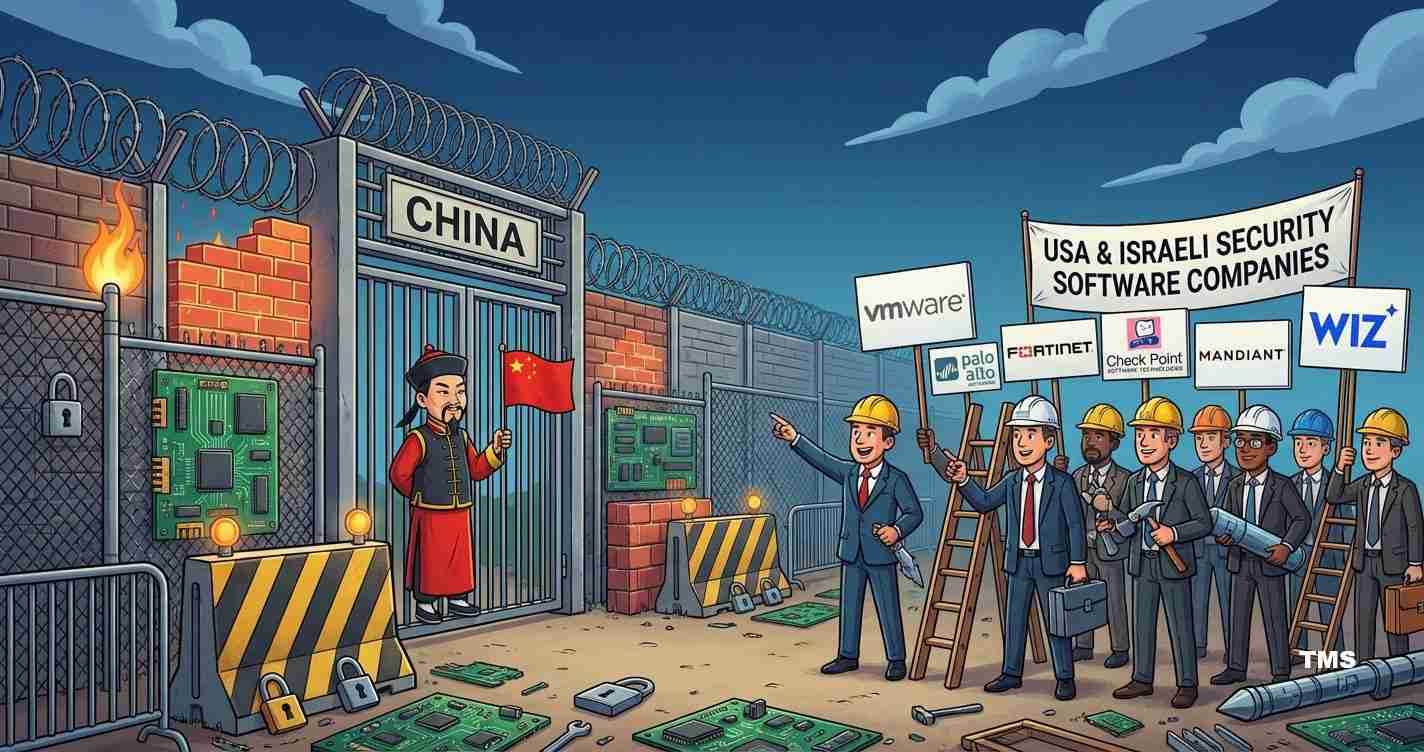
China orders domestic firms to stop using software from more than a dozen U.S. and Israeli cybersecurity vendors
Chinese authorities have ordered domestic companies to halt use of cybersecurity software from over a dozen U.S. and Israeli vendors, citing national security concerns and fears that some tools could collect and transmit sensitive data abroad.
- Directive targets numerous leading U.S. and Israeli cybersecurity suppliers, prompting a shift toward domestic alternatives.
- Regulators cite national security risks tied to potential collection and overseas transmission of configuration and log data.
- Market and operational impacts: Chinese customers must seek replacements while global vendors face potential revenue loss in a major market.
- Local implications: U.S. regions with tech services and universities should prepare for vendor changes and compliance impacts.
What the directive says and who’s affected
Chinese media and foreign outlets report regulators instructed companies to stop using specified foreign cybersecurity tools and to transition to domestic alternatives. Authorities said some foreign security software could collect confidential information and transmit it overseas, a risk linked to national security. Reporting noted that the Cyberspace Administration of China and the Industry and Information Technology Ministry did not respond to requests for comment (Sources: Fox Business; The Jerusalem Post).
Vendors named
Reports compiled by outlets list more than a dozen companies. U.S. firms identified include VMware (Broadcom-owned), Palo Alto Networks, Fortinet, CrowdStrike, SentinelOne, Recorded Future, McAfee, Claroty, Rapid7, Mandiant (Alphabet-owned) and Wiz (Alphabet-owned). Israeli firms named include Check Point Software Technologies, CyberArk, Orca Security and Cato Networks. Imperva, now owned by French defense company Thales, also appeared on lists. (Source: Fox Business.)
Timeline and official responses
Reports indicate the directive was issued in recent days, but no comprehensive public notice listing all affected companies or the ban’s full scope has been released. Media accounts also noted uncertainty about how many Chinese companies received formal notices; key ministries did not reply to inquiries, according to The Jerusalem Post. Analysts and outlets placed the move within broader Chinese policy trends aimed at reducing reliance on foreign technology (Sources: The Jerusalem Post; The Japan Times).
Why Beijing is acting: security and strategy
Regulators framed the directive as a protective measure for sensitive networks and information inside China. Officials expressed concerns that foreign cybersecurity tools might collect configuration data, logs or other sensitive details that could be routed outside the country. Chinese analysts warned that Western equipment could be exploited by foreign intelligence services or malicious actors. The directive also aligns with Beijing’s broader push for tech self-reliance—accelerating domestic development of chips, cloud services and security products (Sources: The Jerusalem Post; The Japan Times).
Possible implications for vendors and users
For named vendors: potential lost revenue in a major market and disruption to customer relationships and product roadmaps.
For Chinese customers: a forced and possibly rapid search for replacement products that may accelerate adoption of domestic cybersecurity providers.
For global cyber defenses: a split ecosystem could complicate threat sharing, joint responses to transnational attacks and interoperability as divergent toolsets and standards emerge.
What this means for international relations and trade
The directive is a further sign of rising technology friction between China and Western countries. U.S. and allied restrictions on Chinese technology in recent years, combined with Beijing’s countermeasures, could deepen a technological divide—leading to duplicated software ecosystems, higher complexity for multinationals, and accelerated policies aimed at national tech self-reliance (Sources: The Japan Times; The Jerusalem Post).
Implications for San Luis Obispo, California
San Luis Obispo County’s mix of small businesses, regional IT providers and the tech workforce connected to Cal Poly means impacts are likely indirect but real:
Economic impact
Most local firms do not directly rely on the large enterprise platforms named, but regional IT companies that host cloud services or manage remote infrastructure may be affected indirectly. A prolonged split in global standards could raise costs for local firms that support multinational clients or depend on global vendor audits and compliance checks.
Higher education and research
Cal Poly and other institutions collaborating internationally could see shifts in software choices for research networks or joint projects. Changes in vendor access or market focus can influence product roadmaps, support lifecycles, and university IT planning and cybersecurity curricula—while also creating research opportunities on fragmented ecosystems.
Local government and public safety
County and city agencies should monitor vendor announcements. If named vendors alter pricing, licensing or support, local governments may need to reassess contracts, validate continuity of critical services, and ensure backups and incident response plans do not depend on a single external vendor.
Workforce and business opportunities
A push toward China tech self-reliance could indirectly increase demand for U.S.-based cybersecurity consulting and migration services. Local IT firms, managed service providers and cybersecurity consultants may find new opportunities helping businesses adapt to vendor changes and updated compliance regimes.
Practical steps for local organizations
- Inventory and review: Audit security tools and check contracts for change and exit clauses.
- Contingency planning: Update incident response and backup plans to ensure continuity if vendor support changes.
- Seek advice: Engage local cybersecurity consultants or university resources to evaluate alternatives and risks.
- Watch standards: Monitor global cyber standards and cross-border data-sharing rules that could affect compliance.
Reporting and next steps
The list of named vendors and the rationale for the directive stem from recent media reporting and compiled lists by outlets. Full, detailed guidance from Chinese regulators was not publicly available at the time of reporting; key ministries did not reply to requests for comment, per The Jerusalem Post. This is a developing story and may change as official notices and vendor statements emerge.