Hundreds of protesters swarm Canopy by Hilton in Minneapolis over claims federal agents were staying there after deadly ICE shooting
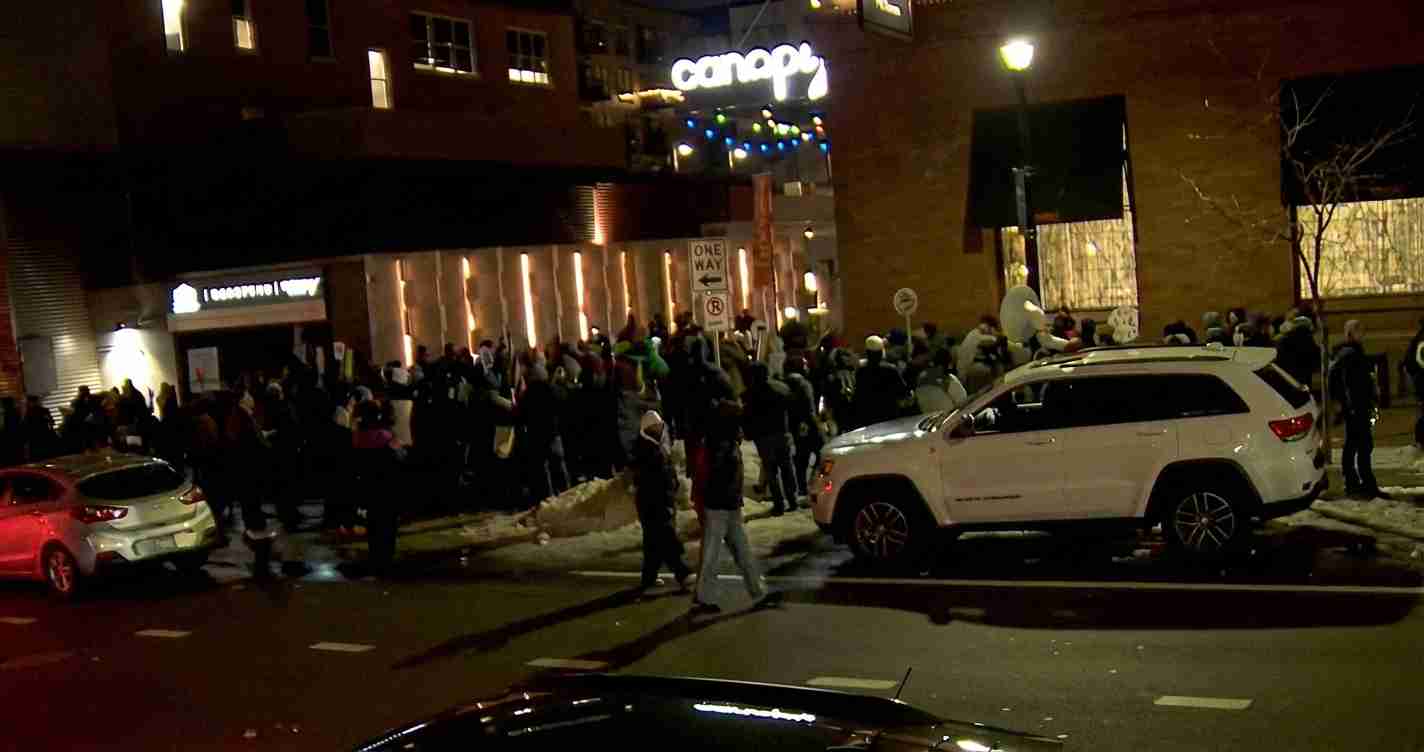
Hundreds of anti‑ICE protesters gathered outside the Canopy by Hilton Minneapolis on Jan. 9, 2026, after claims federal immigration agents were staying there following the fatal ICE shooting of Renee Nicole Good during the city’s Operation Metro Surge.
- Protest targeted the Canopy by Hilton after social media and activist channels circulated claims — reported by Star Tribune — that ICE and federal agents were lodging there.
- The rally followed the Jan. 7 fatal shooting of Renee Nicole Good, a central fact in coverage and in the Star Tribune profile of Good.
- Hotels canceled or relocated reservations, including a Hampton Inn in Lakeville, forcing federal officials to seek alternative lodging as detailed by Star Tribune.
- Authorities have not confirmed lodging locations; DHS and ICE declined to disclose accommodations, citing operational security (per Star Tribune).
Background — the Renee Nicole Good shooting
On the morning of Jan. 7, 2026, an ICE agent shot and killed 37‑year‑old Renee Nicole Good during an enforcement operation on Portland Avenue in south Minneapolis. Family members and local reporting said Good was a U.S. citizen, a mother of three and worked as a caregiver, killed near her home (Star Tribune profile).
Federal officials released cellphone video filmed by the officer involved — identified in local reporting as Jonathan Ross — and characterized the shooting as an act of self‑defense. The officer‑shot video has become central to public and official accounts but has not ended debate about what happened in the moments before the shooting (Star Tribune; video coverage).
Immediate public outcry followed the killing, with protests across Minneapolis. Separate lines of inquiry were announced: Homeland Security and the FBI opened federal reviews, while Minnesota authorities — including the Bureau of Criminal Apprehension — said they would pursue a state investigation, creating an overlap of jurisdictions (Minnesota BCA).
Operation Metro Surge and the influx of federal agents
The shooting occurred amid “Operation Metro Surge,” an ICE enforcement program that brought hundreds of additional federal agents to the Twin Cities in recent weeks. The operation focused on immigration cases in the metro area and increased federal presence in neighborhoods and downtown staging areas (Star Tribune).
After the killing, ICE officials said they would continue the operation “in force,” a stance that further galvanized demonstrators and local groups opposed to the agency’s actions. The heavy federal presence became a flashpoint for activists who argue the deployment risks civilian harm and erodes community trust.
Hotel housing controversy and the Hampton Inn cancellation
To house incoming agents, ICE and related agencies secured hotel rooms across the region. At least one property — a Hampton Inn by Hilton in Lakeville — canceled reservations after staff learned rooms were intended for immigration enforcement personnel, prompting federal officials to find alternative lodging (Star Tribune).
That cancellation highlighted a tactic by protest organizers: pressuring hotels to refuse rooms for enforcement operations. Hotels face legal and reputational questions about whether they must host government agencies and what, if anything, they must disclose to the public about guests.
The Canopy by Hilton protest on Jan. 9
On the evening of Friday, Jan. 9, organizers circulated claims in social media and encrypted channels that federal agents were staying at the Canopy by Hilton Minneapolis, a boutique Hilton‑branded property in downtown. Hundreds marched into the central business district and converged on the hotel, filling sidewalks and spilling into the street outside the entrance (Star Tribune).
“Protesters repeatedly invoked Renee Good’s name and called for an end to Operation Metro Surge,” local reporting noted.
Witnesses described protesters chanting, banging on barricades and using bullhorns. Hotel guests reportedly watched from lobbies and upper‑floor windows, some frightened or confused by the noise and crowd. Organizers tried to keep the crowd from entering the building; police and hotel security maintained a visible presence to prevent escalation (Star Tribune; video coverage).
Uncertainty about who was inside and federal response
Reporters and officials acknowledged it remained unclear whether ICE or other federal agents were actually staying at the Canopy during the protest. DHS and ICE declined to confirm lodging locations, citing operational security. Activists nevertheless treated the hotel as a symbolic and tactical target to disrupt enforcement logistics (Star Tribune).
After cancellation at Lakeville and the Canopy demonstration, federal officials reportedly relocated some agents to undisclosed accommodations to reduce confrontation risk. DHS officials criticized protests as harassment of federal workers and warned hotels against politically motivated cancellations; advocacy groups countered that private businesses can act on values and safety concerns (Star Tribune; American Immigration Council).
Legal and civil‑rights developments
Civil‑rights and immigrant‑rights organizations are reviewing whether Renee Good’s family could bring wrongful‑death or other civil claims against ICE or the federal government. Legal experts note complex issues — including sovereign immunity and jurisdiction — but advocacy groups are exploring multiple legal avenues and public pressure strategies (American Immigration Council).
Minnesota authorities, including the Bureau of Criminal Apprehension, outlined roles in evidence review and local investigation. That state‑level scrutiny, alongside federal inquiries, creates an uncommon overlap that could shape how the shooting and related enforcement actions are judged (Minnesota BCA).
Hotels as a tactical focus for protesters
Targeting hotels is now a deliberate tactic for local anti‑ICE organizers. By pressuring national and regional hotel brands, activists aim to disrupt deployment logistics and publicly link corporate brands to enforcement actions. Downtown hotels, with visible street access and media attention, offer high‑profile venues to attract notice (Star Tribune; American Immigration Council).
Hotels must weigh whether to accept government business during controversial operations, how to protect guests and staff, and how to respond to public pressure without violating privacy or contractual obligations.
Implications for San Luis Obispo, California
Economic and hospitality concerns: Hotels and tourism businesses in San Luis Obispo County may watch Minneapolis events closely. Local managers and officials could face reputational pressure if federal operations target the region; social media attention can force hotels to cancel or reroute group bookings, risking hospitality revenue.
Law enforcement and public safety planning: San Luis Obispo agencies should review coordination protocols among local police, county authorities and federal partners. Rapid crowd convergence on downtown hotel areas calls for clear messaging, crowd management plans and safety measures for guests and staff.
Political and civic conversation: The incident underscores tensions between federal enforcement priorities and local concerns. Elected leaders may be asked to clarify positions on deployments and whether local resources would support or oppose federal actions.
Legal and civil‑rights awareness: Local advocacy groups and legal clinics may see increased demand for information about civil‑rights remedies and responses to federal enforcement; Minneapolis shows families and advocacy groups can use public pressure, local investigation and potential civil suits.
Practical advice: Travelers and downtown residents should be aware that high‑profile federal actions can prompt demonstrations affecting mobility and hotel access. Businesses should prepare communication plans for guests, alternative lodging options and guidance to avoid protest areas.
Sources
- Star Tribune: “ICE raids in Minnesota” coverage.
- Star Tribune: Profile of Renee Nicole Good.
- Minnesota Bureau of Criminal Apprehension: Statement regarding investigation.
- American Immigration Council: Analysis on potential legal claims.
- Video coverage of events in Minneapolis.
- Reporting compiled from Times Media Service and local sources.