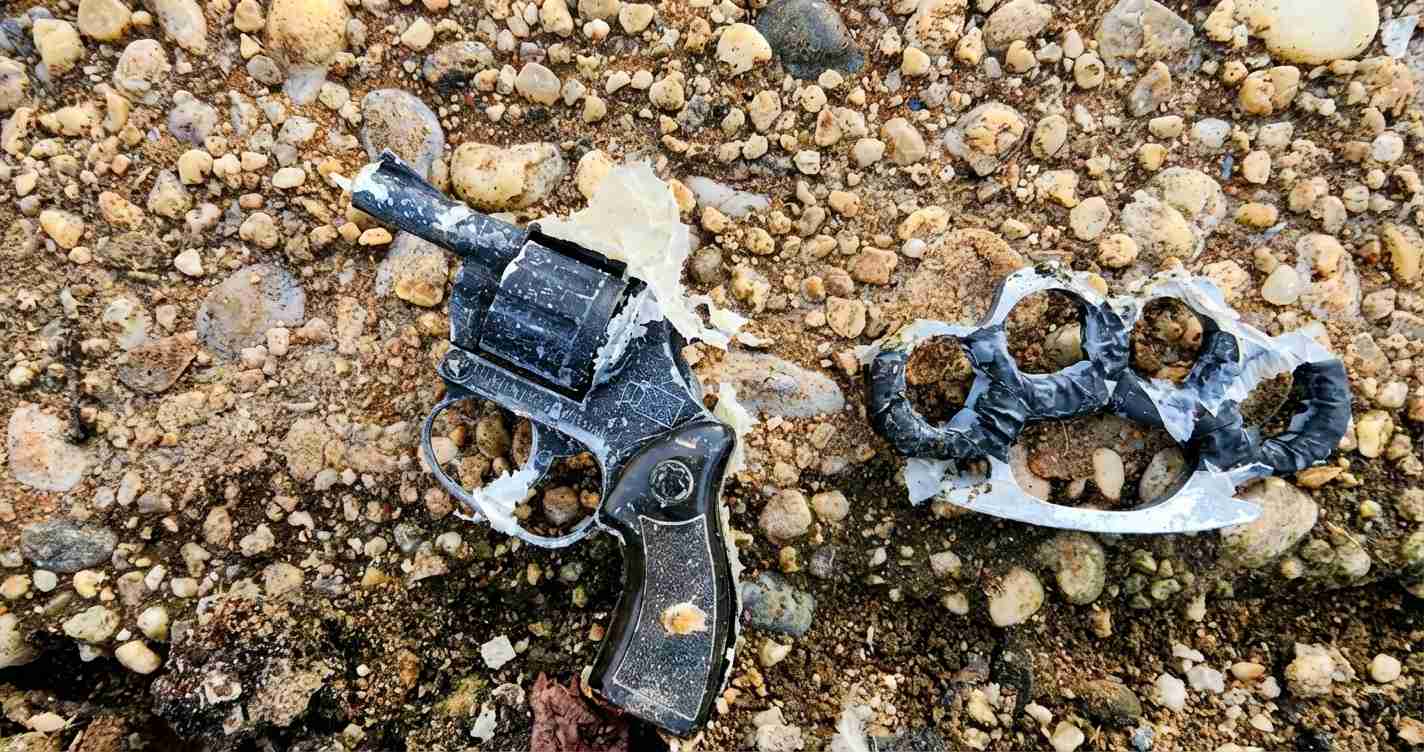
Receding Silver Lake Reservoir Reveals Taped Package Containing Pistol and Brass Knuckles; Staten Island Fisherman Turns Findings Over to Police
Staten Island fisherman Chris Sammon discovered a tightly taped package containing a pistol and brass knuckles on a rock at Silver Lake Reservoir after water levels receded; he handed the items to police, triggering an investigation and local concern.
Key takeaways
- What was found: A tightly taped bundle on a rock at the reservoir’s edge contained a pistol and brass knuckles — items exposed after the water level fell. (Sources: IJR, Unilad.)
- Who found it: Lifelong Staten Island resident and avid fisherman Chris Sammon discovered the package and turned the contents over to police on site.
- Initial assessments: Officers speculated the handgun might be a race-starting gun; a former NYPD gun squad detective said it resembled a Ruger .38-caliber pistol. No ballistics results have been released.
- Context and hazards: The find followed a roughly 8.5-foot drop in water level after the city halted refilling for conservation, revealing phones, golf balls, pipes and other debris on the exposed lakebed.
What was found at Silver Lake Reservoir
Chris Sammon said he went to Silver Lake after hearing reports of the receding waterline. Expecting the usual bottles and litter, he instead found a tightly wrapped package sitting on a rock at the water’s edge. Upon inspecting it, he discovered a pistol and a pair of brass knuckles wrapped in tape. Concerned the items could be tied to a crime, he immediately handed them to a nearby police officer. (Sources: IJR, Unilad.)
Sammon told reporters he might have kept the brass knuckles if not for police presence, but he prioritized safety. He noted the current water level was the lowest he could recall and that he began exploring the exposed shoreline in August.
Investigative details and expert views
Officers on the scene initially offered a cautious theory: some believed the small handgun might be a race-starting gun, a device sometimes used at sporting events or informal races, which could mean the weapon was inert or modified. A former NYPD gun squad detective reviewed photos and descriptions and said the pistol resembled a Ruger .38-caliber handgun.
“Neither formal ballistics testing nor forensic details have been released by authorities,” the reports note, leaving the weapon’s operability and any connection to past crimes unconfirmed.
Police collected the items and took custody for investigation. As of the latest reporting, officials have not released lab results or stated whether the pistol was functional or matched any unsolved cases. That absence of follow-up leaves provenance and intent unanswered.
Receding reservoir water levels and other exposed hazards
The discovery coincided with a sharp drop in Silver Lake’s water level — about 8.5 feet — after the city halted refilling for conservation. City data cited in reporting shows the reservoir held roughly 239.5 million gallons on Dec. 17, down from about 361.5 million gallons in October. The Department of Environmental Protection (DEP) has said it halted refilling for conservation and has no immediate plans to restore prior levels, exposing bed areas normally underwater. (Source: IJR.)
Visitors to the exposed shoreline have reported finding phones, golf balls, pipes and other debris despite fences and posted warnings, raising public-safety concerns and the possibility that evidence from unrelated incidents might resurface.
Public safety and evidence concerns
A taped weapon exposed to the elements presents multiple risks: corrosion and degradation can alter forensic evidence, and sharp objects or ammunition in mud and shallow pools present direct hazards to anyone exploring the area. Police collection likely followed standard evidence procedures, but lab results and public disclosure are pending.
Until lab work is completed and released, the public must wait for confirmation about whether the pistol was operable or linked to any crimes, and whether the brass knuckles match materials from past incidents.
Local reactions and community context
Residents reacted with a mix of shock and curiosity. Sammon’s account — expecting bottles yet finding a weapon — resonated with local anglers and recreationists. The episode highlights how changing water conditions can reveal hidden histories and hazards and how people interact with public lands in new ways.
The DEP has reminded the public to stay out of restricted zones. Fences and posted warnings are in place, but as water recedes more people have climbed barriers to explore, increasing the chance of additional discoveries — some dangerous, some historically significant.
Implications for San Luis Obispo, California
Although this discovery occurred in New York, communities such as San Luis Obispo should consider lessons that may apply locally:
- Water management & public access: Receding reservoirs can reveal hazards; water agencies should clearly communicate restrictions and enforcement plans.
- Public safety & evidence handling: Law-enforcement and emergency services need protocols for safe collection and preservation of exposed items to avoid contamination.
- Recreation & liability: Lower waterlines may attract more visitors — review signage, temporary closures and patrols to reduce injury and protect resources.
- Cultural & historical discovery: Lower levels can expose artifacts; museums, archaeologists and tribal partners should be prepared to assess and preserve finds.
- Community trust: Timely, transparent updates from agencies and police maintain public trust when unusual discoveries occur.
Sources and further reading
Reporting based on available accounts and on-scene statements; follow-up testing and official police statements were not available at the time of publication.
- IJR: “Dark discovery emerges from receded NYC reservoir”
- Unilad: “Fisher finds pistol, brass knuckles at Silver Lake Reservoir”
- AOL: Possible breakthrough — related search coverage
- AOL: Unrelated finds reported in exposed lakebeds
Preserve all original facts, information, and URLs as reported; follow-up information was not available at publication time.