Union Jacks and New Banners: How 2025 British Anti-Immigration Protests Are Rewriting Britain’s Public Space
Since April 2025, far-right-led anti-immigration protests across England have targeted hotels and asylum sites, mixing Union Jacks with anti-immigrant banners; clashes have produced dozens of police injuries and more than 180 arrests, reshaping debates about public space.
- Widespread unrest: Demonstrations have taken place in towns and cities across England, often focused on hotels or proposed asylum accommodation.
- Symbols and campaigns: Organizers pair the Union Jack and English emblems with anti-immigration banners and coordinated online drives such as 2025 British anti-immigration protests — Wikipedia.
- Violence and policing: Police report at least 41 officers injured and more than 180 arrests amid clashes and disorder.
- Local and transatlantic lessons: The protests illuminate how symbolic displays and culture-war rhetoric can influence local policy debates — with implications for places like San Luis Obispo, California.
What happened — locations, tactics, and targets
Since April, towns from Epping and Waterlooville to Hoylake and Stanwell have seen gatherings that vary in size and intensity. Many protests concentrated on hotels and sites proposed to house asylum seekers; at several locations local pressure prompted pauses or reviews of accommodation plans. Some rallies were small and local, while others drew hundreds or over a thousand participants. Police restricted a planned UKIP rally in Whitechapel over high disorder risk, and in Newcastle a UKIP march met large counter-protests organized by Stand Up To Racism.
Symbols, campaigns and online organizing
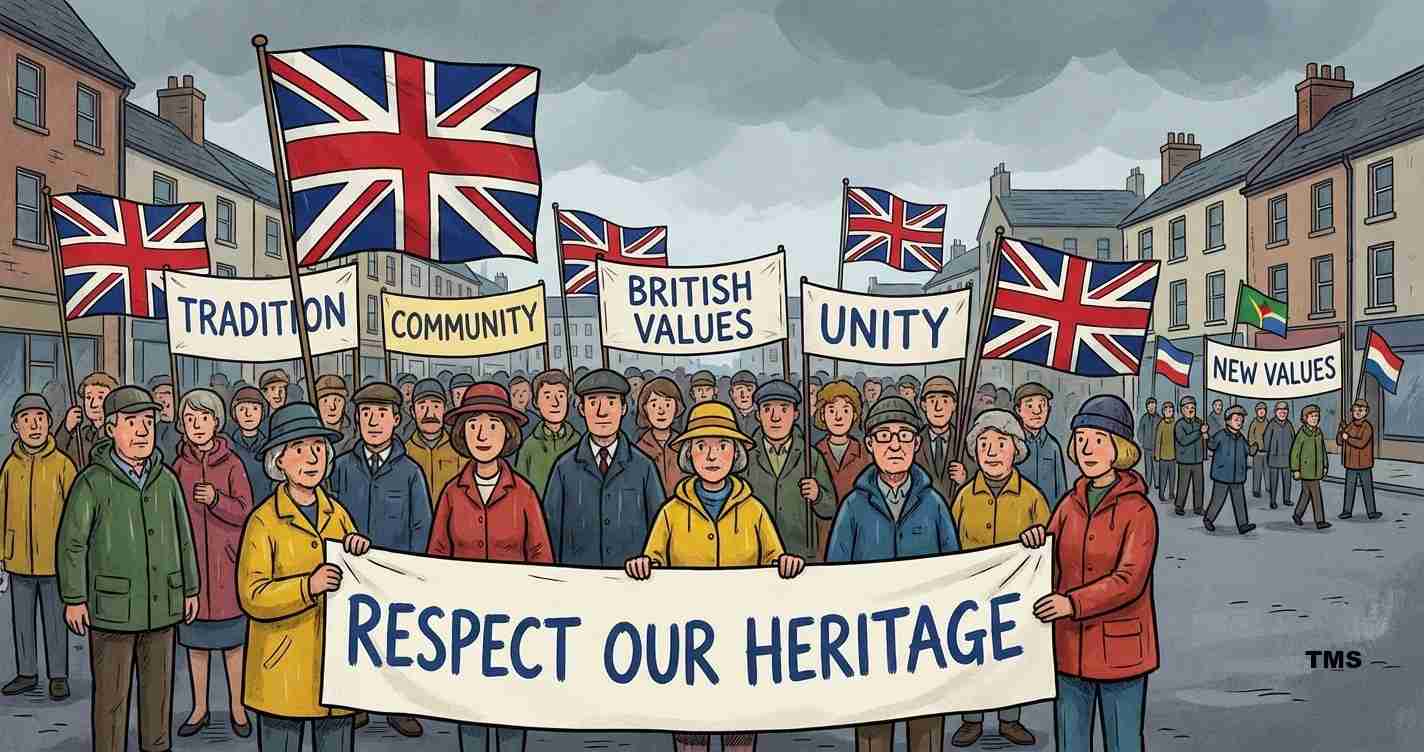
A defining feature is the heavy use of national flags and emblems. Organizers and marchers frequently carry the Union Jack, St George’s Cross, wooden crosses and other patriotic symbols. Campaigns such as “Operation Raise the Colours” circulated on Telegram and Facebook channels linked to far-right activists, encouraging coordinated flag displays and local demonstrations to assert a particular vision of British identity (2025 British anti-immigration protests — Wikipedia).
“Protest imagery mixed national flags with anti-immigration banners and slogans — framed by organizers as defence of identity, critiqued by opponents as exclusionary and fear‑stoking.”
Politics, the anti‑woke thread, and mainstream adoption
Analysts link the demonstrations to a broader backlash against what is framed as “woke” culture, with parties and figures on the right fusing immigration messages with criticism of diversity and decolonisation efforts. Research highlights how anti‑woke rhetoric has migrated from fringe spaces into more mainstream debate (Political Science article on anti-woke rhetoric and politics — Frontiers).
Some mainstream politicians and Reform UK figures have appeared at or backed local actions, amplifying local disputes into national political flashpoints and shifting the tone of public debate (2025 British anti-immigration protests — Wikipedia).
Community responses and policing
The national picture is uneven. In some towns local residents drove protests that led councils to rethink placements; in others, anti-racist counter-demonstrations outnumbered far-right marches and produced cancellations or police-imposed limits. Police forces investigated online messaging that increased disorder risk, limited rallies when necessary and made arrests where violence occurred. Reviews of policing tactics and community outreach are underway in several jurisdictions.
Debate over “foreign banners” and public space
Some protesters cite foreign flags or banners flown by community groups as visible evidence of cultural change they oppose. Reporting so far does not indicate foreign flags alone sparked the protests, but such imagery has been woven into arguments about belonging in public spaces. Opponents warn that weaponising national symbols and anti‑woke language risks eroding trust and harming cohesion (Political Science article on anti-woke rhetoric and politics — Frontiers).
Implications for San Luis Obispo, California
Economic impact: High-profile coverage of violent protests overseas can influence traveller perceptions; local tourism and hospitality operators should monitor bookings and prepare inclusive messaging.
Political consequences: Local disputes over shelter or migrant services can become nationalised; elected officials may reference UK events when framing immigration debates.
Social effects: Symbolic displays can provoke strong reactions. Early public meetings, clear communications, and inclusive outreach can reduce tensions.
Practical applications: Law enforcement should review crowd-control and de-escalation strategies used in the UK; city officials can publish transparent timelines and neighborhood briefings to counter misinformation.