Smithsonian swaps Trump portrait, removes Jan. 6 and impeachment text from National Portrait Gallery display
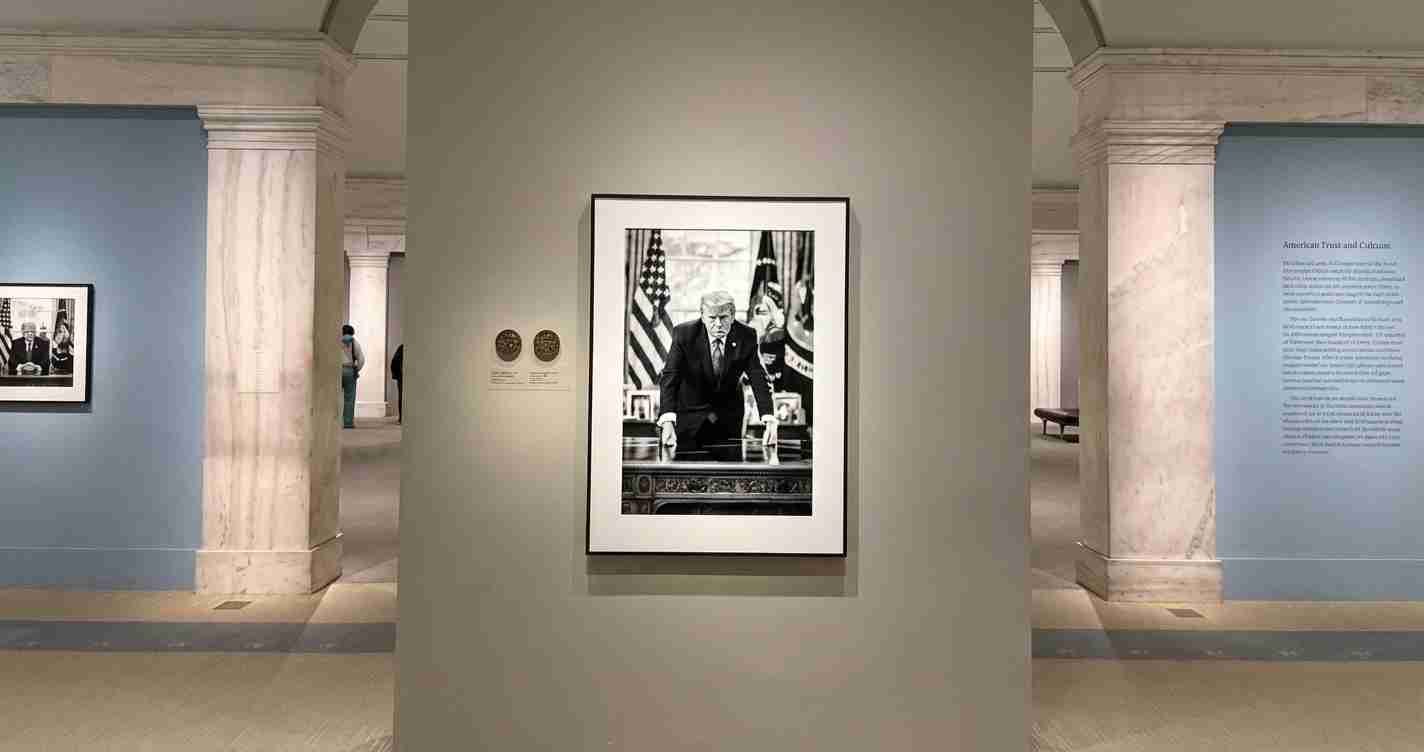
The Smithsonian’s National Portrait Gallery replaced former President Donald Trump’s formal painted portrait with a Daniel Torok black-and-white photograph and shortened the exhibit label, removing references to Jan. 6 and his two impeachments amid scrutiny.
- Portrait change: The gallery installed a black-and-white White House photograph by Daniel Torok and removed the prior painted/formal image.
- Label shortened: Text mentioning Jan. 6 and two impeachments was replaced with a brief “tombstone” label listing only years in office.
- Inconsistent treatment: Other presidents, including Bill Clinton and Andrew Johnson, still have labels noting impeachments, prompting questions about uniformity.
- Context of review: The change coincides with a White House-ordered review of museums ahead of the 250th anniversary, intensifying scrutiny over possible influence.
- Source: Fox News
What changed in the Trump display
The visual and textual elements of former President Trump’s entry in the gallery were modified in two visible ways:
- The gallery removed the earlier formal painted portrait and installed a black-and-white photograph by White House photographer Daniel Torok showing Trump at the Resolute Desk.
- The accompanying wall text was shortened dramatically. The previous label noted that Trump was “impeached twice—on charges of abuse of power and incitement of insurrection after supporters attacked the U.S. Capitol on January 6, 2021—he was acquitted by the Senate in both trials.” The updated label lists only his years in office and omits mention of Jan. 6 and the impeachments.
How this compares to other presidents’ labels
Observers noted that the gallery continues to include interpretive labels for other presidents that mention major events and controversies. For example, labels for impeached presidents such as Bill Clinton and Andrew Johnson still reference their impeachments, creating a contrast with the shortened Trump entry.
Museum labeling is intended to provide historical context; critics argue removing major events from a president’s label changes the context visitors receive.
Smithsonian and National Portrait Gallery response
The gallery told the Associated Press, as reported by Fox News, that it “has been exploring quotes or tombstone labels” that would provide basic facts such as an artist’s name and dates. The institution framed the change as part of a broader experiment with simpler labels.
“The gallery has been exploring quotes or tombstone labels,” the museum said, according to reporting.
Museum officials did not specify whether the shorter labels would be applied uniformly across presidential displays, leaving uncertainty about whether Trump’s entry was treated differently.
Reaction from Trump and the White House
Former President Trump praised the change on Truth Social, posting the new photograph and calling the display an honor. A White House spokesperson, Davis Ingle, told Fox News Digital that “for the first time in history, the Smithsonian National Portrait Gallery has hung up an iconic photo taken by the White House honoring President Trump,” and said Trump’s “unmatched aura will be seen and felt throughout the halls of the National Portrait Gallery.”
A White House official said the photograph will remain on display until an official painted portrait is completed.
Federal review and the broader context
The timing of the change coincides with a White House-ordered review of museums ahead of the nation’s 250th anniversary in 2026. Reporting indicates the Smithsonian was asked to provide extensive internal records and warned that federal funding could be at risk, raising concerns that political pressure might be influencing curatorial choices.
Critics argue that cultural institutions must retain independence and that curatorial decisions should be guided by scholarship, not political considerations.
Open questions and what remains unclear
- Is the label change part of a genuine, gallery-wide shift toward shorter “tombstone” labels, or was it applied specifically to Trump’s portrait?
- What internal communications, if any, passed between the White House and the Smithsonian concerning the image and label change?
- Will the National Portrait Gallery formalize a new labeling policy and publish criteria for including major events such as impeachments or attacks on democracy?
Advocates for transparency urge the Smithsonian to publish the policy and timeline for the change and to make internal records available to demonstrate curatorial, not political, decision-making.
Implications for San Luis Obispo, California
The national debate over the Smithsonian’s decision has potential ripple effects for local communities like San Luis Obispo County across several dimensions:
Economic impact
Museums and cultural tourism drive local economies. Headlines about federal influence on national museums could influence visitor perceptions and philanthropic giving, potentially affecting federal grant prospects or cooperative programs that benefit local museums and historic sites.
Political consequences
San Luis Obispo’s diverse electorate may view federal scrutiny of museums as a cautionary sign about political influence over culture. Local candidates and leaders could use the debate to argue either for protecting institutional independence or for aligning public funding with community values.
Social effects
Public discussion about how history is displayed may spur local events—panels, workshops and school lessons—on museum literacy, civics and how historical interpretation is constructed.
Cultural relevance
San Luis Obispo’s arts scene and local museums may review exhibit practices and community engagement strategies in response to the national conversation, potentially fostering new partnerships with universities or national institutions for educational programming emphasizing transparency and scholarship.
Practical applications for residents
Citizens concerned about how history is preserved can take concrete steps: attend museum board meetings, ask about exhibit decision-making, support local cultural institutions through donations or volunteering, and use the Smithsonian episode as a teaching tool for source evaluation and museum interpretation.
Sources
Primary reporting used for this article: Fox News. Further developments may emerge from public records requests and follow-up reporting.