Decades-long ACTIVE study finds targeted brain training cuts dementia risk by 25%
A landmark, 20-year randomized trial found that adaptive speed‑of‑processing brain training reduced dementia incidence by 25% compared with no training, suggesting targeted, computer-based cognitive exercises may offer durable protection for community‑dwelling older adults, with clinical diagnoses tracked over time.
Key takeaways
- Long follow-up: The ACTIVE trial began in 1998–1999 with about 2,800 adults aged 65–94 and followed participants for roughly 20 years; see the journal article.
- Speed training effect: Adaptive speed‑of‑processing training with booster sessions was associated with a 25% lower dementia incidence over 20 years versus the no‑training control (see the ScienceDaily summary).
- Program format: Initial training was 10 sessions over about six weeks; some participants received boosters at ~11 months and ~35 months (details via the UF Health summary).
- Specificity: Memory and reasoning training did not show a statistically significant reduction in dementia incidence at 20 years.
Study design and participants
ACTIVE (Advanced Cognitive Training for Independent and Vital Elderly) was a randomized, controlled, multi‑site U.S. trial funded by the National Institutes of Health, including the National Institute on Aging and the National Institute of Nursing Research. Researchers enrolled between 2,802 and 2,832 generally healthy, community‑dwelling older adults and followed them for roughly two decades.
Participants were randomly assigned to one of four groups: memory training, reasoning training, speed‑of‑processing training (adaptive), or a no‑training control. Initial training consisted of 10 sessions of about 60–75 minutes across ~six weeks; a subset was randomly chosen to receive booster sessions at ~11 months and ~35 months. Those who completed the maximum recommended schedule received up to 18 sessions over three years. (See the UF Health summary and the ScienceDaily summary.)
The three training programs
- Memory training: Strategy-based techniques to improve recall.
- Reasoning training: Practice with problem‑solving exercises.
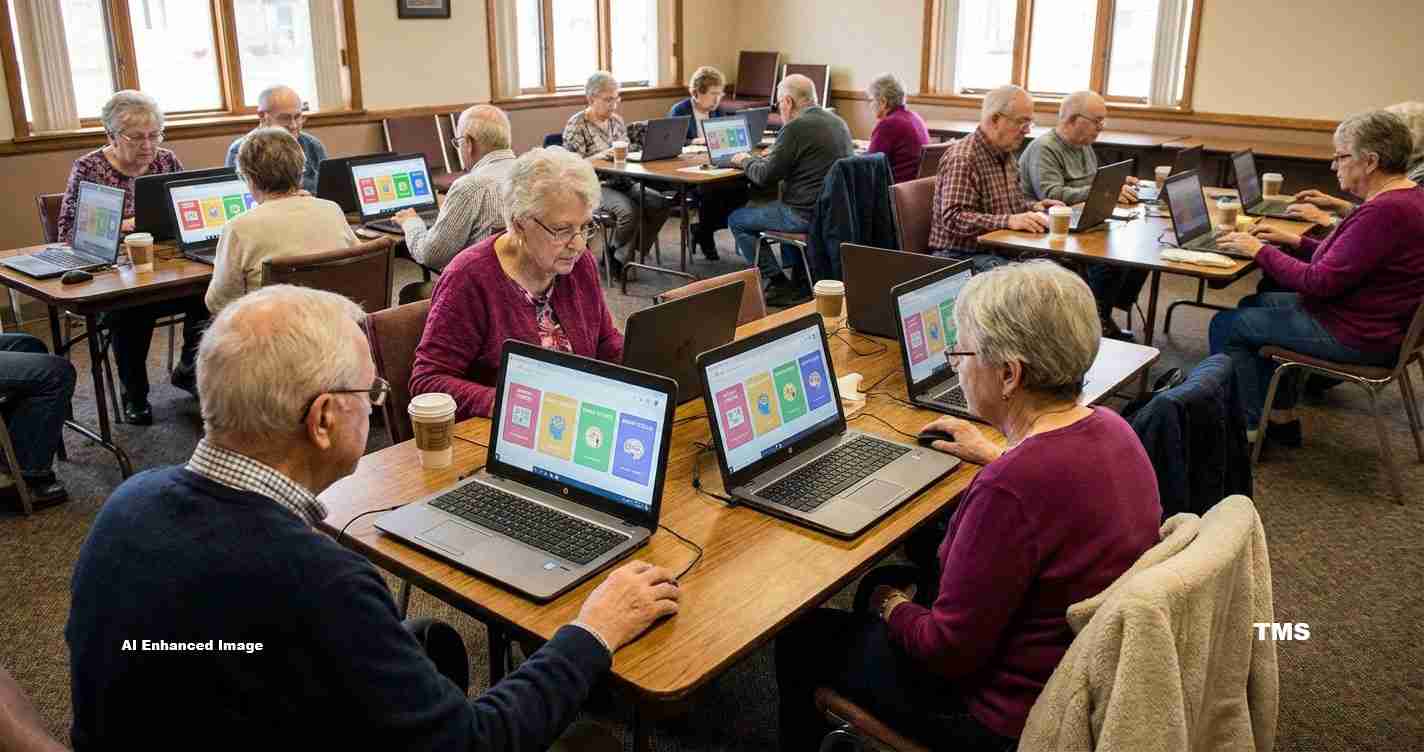
- Speed‑of‑processing training: Computerized visual tasks that adaptively increase difficulty to improve the speed of visual decision‑making.
How dementia was tracked
The 20‑year follow‑up used real‑world health data — medical records and Medicare claims — to identify dementia diagnoses over time. This approach enabled measurement of long‑term clinical outcomes rather than only short‑term cognitive test results. The study team reported dementia cases identified through health records and compared incidence across groups. (See the NIH news release.)
Main 20-year findings
Key numeric result: Among participants who received speed‑of‑processing training plus boosters, 105 of 264 (40%) were diagnosed with dementia over 20 years versus 239 of 491 (49%) in the no‑training control group — a 25% lower incidence. The dementia‑reducing effect was not observed for memory or reasoning training. (Source summaries: the ScienceDaily summary and the published journal article.)
Earlier ACTIVE reports showed gains in everyday functioning at five years across trainings, with reasoning and speed training maintaining some benefits at 10 years; speed training earlier showed a 29% lower dementia risk at 10 years.
Why speed training may work
Investigators emphasize the adaptive nature of the speed program. Rather than teaching fixed strategies, the tasks pushed users to make faster visual decisions under time pressure while the program continually raised difficulty as performance improved. Researchers propose this may strengthen neural networks supporting attention and rapid processing, though direct mechanistic proof remains to be established.
“We were pleasantly surprised by the 20‑year durability of the benefit,” said Michael Marsiske, PhD, a principal investigator at the University of Florida College of Public Health and Health Professions. He noted the training “does no harm and may confer substantial benefit.” (See the UF Health summary.)
Outside perspectives: George Rebok, PhD (Johns Hopkins), urged refining visual‑processing methods and testing combinations with exercise, diet and other lifestyle steps. Michael Merzenich, PhD, noted the results support the potential for targeted, adaptive programs to produce lasting change (see commentary at BrainHQ and coverage in ScienceDaily).
Limits and next steps
- The trial tested single‑component programs; it did not evaluate combined lifestyle interventions (exercise, diet, blood‑pressure control).
- Using medical records and claims for dementia identification is valuable for long-term tracking but can miss cases or vary with care‑seeking behavior.
- Mechanistic explanations are still hypothetical; further research is needed to measure brain changes tied to training and to test delivery at scale.
Implications for San Luis Obispo, California
San Luis Obispo County, like many California communities, has a growing older population that values independence and daily functioning. The ACTIVE results suggest several local actions:
- For seniors and caregivers: Ask clinicians about validated cognitive speed‑of‑processing programs; many are computer‑based and available individually or in groups. Consult health providers first if existing cognitive or medical conditions are present.
- For senior centers and community programs: Consider piloting adaptive speed training or partnering with certified providers. If boosters matter, plan for follow‑up sessions and access support (transportation, computers).
- For local health systems and policy makers: Evaluate whether cognitive speed training could complement prevention strategies (physical activity, blood‑pressure control, healthy diets) as a relatively low‑risk, potentially low‑cost option.
- For researchers and universities: Explore local trials combining speed training with lifestyle interventions and delivery models that work in rural/coastal settings; telehealth can extend reach to homebound seniors.
- Practical impact: If confirmed at scale, these programs could reduce dementia cases, improve medication management and daily independence, and ease pressure on caregivers and health services.
Reporting and sources
This article is based on the ACTIVE trial publication and summaries from university and federal sources, including:
- Alzheimer’s & Dementia: Translational Research & Clinical Interventions (DOI: 10.1002/trc2.70197)
- University of Florida Health news release
- ScienceDaily summary
- NIH news release
- BrainHQ commentary
- Additional coverage (Fox News)
- Additional coverage (AARP)
Next steps: Researchers plan further work to determine how best to deliver adaptive speed‑of‑processing training at scale and whether combining it with other health measures amplifies protection against dementia.