U.S. confirms travel-linked Clade I mpox cases as global agencies watch rare hantavirus reports
The United States has recorded 15 travel-linked cases of Clade I mpox since late 2024, beginning with California’s first confirmed case; infections are travel-associated, distinct from the 2022 strain, and officials urge vaccination and vigilance.
- Fifteen travel-linked Clade I mpox cases confirmed in the U.S.; all tied to recent travel with no detected community spread.
- Clade I historically causes more severe illness than Clade II; vaccination with JYNNEOS is recommended for people at higher risk.
- Hantavirus reports reviewed are not linked to mpox; hantavirus remains a separate, rodent-borne disease (CDC hantavirus).
What is Clade I mpox and why it matters
Clade I mpox is one of two primary genetic forms of the virus that causes mpox (formerly called monkeypox). Health agencies note Clade I historically stems from Central Africa and has been associated with more severe illness and higher death rates than Clade II, which drove the 2022 global outbreak. See the World Health Organization and the CDC mpox overview for clade context and guidance.
Key information
- First U.S. case: California reported the first confirmed Clade I mpox case in November 2024; the patient had recent travel to areas with Clade I transmission and recovered in isolation, according to the CDC Health Alert Network advisory HAN00519 and reporting by Contagion Live.
- By early 2026 federal reporting indicates a total of 15 travel-linked Clade I cases in the U.S.; all cases reported to date are linked to travel and not to community spread (CDC situation summaries).
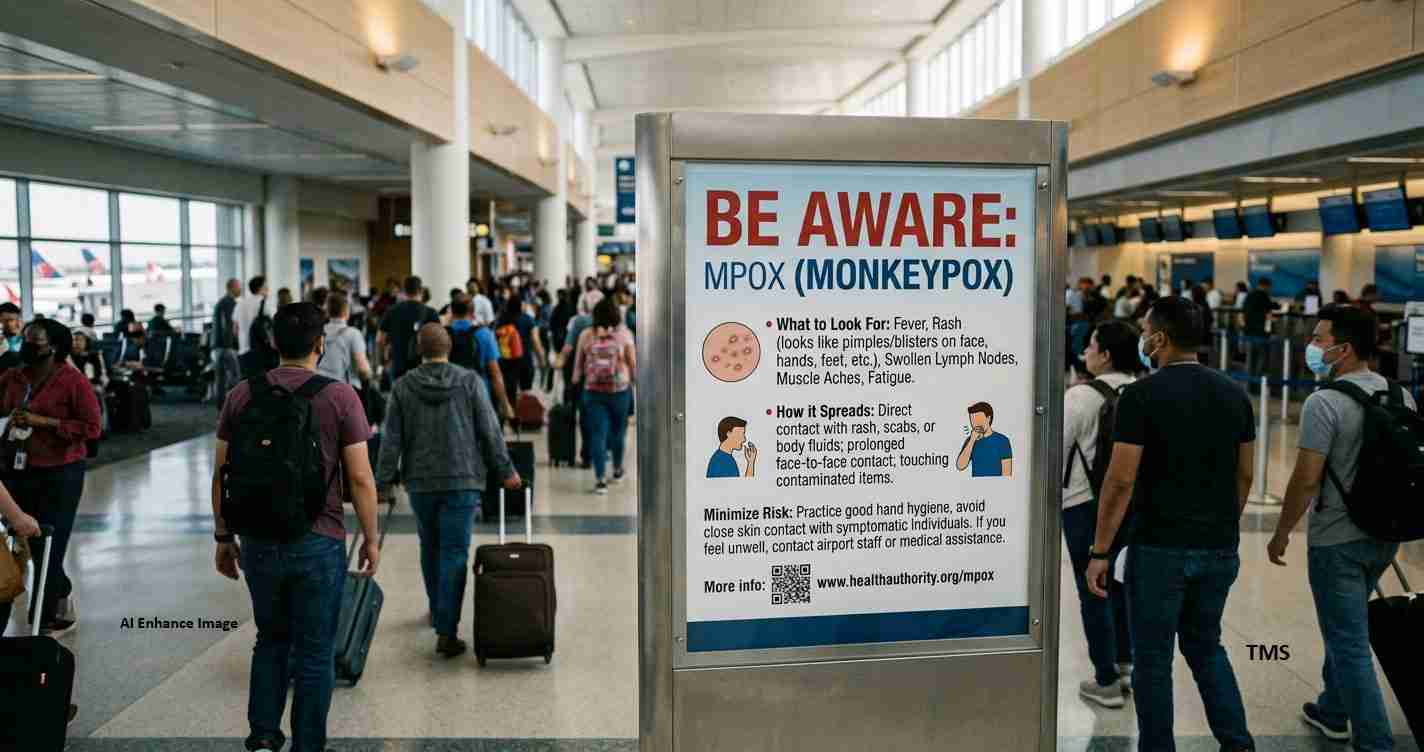
- Symptoms: Fever, swollen lymph nodes and a characteristic rash or lesions; historically, Clade I has produced more widespread rashes and complications in severe cases (CDC clinical overview).
- Risk and prevention: Immediate risk to the general U.S. public is considered low, but health officials urge people at higher risk—travelers to affected regions, close contacts of cases, and attendees of large events—to consider the two-dose JYNNEOS vaccine.
- Mpox–hantavirus reports: Reviewed sources do not support a link between mpox and hantavirus; hantavirus is a separate rodent-borne illness (CDC hantavirus).
How U.S. cases were identified and tracked
State and local public health laboratories screen suspected cases with orthopoxvirus PCR. Specimens positive for non-variola orthopoxvirus (NVO) but negative for Clade II may be sent to the CDC for clade confirmation; this process was used to confirm the initial California case in November 2024 (CDC HAN advisory HAN00519).
Subsequent cases: By early 2026 additional travel-linked cases were reported in other states, including at least one in San Francisco in spring 2026 linked to travel (KQED). The CDC states these cases remain unconnected with no evidence of sustained community spread (CDC situation summary).
Global context and why clades matter
Clade I has driven large outbreaks in Central Africa for years, with higher severity and mortality than Clade II in many settings. Data through late 2024 documented thousands of cases and a higher death toll in parts of Central and Eastern Africa (see Johns Hopkins public health brief, Jan. 2025 and regional reporting from Africa CDC).
Because international travel and large events move clade-specific risks between regions, distinguishing Clade I from Clade II helps officials prioritize testing, treatment and vaccination for exposed contacts and communities (WHO; CDC).
Vaccination and prevention — what health agencies recommend
The JYNNEOS vaccine remains the primary preventive tool. Agencies recommend completing the two-dose series for optimal protection and note the vaccine is safe, effective and widely available through state and local health departments.
Prevention steps include:
- Avoid close skin-to-skin contact with people who have a rash that could be mpox.
- Do not share bedding, towels or clothing with someone who has mpox.
- Seek testing if you develop fever, swollen lymph nodes and a new rash after travel or close contact with a possible case.
- Travelers to areas with known Clade I or Clade II transmission should consult public health authorities before and after travel (CDC clinical guidance).
Hantavirus reports — what’s known and what isn’t
Hantavirus is a distinct zoonotic disease usually spread when people breathe aerosolized virus from rodent urine or droppings. It can cause severe respiratory or kidney illness. While isolated hantavirus cases have been reported in parts of Europe and elsewhere in past years, the reporting reviewed for this article did not substantiate a new, linked outbreak in Spain or France tied to Clade I mpox. For general information see the CDC hantavirus guidance and WHO resources on zoonoses (WHO).
Key takeaway: Current evidence does not support a connection between recent Clade I mpox cases and new hantavirus outbreaks.
Sources and further reading
- CDC Health Alert Network advisory HAN00519, Nov. 18, 2024
- CDC mpox overview
- CDC clinical overview for health care providers
- CDC mpox vaccine information
- CDC mpox situation summary
- Contagion Live reporting on first U.S. Clade I case
- KQED reporting on a San Francisco Clade I case
- Johns Hopkins public health brief, Jan. 2025
- Africa CDC mpox resources
- CDC hantavirus information
- WHO fact sheet on monkeypox
Implications for San Luis Obispo, California
Economic impact
San Luis Obispo’s economy depends on tourism, events and summer travel. Travel-linked Clade I cases raise concerns for festivals, concerts and college events that draw visitors. Local businesses hosting gatherings or offering lodging should prepare for customer or staff questions and prioritize clear communication and safety planning.
Political consequences
County supervisors and public health leaders may be asked to update guidance or improve vaccine access ahead of high-traffic events. Elected officials will need to balance public health measures with support for local businesses. Clear, factual messaging reduces political friction and supports community confidence.
Social effects
Residents may feel anxious about attending crowded events, beaches, farmers markets or university gatherings. Outreach in plain language about symptoms, prevention and vaccination can reduce fear. Community organizations serving vulnerable groups should be prepared to share vaccine access and testing information without stigma.
Cultural relevance
San Luis Obispo’s close-knit community and event calendar — including Cal Poly and local festivals — mean guidance must be culturally sensitive and practical. Emphasizing personal actions (avoid close contact with symptomatic people, seek testing, get vaccinated if at risk) aligns with local community-care values.
Practical applications
- Check vaccine availability through San Luis Obispo County Public Health Services.
- Seek testing if you develop fever and a new rash or had close contact with someone with suspected mpox.
- Follow public health advice before and after travel, especially to areas with known mpox transmission.
- Local agencies should ensure quick access to testing, clear guidance for event organizers, and timely vaccine clinics before major gatherings.
For up-to-date guidance and vaccine locations, San Luis Obispo residents can consult the county public health website and the CDC pages cited above.