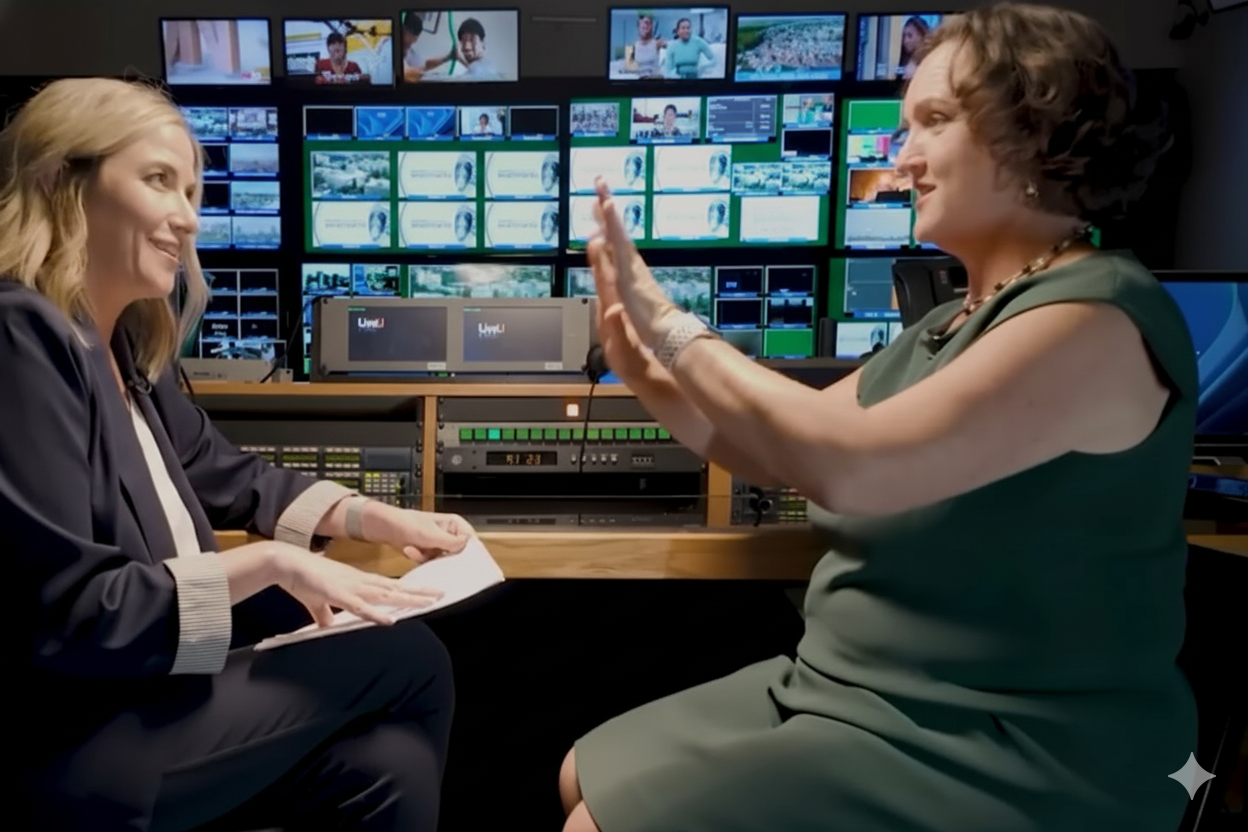
Katie Porter abruptly ends CBS interview after tense exchange over Trump voters, igniting debate in California gubernatorial race
California gubernatorial candidate Katie Porter abruptly ended a CBS News Sacramento interview in early October 2025 after a tense exchange about how she’d win roughly 40% of voters who supported Donald Trump, sparking viral debate and campaign scrutiny.
Key takeaways
- Walkout: Porter ended a televised CBS News Sacramento interview after calling a question about reaching ~40% Trump voters “unnecessarily argumentative” (video).
- Viral impact: Clips circulated widely, prompting opponents to question her ability to engage skeptical voters and changing the campaign narrative (video).
- Campaign defense: Porter’s team framed the exit as pushback against repetitive, antagonistic follow-ups, not avoidance of policy discussion (video).
- Local stakes: The episode may influence voter perceptions and local event planning in counties like San Luis Obispo, where direct engagement is valued.
Main story
What happened on the set
The CBS News Sacramento interview began as a routine exchange but escalated when reporter Julie Watts asked Porter how she planned to reach the roughly 40% of Californians who had voted for Donald Trump. That percentage has become a frequent metric in discussions about whether Democrats can build a winning statewide coalition.
Porter pushed back on the tone and framing. On camera she said,
“I feel like this is unnecessarily argumentative. What is your question?”
Watts continued pressing for a direct plan to appeal to Trump voters, and Porter responded that she would end the interview:
“I don’t want to keep doing this. I’m going to call it. Thank you.”
She later added off-camera,
“Not like this. I’m not, not with seven follow-ups to every single question you ask.”
(video)
Footage of the walkout was quickly shared across social platforms and news outlets, amplifying reactions from rivals, commentators and voters (video).
Campaign fallout and opponent reactions
Rival campaigns seized on the exchange as evidence Porter might struggle to win beyond the Democratic base. Political operatives noted the optics of a candidate leaving an interview can intensify concerns about message discipline and readiness for high-pressure debates or statewide media appearances.
Opponents used clips in digital ads and social posts to suggest the incident showed a reluctance to answer tough questions, while Porter’s team argued the situation was about journalistic technique and repetitious follow-ups, not an unwillingness to engage substantively (video).
Why the “40%” question matters
The figure — roughly 40% who supported Trump — is consequential in California politics because, despite the state’s Democratic lean, Republican and independent voters remain a sizable bloc. Analysts say questions about Trump voters test a candidate’s ability to address issues across the political spectrum, including the economy, public safety and housing.
Porter’s decision not to answer the question on camera left a rhetorical gap opponents and undecided voters could exploit, shifting focus away from policy proposals toward perceived temperament and media strategy (video).
Context: Proposition 50, redistricting and media lines of questioning
Observers tied the exchange to larger controversies in the campaign, such as debate over Proposition 50 and redistricting efforts. Supporters of those measures characterize them as protections against what they call a “Trump power grab,” a framing that complicates outreach to voters wary of Democratic priorities.
Media analysts were split: some criticized the reporter’s repeated follow-ups as escalatory, while others said follow-ups are standard journalism used to press candidates on specifics voters deserve to hear (video).
Public reaction and the viral spread
The clip’s viral spread generated mixed commentary. Supporters defended Porter’s refusal to be drawn into antagonistic framing, while critics argued the exchange showed a weakness in engaging skeptical constituencies. Political pundits debated whether the incident reflected larger issues of polarization or simply an interview technique problem.
Campaigns amplified the footage in targeted messaging, and pundits used the moment to discuss candidate media preparedness and the challenges of speaking about constituencies tied to former President Trump without inflaming partisan responses (video).
Implications for San Luis Obispo, California
Economic impact
High-profile controversies bring reporters and campaign staff into communities, which can boost hotel stays, restaurants and local transportation during events. If Porter’s schedule changes after the incident, some local vendors in San Luis Obispo could see fewer campaign-related customers.
Political consequences
San Luis Obispo County is politically mixed. The walkout could energize Republican and independent voters who interpret Porter’s reaction as a reluctance to engage with Trump supporters, while local campaigns may use the clip to shape turnout and messaging ahead of primaries and the general election.
Social effects
The viral clip may deepen partisan conversations at town halls, civic groups and local media. Residents focused on housing, public safety and wildfire readiness may evaluate the episode as a test of how a governor would handle pressure and media scrutiny.
Cultural relevance
San Luis Obispo places value on direct engagement and community dialogue. A televised walkout can clash with local expectations, and organizers of local forums may cite the episode when deciding on invitations or stricter Q&A rules.
Practical applications for voters
- Voters can treat the walkout as one of several factors and seek direct interaction—attending town halls or moderated forums to hear Porter’s in-person responses.
- Local outlets and civic groups may increase moderated events to ensure substantive discussion without repetitive back-and-forth that escalated the televised exchange.
Sourcing and transparency
This report is based on video footage of the CBS News Sacramento interview and related clips that circulated online in early October 2025 (related clip; related clip).
Reporting and editing for this piece followed standard verification practices, using publicly available video of the interview and subsequent public statements and reactions. All original facts and URLs are preserved above for transparency.