Zohran Mamdani Delivers Victory Speech After Historic Win — New York City’s First Muslim Mayor
Zohran Mamdani delivered a victory speech on Nov. 5, 2025, after becoming New York City’s first Muslim mayor, a historic win that drew national attention and large online viewership during a PBS NewsHour livestream broadcast.
Key takeaways
- Historic milestone: Zohran Mamdani (Democrat) won the New York City mayoral race and addressed supporters on election night via the PBS NewsHour livestream.
- High national interest: The broadcast reported more than 682,000 viewers in the initial hours, underscoring widespread attention to the result.
- Coverage focus: The livestream emphasized Mamdani’s remarks and symbolic significance rather than publishing detailed vote totals or opponent returns.
What happened on election night
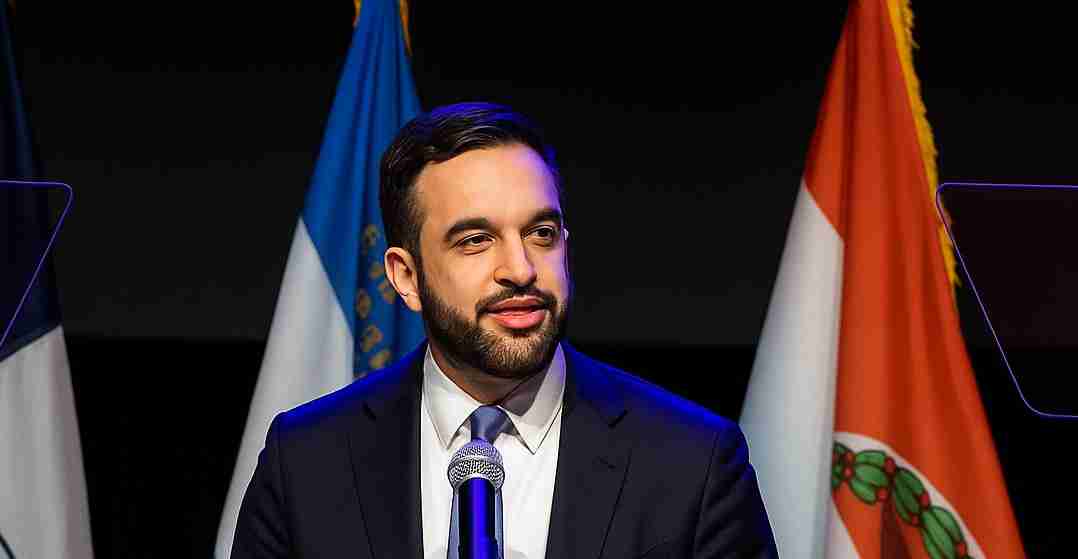
On Nov. 5, Mamdani stepped to the podium and spoke to a crowd of supporters and a national audience. The remarks were carried live by the PBS NewsHour livestream, which framed the moment as a symbolic milestone for representation in New York City.
“We celebrate tonight, and tomorrow we get to work,” Mamdani said, mixing celebration with calls for unity and a focus on solving the city’s pressing problems.
The livestream coverage prioritized Mamdani’s address and the historic framing, showing both local reaction and a broad national audience that followed the race closely.
Historic significance and identity
Mamdani’s election was widely described as historic because he is the first Muslim elected mayor of New York City. Observers and national outlets positioned the victory as both a political achievement and a meaningful step for civic inclusion in the largest U.S. city.
Coverage emphasized identity without fully replacing scrutiny of governance plans; the speech and reporting placed the win within broader debates over housing, public safety, and city services, even though the broadcast itself focused mainly on the celebratory aspects.
Coverage, audience and reach
The PBS NewsHour livestream registered strong early viewership — more than 682,000 viewers in the first hours — highlighting national interest in NYC’s mayoral outcome and the symbolic importance of electing the city’s first Muslim mayor.
That attention reflected both policy interest in New York’s governance and the larger conversation about representation in American politics. Local viewers saw live reaction and context; national viewers saw the moment’s symbolic reach.
Election results: what is known and what remains unclear
Available reporting from the PBS NewsHour livestream confirms Mamdani’s victory but does not include a full numerical breakdown, margins, or detailed results for other candidates. The stream focused on remarks and symbolism rather than tabulated returns.
Readers seeking certified numbers should consult the New York City Board of Elections and detailed post-election reports for opponent names, vote totals, and borough-level breakdowns.
Accountability and unanswered questions
An investigative follow-up should address several outstanding items not covered in the livestream:
- Exact vote totals and percentage margins across the city and by borough.
- Names and party affiliations of all major challengers and their vote shares.
- Voter turnout figures and comparisons to prior mayoral elections.
- Early policy signals from Mamdani’s transition team and potential shifts in city administration.
Implications for San Luis Obispo, California
While direct effects in San Luis Obispo are limited, the election may produce indirect economic, political, social, and cultural ripple effects.
Economic impact
Direct economic effects in San Luis Obispo from a NYC mayoral change are likely minimal. However, policy shifts in New York around housing, regulation, or finance can ripple through national markets and influence sectors that touch California.
Political consequences
Mamdani’s victory may energize local civic groups in San Luis Obispo focused on representation and voter engagement. Local leaders might study his coalition-building and messaging for future campaigns.
Social effects
San Luis Obispo’s Muslim residents and broader faith communities may view the outcome as a positive sign for representation, potentially boosting civic participation among underrepresented groups.
Cultural relevance
Universities, cultural organizations, and media outlets in SLO could use Mamdani’s story to spark dialogue about diversity and leadership, hosting panels or community forums that explore implications for municipal governance.
Practical applications for residents
For everyday residents, the most immediate impact is indirect: local organizers may adopt outreach tactics, coalition strategies, and voter-registration efforts inspired by the campaign’s national attention. Nonprofits may leverage the moment to pursue grants and partnerships focused on inclusion.
Reporting sources and where to look next
This article relies on the PBS NewsHour livestream of Zohran Mamdani’s victory speech for the immediate record and viewership figures. For certified vote totals, opponent names, turnout statistics and complete breakdowns, consult the New York City Board of Elections and detailed post-election reporting from major outlets that publish certified returns.
Preserve the primary record: review the PBS NewsHour livestream for Mamdani’s full remarks and the context of election night coverage.