Marjorie Taylor Greene Apologizes for Role in ‘Toxic Politics’ After Trump Calls Her a ‘Traitor,’ Cites Security Warnings
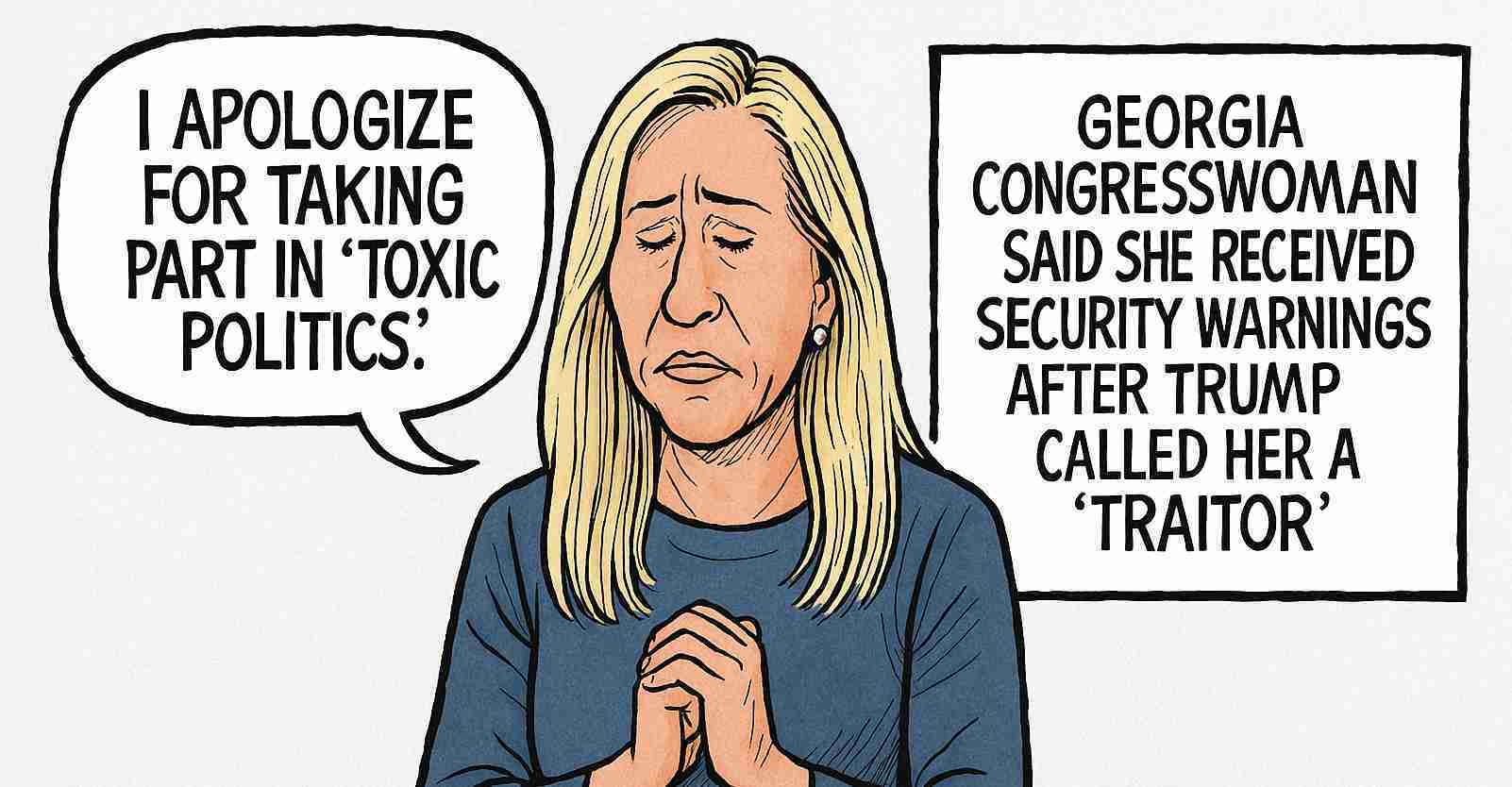
In Rome, Georgia, Rep. Marjorie Taylor Greene apologized on CNN for contributing to “toxic politics” after former President Donald Trump denounced her as a “traitor,” a split that reportedly triggered increased security threats and family concerns.
Key takeaways
- Public apology: Greene told CNN she is “sorry for taking part in the toxic politics” and acknowledged that divisive rhetoric can endanger public figures; see her video interview and a Fox News clip.
- Rift with Trump: A public denunciation by former President Donald Trump — calling Greene a “traitor” and signaling he would not back her — preceded a reported rise in threats and security concerns.
- Security alerts: Greene said private security firms warned of a spike in threats and her family publicly asked for prayers as safety worries grew (private security firms; daughter’s plea for prayers).
- Policy stance intact: Greene defended pressing for transparency on Jeffrey Epstein files, saying victims deserve answers despite political cost.
Background: Trump’s denunciation and fallout
Once a staunch Trump ally, Greene publicly split with the former president over multiple issues, notably her push for releasing Department of Justice files tied to Jeffrey Epstein and her criticisms of Republican health-care positions. That disagreement drew sharp rebukes from Trump — he labeled her “wacky,” a “RINO,” a “ranting lunatic,” and most prominently a “traitor.” He also indicated he would encourage a primary challenge in her Georgia district, a move sources say reshaped local political dynamics and donor behavior (reporting on the rupture).
Public and security response
Greene told CNN she began receiving an increased number of threats after Trump’s comments and that private security firms alerted her to a spike in hostility. Her family raised alarms publicly — her daughter appealed for prayers as the feud intensified (daughter’s public plea).
“These are the types of words… that can radicalize people against me and put my life in danger,” Greene said on camera, describing why the tone of public attacks matters. Additional reporting confirmed an uptick in more serious threats that prompted enhanced security concern (AOL coverage of threats).
Greene’s apology on CNN: admitting a role in toxic politics
In a candid exchange on CNN’s State of the Union, Greene said,
“I would like to say humbly, I’m sorry for taking part in the toxic politics. It’s very bad for our country.”
She acknowledged she had not spoken strongly enough about the risks of such rhetoric until she became its target. Video excerpts and contemporaneous clips are available in the video interview and a related Fox News clip.
The apology represents a shift for Greene, long known as a provocateur who used forceful rhetoric to energize supporters. While she accepted responsibility for contributing to a toxic atmosphere, she did not fully renounce past tactics — instead offering a nuanced statement that mixed contrition with political defense.
Reflections, faith and a bid for reconciliation
Greene framed her apology in moral and spiritual terms, invoking her Christian faith and the importance of forgiveness as guiding reasons to step back from inflammatory language. She said she hoped to reconcile with Trump but emphasized she would not back down from pushing for transparency on the Epstein files — a core point of disagreement with the former president (coverage of the Epstein dispute).
Continued advocacy amid political costs
Despite expressing regret about tactics, Greene reiterated her commitment to transparency and argued that victims deserve answers. Political analysts note that departing from Trump’s circle on high-profile matters risks donations, endorsements, and base enthusiasm. Trump’s statements encouraging a primary challenger highlight the immediate electoral peril she faces (analysis of political risks).
Implications for San Luis Obispo, California
Political tone and public safety
Though this episode unfolded in Georgia, it illustrates a national pattern with local consequences. Heated national rhetoric can ripple into communities like San Luis Obispo, prompting local leaders to monitor rhetoric and its effects on public safety. Civic groups and officials may feel pressure to condemn threats and promote respectful debate.
Local campaigns and elections
National headlines influence voter attitudes. Local campaigns in San Luis Obispo and across California could see voters weigh party unity and conduct. Moderates may press for candidates prioritizing accountability and de-escalation, and donors or endorsers could reassess in light of high-profile national schisms.
Security and event planning
The surge in threats following a public split underscores practical concerns for event organizers. Town halls, forums, and rallies should review security plans, coordinate with law enforcement and private firms, and prepare to screen and mitigate risks when hosting polarizing figures.
Media literacy, civic education and economy
This episode can be a teaching moment for schools, libraries, and civic groups to host forums on media literacy and the link between rhetoric and violence. Local economies dependent on tourism and events should prepare for potential demonstrators and media attention when national controversies draw focus to local venues.
Practical steps for residents
Residents can support nonpartisan monitoring of threats, encourage pledges of civil conduct at candidate forums, and participate in programs that promote constructive debate. Local outlets can emphasize local impact and safety when covering national disputes.
Source notes and media coverage
Key elements of this report are drawn from Greene’s on-camera interview and contemporaneous media coverage. Primary video and coverage sources include the CNN video interview, a Fox News clip, and reporting on the political rift and Epstein files (regional analysis). Additional coverage of security concerns and family statements appeared in AOL and Times of India.
Reporting sources — video interview; Fox News clip; analysis of the rift; AOL coverage; Times of India.