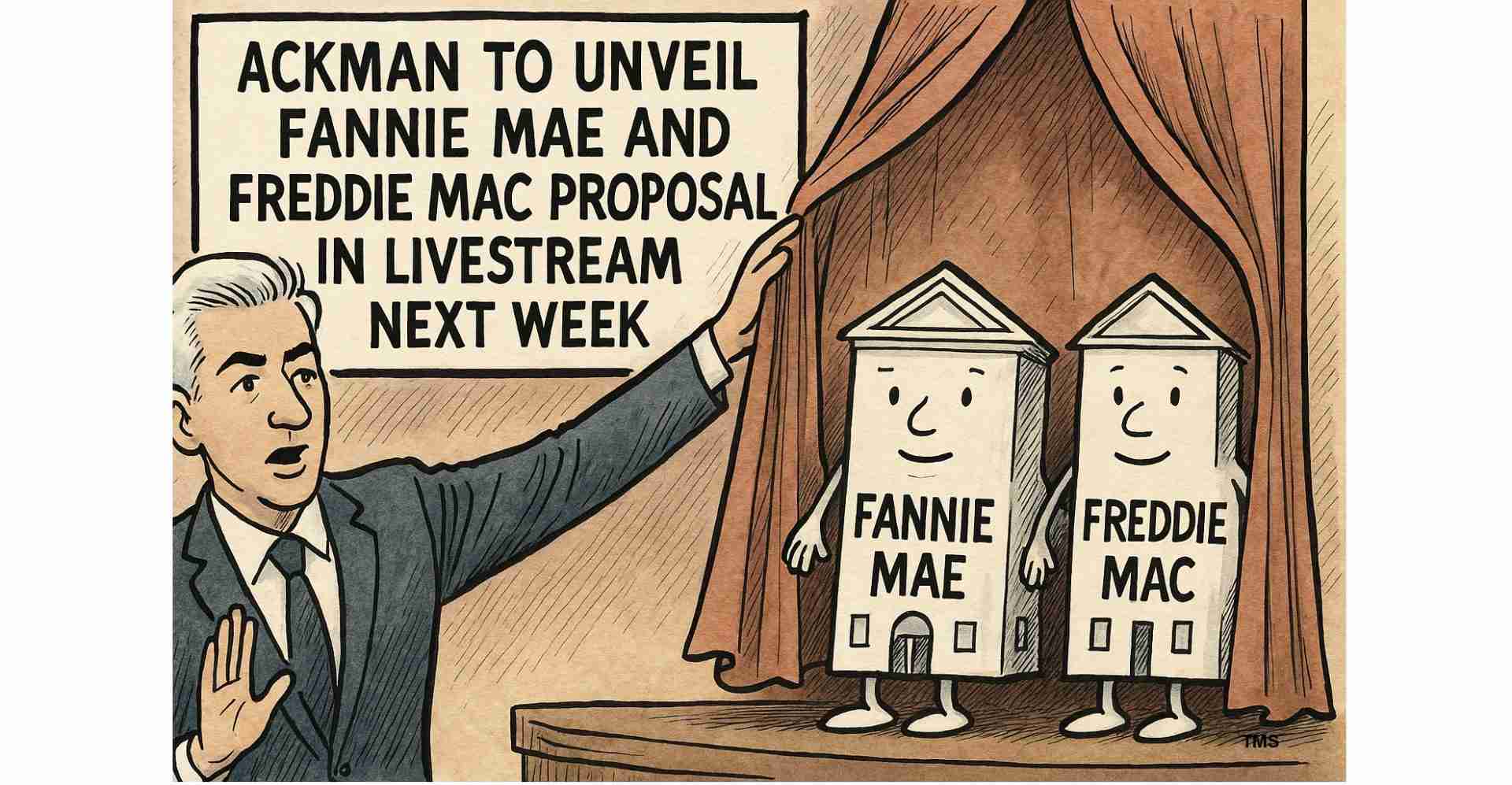
Bill Ackman to unveil Fannie Mae and Freddie Mac proposal in livestream next week, pushing privatization and possible merger
Billionaire hedge fund manager Bill Ackman will unveil a proposal next week in a livestream to merge and privatize Fannie Mae and Freddie Mac, aiming to reshape U.S. housing finance and potentially affect mortgage rates nationwide.
- Who: Pershing Square founder Bill Ackman will present a plan for the government-sponsored enterprises next week.
- What: The proposal centers on merging Fannie Mae and Freddie Mac into a single, privately held company and accelerating privatization toward a possible IPO.
- Why it matters: A merger or privatization could change mortgage costs, investor returns, and federal oversight of the housing finance system.
- Where to learn more: Background and regulatory context are available from Pershing Square and the Federal Housing Finance Agency.
Livestream announcement
Ackman said he will present details of a new Fannie Mae and Freddie Mac proposal during a social media livestream next week. The format suggests a direct pitch to investors, policymakers and the public and follows his prior public interest in reshaping the GSEs.
The livestream format appears designed to reach a wide audience of investors, policymakers and homeowners directly.
Proposal content: merger and privatization
Reporting compiled by Times Media Service indicates Ackman’s plan centers on merging Fannie Mae and Freddie Mac into a single, privately held company. He argues a merger could produce operational efficiencies, reduce duplication, and potentially lower mortgage costs by cutting expenses and simplifying oversight under the FHFA.
Privatization in the proposal means transitioning the GSEs from long-standing conservatorship back to private ownership, likely through public offerings. Supporters say privatization frees the market from heavy government management; critics warn it could raise risk for taxpayers and homeowners.
Privatization and IPO plans
Times Media Service reporting notes conversations about offering up to 15% of combined shares in a large IPO — a move that could raise tens of billions of dollars. Proponents view an IPO as a pathway back to private capital markets and reduced federal involvement; opponents caution that rapid capital-raising might prioritize investors over borrowers. Any IPO structure would require regulatory approval and depend on market conditions. (FHFA overview.)
Market impact: who wins and who pays
Advocates say a merged, efficient company could lower mortgage costs through scale and reduced duplication and could shrink a conservatorship line item on the federal balance sheet.
Critics — including some housing advocates and economists — warn privatization could increase average annual mortgage costs for households by hundreds or even thousands of dollars in some scenarios, due to private firms seeking higher returns and removal of certain public backstops. Policymakers will weigh these trade-offs.
Investment context: Pershing Square’s stake
Pershing Square, Ackman’s firm, holds large investments tied to Fannie Mae and Freddie Mac shares and related instruments. The surge in those securities has been a major contributor to the fund’s gains, increasing attention on Ackman’s proposal because changes to GSE structure would affect share values and investor returns. See Pershing Square investor materials for details.
Regulatory and political context
Fannie Mae and Freddie Mac have been under federal conservatorship since 2008, with the FHFA overseeing operations. Leadership shifts and increased scrutiny at the FHFA have added complexity to privatization talks. The timing of Ackman’s proposal aligns with Trump administration goals to reduce government control of housing finance, a political alignment that could affect regulators and lawmakers. Any major change will face legal review, potential litigation and Congressional oversight.
Background: Fannie Mae and Freddie Mac’s role
Fannie Mae and Freddie Mac were created to support mortgage lending by buying or guaranteeing loans so lenders can make new mortgages. Together they back a large portion of U.S. mortgages and help stabilize homeownership access. Both entered conservatorship in 2008 and have since returned profits to the Treasury while remaining under federal oversight. Privatization would reverse more than a decade of federal control and change how mortgage risk is shared between taxpayers and the private sector. (Fannie Mae; Freddie Mac.)
Market reaction and analyst views
Markets have responded strongly to privatization talk: shares and related securities tied to the GSEs have risen in recent months on hopes of a return to private ownership. Analysts are divided on long-term fair value for the companies’ shares; projections vary widely based on regulatory terms, capital structure and profitability assumptions. Some view Ackman’s proposal as a potential inflection point that could accelerate privatization; others say complexity and political stakes make rapid change unlikely.
Implications for San Luis Obispo, California
Economic impact: San Luis Obispo County’s mixed housing market could see ripple effects. Lower mortgage rates might improve affordability; higher rates could squeeze first-time buyers and lower-income households.
Local lenders and banks: Community banks and credit unions that sell loans into the secondary market could face changes in demand and pricing, potentially altering local loan availability.
Housing supply and development: Costlier or less certain mortgage funding could slow housing projects, including affordable units, putting pressure on local supply.
Political and social consequences: Local officials, civic groups and employers may weigh in if national policy shifts affect mortgage costs or housing access; changes can affect household budgets, commuting patterns and long-term residency decisions.
How local residents can prepare
- Monitor developments and the upcoming livestream for timing and detail.
- Homebuyers should consult lenders about rate locks; homeowners considering refinancing should compare current offers and timelines.
- Local advocates and officials can engage with state and federal representatives to express concerns or support for measures that protect affordability.
Sources and further reading
Reporting compiled from Times Media Service research and public filings and statements from the entities listed above.