Anti-ICE protesters storm Cities Church in St. Paul, chanting “Justice for Renee Good” as service is interrupted
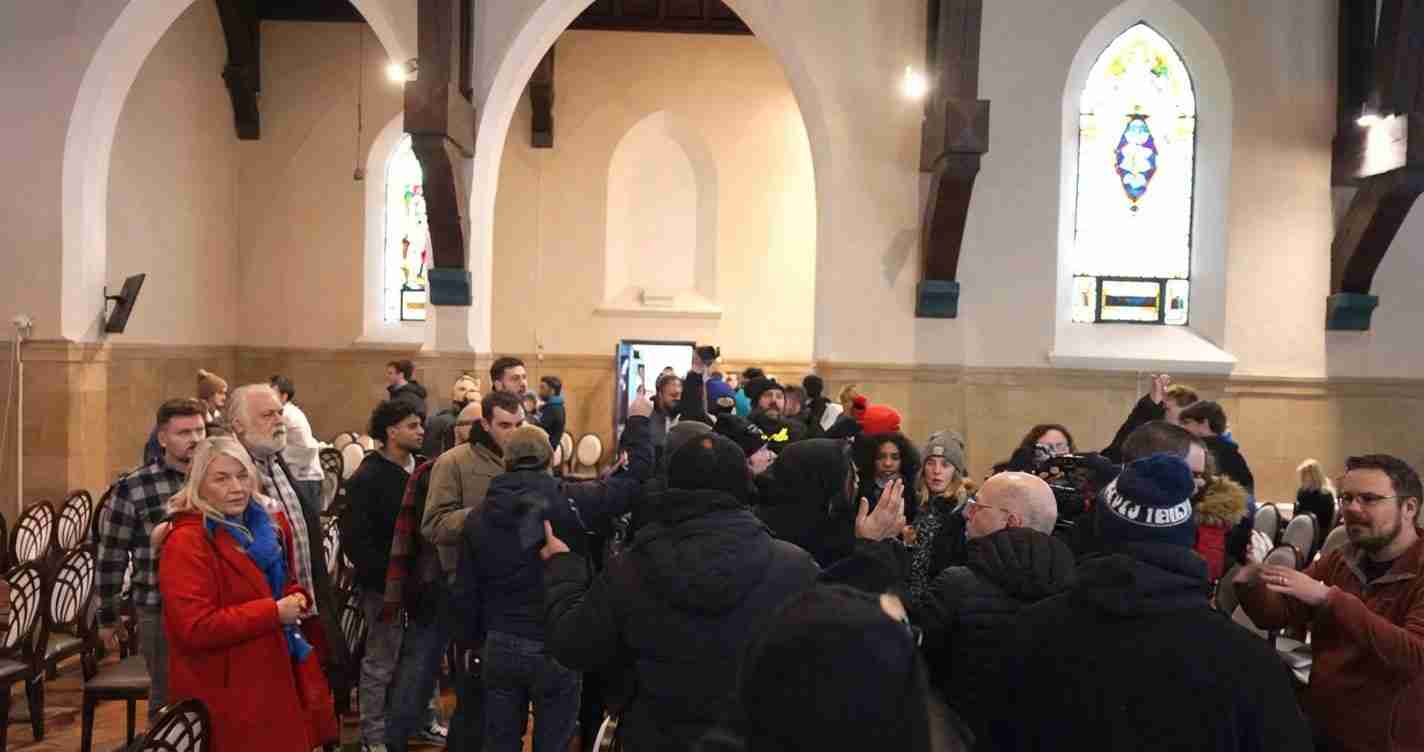
Anti-ICE protesters interrupted a Cities Church worship service in St. Paul on Jan. 18, 2026, chanting “Justice for Renee Good” after alleging a pastor had ties to ICE; that affiliation remains unconfirmed amid escalating Twin Cities protests.
Key takeaways
- Protesters entered a sanctuary: Demonstrators entered Cities Church as the service began and chanted “Justice for Renee Good.” A video of the disruption circulated online.
- Allegation unverified: Protesters said they believed a pastor had an ICE affiliation; public records and reporting did not confirm that claim at the time of publication (verification gap).
- Part of larger unrest: The incident follows weeks of protests after the Jan. 7 killing of Renee Good by an ICE agent, which has spurred demonstrations, legal actions and heated political debate.
What happened at Cities Church
Video footage shared online shows demonstrators entering the sanctuary of Cities Church in St. Paul as the service began. Protesters moved to the center of the room while a pastor spoke and chanted slogans including “Justice for Renee Good” and “Who needs justice, we need justice.” The footage includes a person filming who described the action as a “clandestine mission” and said the group believed a pastor at the church was connected to ICE. See the video clip circulating online.
At the time of this report there were no public statements from St. Paul police or Cities Church confirming arrests, injuries, the pastor’s identity, or any official ties to Immigration and Customs Enforcement. Local leaders and law enforcement have expressed concern about protesters targeting houses of worship amid rising tensions across the Twin Cities in the weeks after the shooting of Renee Good.
Background: the killing of Renee Good and the protests that followed
Renee Nicole Good, 37, was shot and killed by ICE agent Jonathan Ross on Jan. 7 during an operation near Portland Avenue in Minneapolis, according to multiple reports and timelines. The killing sparked large demonstrations and national debate; for an overview see the Wikipedia timeline and sources and reporting summarized by WUFT.
Federal officials, including DHS Secretary Kristi Noem and President Trump, described the agent’s actions as self-defense, saying the agent was threatened when Good drove her SUV toward agents; Noem called some actions “domestic terrorism.” Other officials and eyewitnesses disputed that account. Minneapolis Mayor Jacob Frey publicly criticized the federal narrative after reviewing video, and Minnesota Gov. Tim Walz said footage did not support federal claims. Local leaders and Democrats urged ICE to leave the city. Eyewitnesses and journalists described Good as a legal observer or bystander who had dropped her son at school shortly before the shooting.
“Her family’s lawyers — some who previously represented George Floyd’s relatives — have said they want Good remembered as ‘an agent of peace.’”
Escalating demonstrations and legal pushback
The killing set off weeks of large protests in the Twin Cities under slogans such as “ICE Out For Good.” Thousands rallied on Jan. 10–11 in Minneapolis and St. Paul, with dozens arrested and some officers reported injured; protests spread to other cities. On Jan. 12, Minnesota’s attorney general, Minneapolis, and St. Paul filed a lawsuit against DHS seeking to end ICE deployments in the state. State leaders also took symbolic and policy actions, including Gov. Walz proclaiming Jan. 9 “Renee Good Day” and lawmakers pursuing measures to limit cooperation with federal immigration enforcement.
Conflicting narratives and misinformation
The case produced a torrent of conflicting claims. Federal sources emphasized threats to agents and past incidents, while many local officials and witnesses criticized ICE tactics and questioned the agent’s account. Misinformation circulated quickly, including AI-generated images that complicated identification of the agent involved; see the OPB analysis about AI images spreading confusion.
Verification gaps and outstanding questions
Reporting and public records did not confirm whether a pastor at Cities Church had any official ICE affiliation. Police statements, church comment, or employment records confirming such a tie were not found in the reporting available to Times Media Service at publication. The environment of rapid, contested information appears to have helped fuel direct actions and unverified claims — including the allegation that led protesters to target a house of worship.
Implications for San Luis Obispo, California
Although the incident occurred in St. Paul, its ripple effects could reach San Luis Obispo in several ways:
- Economic impact: Tourism and local businesses could be affected if national tensions spur regional protests that deter visitors and events in a tourism-reliant area.
- Political consequences: Local debates in SLO may intensify over cooperation with federal immigration authorities, sanctuary policies, and balancing public safety with free expression.
- Social effects: Immigrant communities and faith groups could feel heightened concern and may organize legal clinics, mutual aid, or safety planning in response.
- Cultural relevance: Faith communities may reassess roles of pastors in political life and prepare guidance on protest response and worship safety.
Practical applications for residents
City officials, houses of worship and venues in San Luis Obispo are advised to review safety protocols for services and gatherings, including communications plans, points of contact with local police, and de-escalation training. Residents who wish to protest or support causes should coordinate with local organizers to ensure demonstrations are lawful and safe. Community members seeking reliable information should consult verified reporting and official statements rather than unvetted social posts or AI-generated imagery.
Sources and further reading
- Video of St. Paul church disruption
- WUFT: What we know one day after the killing of Renee Good by an ICE agent in Minneapolis
- Killing of Renee Good — Wikipedia timeline and sources
- ACLU action page related to protests
- OPB analysis: AI images of Minneapolis ICE agent spread confusion
- Boston Review commentary: Renee Good’s murder and other acts of terror