
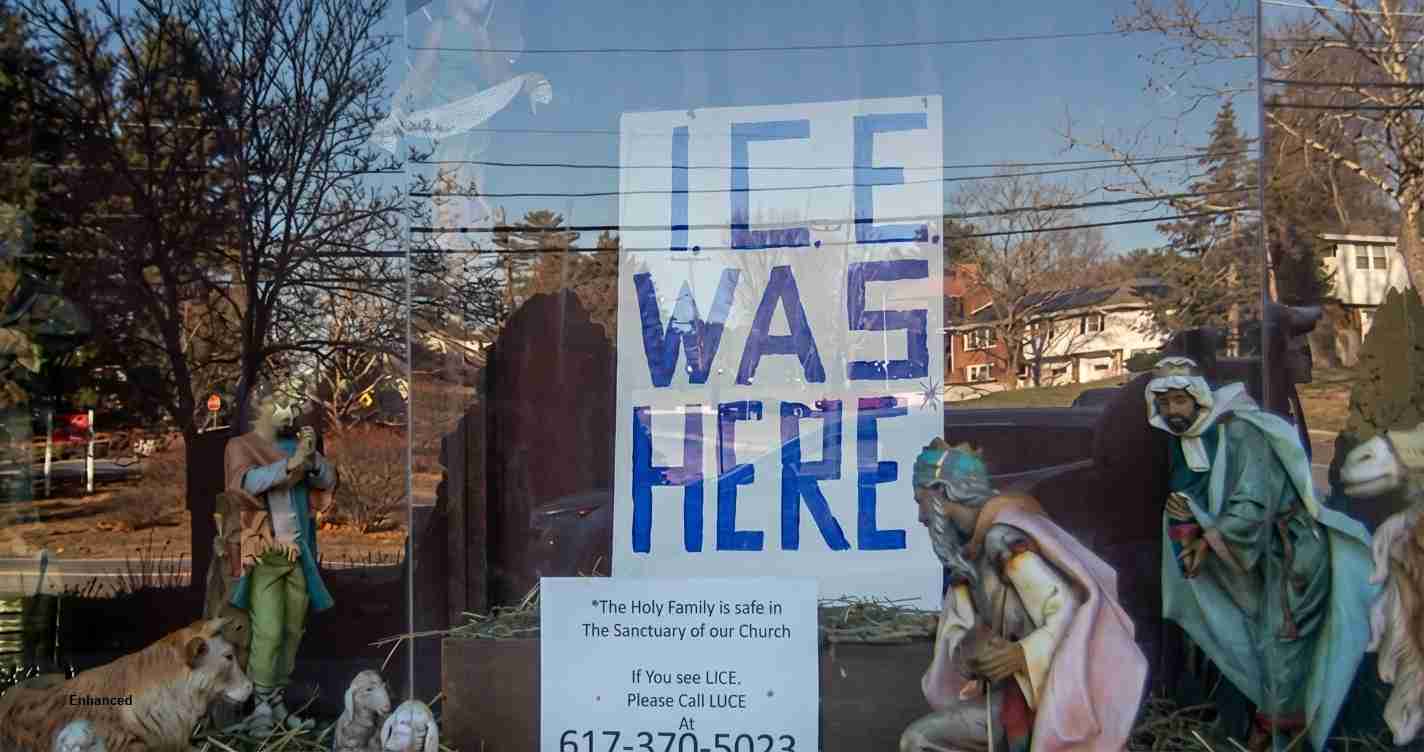
“ICE was here” Nativity at St. Susanna in Dedham Sparks Clash Between Parish, Archdiocese and ICE
At St. Susanna Parish in Dedham, a Nativity display replaced the Holy Family with a sign reading “ICE was here,” prompting criticism from the Archdiocese of Boston and ICE and a parish defense rooted in faith and social justice.
Key takeaways
- Empty manger, loud message: The Holy Family figures were removed and replaced by a placard reading “ICE was here.”
- Institutional clash: The CBS News–reported display drew a formal rebuke from the Archdiocese of Boston, which called it “politically divisive.”
- Parish stands firm: Pastor Fr. Stephen Josoma says the installation reflects the parish’s work with refugees and is intended as religious art to provoke reflection.
Key information
Location: St. Susanna Parish, Dedham, a Boston suburb. (Sources: CBS News, WBUR)
The display: Statues of Jesus, Mary and Joseph were removed and replaced with a sign reading “ICE was here” and a smaller sign directing people to LUCE Immigration Justice Network at 617-370-5023. (Sources: CBS News, The Independent, WBUR)
Reaction: The Archdiocese demanded removal as a “politically divisive display,” while Todd Lyons, Boston field office director for U.S. Immigration and Customs Enforcement (ICE), warned the scene fosters a “dangerous narrative.” (Sources: CBS News, WBUR)
What the display shows and why the parish says it matters
St. Susanna’s outdoor Nativity retains animals, shepherds and wise men, but the manger is intentionally empty. In its place stands a large placard that reads “ICE was here.” Beneath it is a smaller sign: “The Holy Family is safe in our Church … If you see ICE please call LUCE at 617‑370‑5023.” The message directs people to local monitoring and support for immigrants and asylum seekers. (Sources: CBS News; The Independent; WBUR)
“All art is supposed to move you.” — Fr. Stephen Josoma described the installation as religious art intended to provoke reflection after conversations with refugee and immigrant families.
Fr. Josoma says the display grew from parish work with families from Honduras, Guatemala and Afghanistan and from parishioners’ fears of deportation to violence or persecution. He characterized recent enforcement as “brutal” and stressed the crèche’s role in showing “the context Christmas is happening in this year.” (Sources: The Independent; WBUR)
St. Susanna’s history of political crèches
This is not the parish’s first politically framed Nativity. For more than a decade St. Susanna has tied the crèche to current events including gun violence, climate change and immigration. Notable prior installations: in 2017 the display listed U.S. mass‑shooting cities with death tolls; in 2018 it depicted baby Jesus in a cage and the wise men behind a wall to protest family‑separation policies — a display that drew national attention and criticism. (Sources: CBS News; WBUR; The Independent)
Archdiocese of Boston pushes back
The Archdiocese of Boston issued a formal statement calling the display a “politically divisive display” that “should be removed, and the manger restored to its proper sacred purpose.” The archdiocese emphasized that church grounds should offer “genuine opportunities for prayer and Catholic worship — not divisive political messaging.” Officials said St. Susanna did not request permission to alter the Nativity and cited norms barring the use of sacred objects for non-devotional purposes. (Sources: CBS News; WBUR)
Archdiocese spokesman Terrence Donilon reiterated U.S. Conference of Catholic Bishops’ teachings on humane treatment of migrants while acknowledging a nation’s right to control borders. The archdiocese framed its objection around venue for debate — arguing civic forums, not sacred symbols, are the proper place for contentious political messages. (Source: WBUR; CBS News)
ICE official says display endangers staff
Todd Lyons, director of ICE’s Boston field office, told media the signage contributes to a “dangerous narrative” that villainizes federal agents. Lyons argued conflating enforcement policy with the actions of front-line officers could erode public understanding of ICE’s legal role and increase risks to personnel. (Sources: CBS News; WBUR)
Supporters and critics in the community
Local reaction has been mixed. Some residents say a churchyard is not the right place for political messages; others praise the parish for standing with immigrants. C.J. Doyle, executive director of the Catholic Action League of Massachusetts, called the display “divisive,” “disrespectful” and “sacrilegious political theater,” labeling the pastor a “dissident priest.” Supporters counter that the parish critiques policy — not individual officers — and uses the Holy Family’s displacement to highlight present refugee struggles. (Sources: CBS News; The Independent; WBUR)
Parish decides to keep the display
After the archdiocese demanded removal, Fr. Josoma said the parish would discuss the issue at a scheduled meeting. Parish leaders later told WBUR they would keep the display, saying it aligns with their understanding of the Gospel call to protect migrants and refugees and is consistent with the parish’s history of tying the Nativity to humanitarian crises. (Source: WBUR)
Broader context: enforcement, faith and public debate
The dispute comes amid reported stepped‑up ICE operations and rising deportations under recent federal directives. St. Susanna’s resettlement and asylum aid work informs its concern that enforcement might return vulnerable people to dangerous conditions. The clash also highlights a wider tension in American Catholicism: bishops urge humane treatment of migrants but also caution against turning liturgical symbols into overtly political displays that could divide worshippers. (Sources: The Independent; WBUR)
Implications for San Luis Obispo, California
- Local faith communities: Parishes here may treat the Dedham dispute as a test case when weighing public advocacy versus pastoral unity.
- Public conversation: The display could sharpen local debate on immigration advocacy venues — houses of worship, civic forums or nonprofit action.
- Safety and relations: Local law enforcement and ICE agents may monitor national rhetoric for effects on community relations and officer safety.
- Political leaders: Elected officials in San Luis Obispo could be asked to respond if a similar display appears locally, balancing free expression, sacred spaces and humane policy concerns.
- Practical effects for immigrants: National attention on faith‑based advocacy might increase visibility for local support networks and inspire similar monitoring programs or hotlines.
Sources and further reading
- CBS Boston: “Dedham church replaces baby Jesus with sign reading ‘ICE was here’”
- WBUR: “Catholic parish in Dedham keeps ‘ICE was here’ sign in nativity display”
- The Independent: “Massachusetts church sign ‘ICE was here’ draws criticism”
Reporting note: This article compiles coverage from local and national outlets and quotes statements from the Archdiocese of Boston and ICE; source links above provide full reporting and context.
