Armadillo rising: A’s break ground on $1.75B Las Vegas ballpark as construction races toward 2028 opening
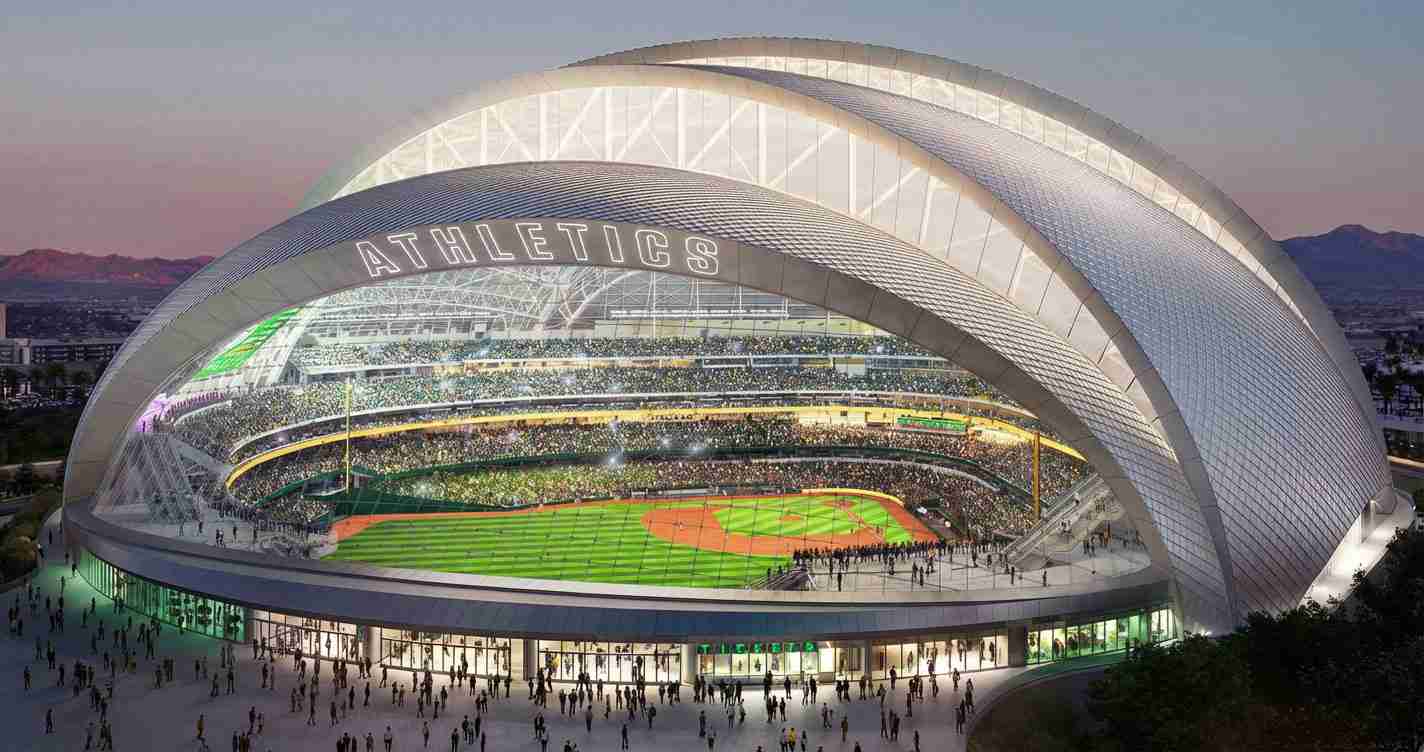
The Oakland Athletics broke ground on a $1.75 billion, Bjarke Ingels Group–designed “Armadillo” ballpark at Tropicana and Las Vegas Boulevard, a 33,000-seat, rapidly advancing project with public funding backing slated to open for the 2028 MLB season.
- Major milestone: Owner John Fisher and MLB Commissioner Rob Manfred joined a June 23 groundbreaking at the Tropicana site — ESPN.
- Design signature: Bjarke Ingels Group (BIG) and HNTB’s layered “Armadillo” concept features overlapping arches and a 36,000 sq ft cable-net glass wall — Dezeen.
- Fast schedule: Mortenson-McCarthy manages construction; team officials report rapid deck pours, buttress work and roof steel milestones aimed at a 2028 opening — Review-Journal.
- Public role: Nevada and Clark County approved up to $380 million in tax-credit-based incentives to support the project.
Groundbreaking day: ceremony and message
On the former Tropicana lot, the A’s staged a public ceremony that mixed celebration and salesmanship. Owner John Fisher declared, “We are Vegas’ team,” as crowds gathered around the marked home plate and construction equipment. MLB Commissioner Rob Manfred praised Las Vegas’ demographics and tourism market as reasons the franchise will prosper. Former players, Little Leaguers and local officials joined the event as the team framed the move as both a sporting and civic milestone.
Construction progress: what’s already done and what’s next
Rapid early work: Site grading began April 22, caisson drilling for foundations began May 13, and by late June crews had poured the first outfield deck and much of the lower concourse. Team updates say the second-level concourse has been poured from the third-base foul pole toward first base, with roughly half of the ballpark’s decks complete and 84% of seating planned between the foul poles to keep fans close to the action (Review-Journal).
Schedule milestones: Team president Marc Badain outlined a tight calendar: bowl steel work to start in March, five of six roof-supporting buttresses completed by the end of March with the sixth in spring, visible roof steel by June, and main frame erection through summer and early fall. Escalators were due to arrive within weeks of the groundbreaking and installation was slated to begin soon after (ESPN).
Stadium design and fan experience
The first baseball stadium from Bjarke Ingels Group (BIG) in collaboration with sports firm HNTB has been nicknamed the “Armadillo” for its layered, overlapping arches that evoke an armadillo shell and classic baseball pennants. The exterior will be clad in square metal panels and anchored by a 36,000-square-foot cable‑net glass wall — billed as the world’s largest — creating a distinctive presence along Las Vegas Boulevard (Dezeen).
Interior elements include domed lounges, broad concession areas, and a fixed roof that completes the silhouette. Designers emphasize intimacy — most seating between the foul poles — and modern fan amenities intended to work within the Strip’s entertainment ecosystem.
Funding, approvals and the public role
The $1.75 billion price tag includes up to $380 million in public support approved by Nevada and Clark County, structured through tax credits and a special district arrangement rather than a direct cash grant. The approvals followed SB1-related measures, zoning and lease agreements, and a final lease and non-relocation agreement signed in December before permits and grading approvals in April (Review-Journal; ESPN).
Investigative note: The tax‑mechanism structure shifts long‑term financial risk onto public entities if revenue projections fall short. Local watchdogs have flagged the size of incentives for a private sports venue; proponents stress potential tourism, job and tax benefits.
Construction management and schedule risks
Mortenson‑McCarthy’s joint venture is managing construction and pushing rapid early progress, but large projects face common risks: supply‑chain delays for steel and specialized materials, weather interruptions, labor disputes, and permitting holdups. The team’s publicly stated milestones — buttress completion, bowl steel start, roof steel visibility — will serve as clear indicators of whether the 2028 schedule holds (Review-Journal).
Team context and transition
After the A’s final season at Oakland Coliseum in 2024, the franchise is operating in a temporary arrangement in a West Sacramento Triple‑A park through the 2025–2027 seasons. The club has incorporated local and regional imagery into patches and marketing while positioning Las Vegas as its long‑term home. Commissioner Manfred cited tourism and demographic factors that make Las Vegas a viable MLB market (ESPN).
Surrounding development and wider site plans
The ballpark occupies a nine‑acre parcel of the larger Tropicana site — demolished in October — with potential for mixed‑use development and links to a 35‑acre redevelopment parcel that once planned a 3,005‑room Bally’s complex. The stadium is intended to act as an anchor that could spur hotels, retail and entertainment projects leveraging its Strip location (Dezeen; Review-Journal).
Implications for San Luis Obispo, California
Economic impact
San Luis Obispo’s tourism and hospitality sectors could see subtle shifts as some Northern California A’s fans travel to Las Vegas for games instead of local outings. Local businesses that previously served Oakland‑based fans may need to adapt, while tour operators and hospitality providers might create packages aimed at visiting baseball spectators (ESPN; Review-Journal).
Political consequences
Local leaders in San Luis Obispo observing the A’s move may face renewed debate over public financing for sports venues. Nevada’s use of tax credits and special districts to attract the franchise provides a model that could reappear in California policy discussions, potentially influencing voter and council decisions on subsidies and stadium upgrades (Review-Journal).
Social and community effects
Youth baseball programs and Little Leagues in San Luis Obispo may see regional pathways shift as the A’s emphasize youth engagement in Las Vegas. Fans who once saw the A’s as a nearby major‑league presence will travel farther, potentially increasing attendance at other Bay Area or Los Angeles games and encouraging stronger support for college and high school baseball locally (ESPN).
Cultural relevance
The A’s departure removes a historic Bay Area brand from Northern California’s pro sports map, a cultural loss for longtime fans in San Luis Obispo. The move also highlights intercity competition for sports and entertainment investment, which local arts, sports and civic groups may respond to by emphasizing homegrown teams and events.
Practical applications for residents
- Travel: Fans should plan for longer trips and lodging in Las Vegas; local travel businesses could develop packaged trips to capture that demand (ESPN).
- Economy: Small businesses tied to Bay Area sports tourism may need new marketing strategies; other firms could explore opportunities serving traveling fans (Review-Journal).
- Policy: Citizens should monitor how Nevada used tax credits and special districts, since similar financing approaches could surface in California discussions (Review-Journal).
Sources and reporting
This article draws on reporting and public statements from:
- ESPN: Athletics celebrate groundbreaking for $1.75B Vegas stadium
- Dezeen: BIG’s “Armadillo” stadium for the Athletics breaks ground in Las Vegas
- Las Vegas Review-Journal: A’s Las Vegas ballpark timeline and approvals
Reporting notes: Project filings, team statements and local officials’ comments supplemented news coverage to preserve timelines, design details and funding structures described above.