Austin police, DPS troopers charge into anti‑ICE crowd; pepper balls fired, multiple detained after march from J.J. Pickle federal building
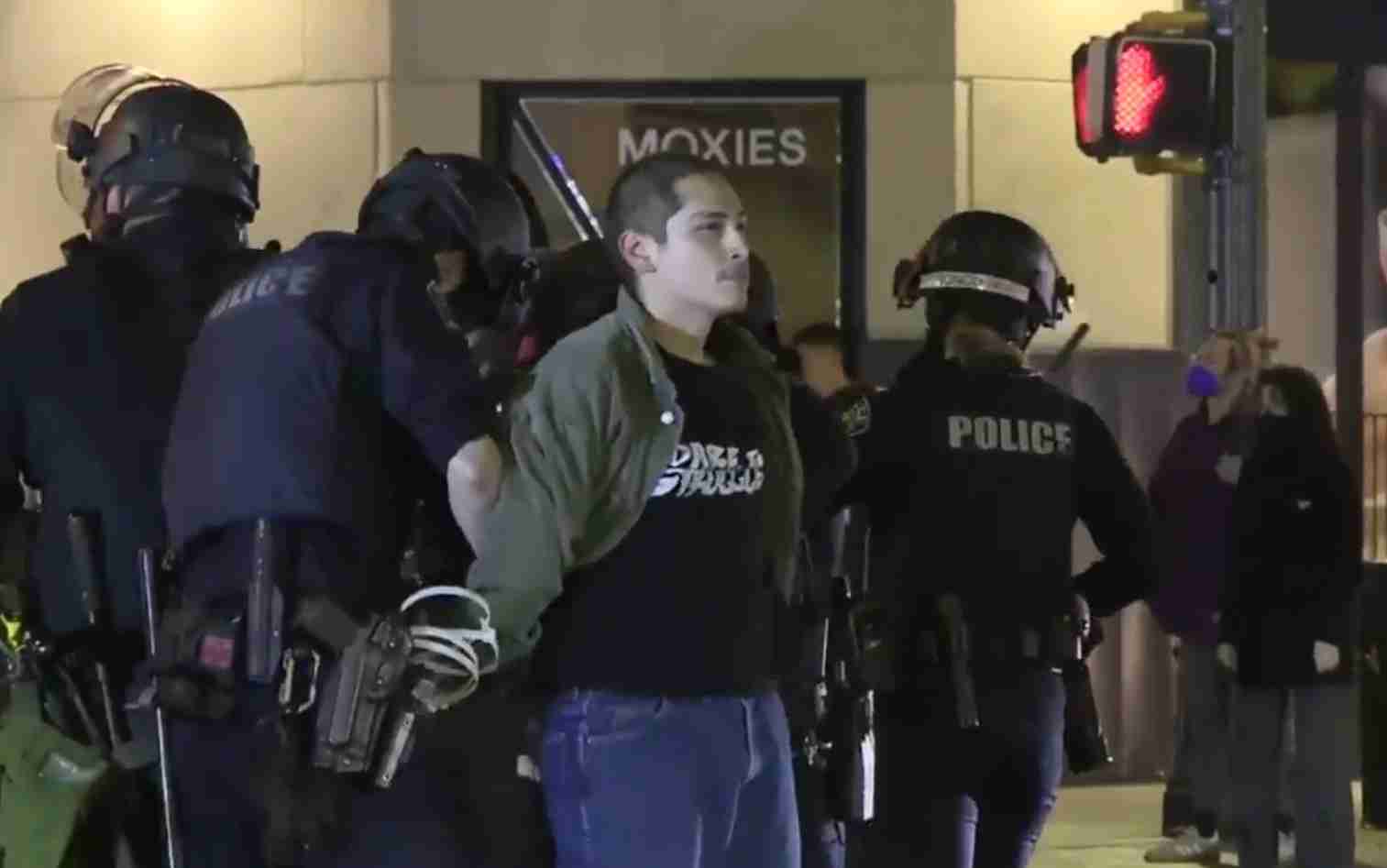
Austin police and Texas Department of Public Safety troopers dispersed anti‑ICE protesters downtown Saturday night, deploying pepper balls and detaining multiple people after demonstrators blocked intersections following a march from the J.J. Pickle Federal Building.
Key takeaways
- When and where: About 8 p.m. Saturday near South Congress Ave. and East 6th St.
- Tactics used: Officers on bicycles charged into the crowd while troopers and officers deployed pepper balls or other nonlethal rounds, witnesses said (News4 San Antonio).
- Arrests: Multiple detentions reported; organizer and APD figures differ, with claims of at least five to seven arrests (CBS Austin, KUT).
What happened
Organizers and local outlets described the evening action as part of a broader day of demonstrations billed “End ICE Terror.” Demonstrators gathered at the J.J. Pickle Federal Building at 300 E. 8th St. around 6:30 p.m. and marched through downtown, stopping to call for an end to ICE operations in Austin and accountability following the killing of Renee Nicole Good.
Attendance estimates varied: roughly 400 people rallied at City Hall earlier in the day, and more than 100 people joined the evening action outside the federal building, according to local reports.
Tensions built as demonstrators intermittently blocked roadways, including the intersection of South Congress and East 6th. After about ten minutes of blocked traffic, officers moved in and charged into the gathered crowd; video and witness accounts show officers advancing on bicycles and physically detaining some people.
Police response and crowd‑control tactics
Multiple outlets reported that Texas Department of Public Safety troopers fired rounds witnesses described as pepper balls or other nonlethal projectiles. The Austin Police Department confirmed pepper balls were used but told KUT it was unclear whether APD or DPS fired the rounds.
Organizers’ reaction: Members of the activist group Dare to Struggle Austin called the police action “brutal,” describing officers charging the crowd with bicycles and deploying pepper balls and other nonlethal rounds. One demonstrator told News4 San Antonio the force felt excessive.
Arrests and detention numbers
Local reports differ on exact counts. Dare to Struggle Austin said at least seven people were arrested, including one person allegedly detained while walking to their car. The Austin Police Department told KUT at least five people were arrested Saturday night and that more accurate numbers would be released after processing; CBS Austin reported officers expected to release updated figures later.
Organizers demanded the release of those detained and urged prosecutors to drop charges. Dare to Struggle Austin also called for murder charges against ICE officer Jonathan Ross and for accountability for officers they say used excessive force.
Voices on the ground
Protesters chanted for justice for Renee Good and urged ICE to leave Austin. Witnesses said the crowd repeatedly blocked streets during the march and that officers followed the route closely. Multiple participants said the presence of state troopers alongside local police escalated tensions. Federal officers reportedly warned media the situation could get “spicy” if protesters remained in the street, according to local coverage.
Officials’ statements and political reaction
Gov. Greg Abbott posted video from the scene and wrote on social media, “Texas is not Minnesota,” arguing the Texas Department of Public Safety would not tolerate defiant protesters. In a statement to CBS Austin, Abbott linked the Minneapolis shooting to what he called “reckless and dangerous rhetoric” and said law enforcement have the right to defend themselves.
“We support and respect the public’s First Amendment right to peacefully assemble and express their views, but violence, threats to the public or law enforcement, obstruction of roadways, and damage to property will not be tolerated.”
— Lt. Chris Olivarez, a DPS spokesperson, as reported by local outlets. APD confirmed DPS troopers were on scene with APD and said pepper balls were deployed to disperse demonstrators, though agency responsibility for specific shots remained under review (CBS Austin, KUT).
Context and scale
KUT reported this was at least the third straight day of anti‑ICE protests in Austin following the killing of Renee Good. The day’s demonstrations included a morning rally at City Hall with roughly 400 people and the later “End ICE Terror” action outside the federal building with more than 100 attendees. The protests reflect a national outcry and local demands to change or remove ICE activity in Austin (KUT).
Implications for San Luis Obispo, California
Economic impact: Local businesses and tourism in San Luis Obispo could be affected if regional or national protests grow or inspire similar actions. Downtown demonstrations that block traffic or produce detentions can disrupt evening commerce, delivery routes and customer access. Local leaders and business owners should review event plans and emergency communication protocols with city and county law enforcement to limit lost revenue.
Political consequences: Moderately aligned voters in SLO may frame the Austin response as a public‑safety issue or a civil‑liberties concern. State law enforcement involvement in crowd control can intensify debates about state vs. local control of policing.
Social and cultural effects: Campus and civic groups in SLO may organize vigils, rallies or solidarity events in response. Community organizers should coordinate with police early to plan safe assemblies and routes that avoid disrupting downtown commerce.
Practical applications for residents
- Monitor city and county alerts during large gatherings and follow guidance from local police.
- Event organizers should use permits and provide advance notification to reduce confrontation risk.
- Civic groups planning demonstrations should designate marshals, communicate routes, and provide clear instructions to participants to avoid blocking critical intersections.
- Lawmakers and community groups might hold local forums to discuss crowd‑control tactics, nonlethal tools, and protections for peaceful assembly.
Sources and reporting notes
This article draws on local news reporting from: CBS Austin, CBS Austin (follow-up), News4 San Antonio, Fox San Antonio, KUT, and FOX7 Austin.
Journalists on scene reported that exact arrest totals and agency responsibility for specific actions were still being confirmed by the Austin Police Department and DPS at the time of reporting; APD expected to provide more accurate numbers after processing detainees (CBS Austin, KUT).