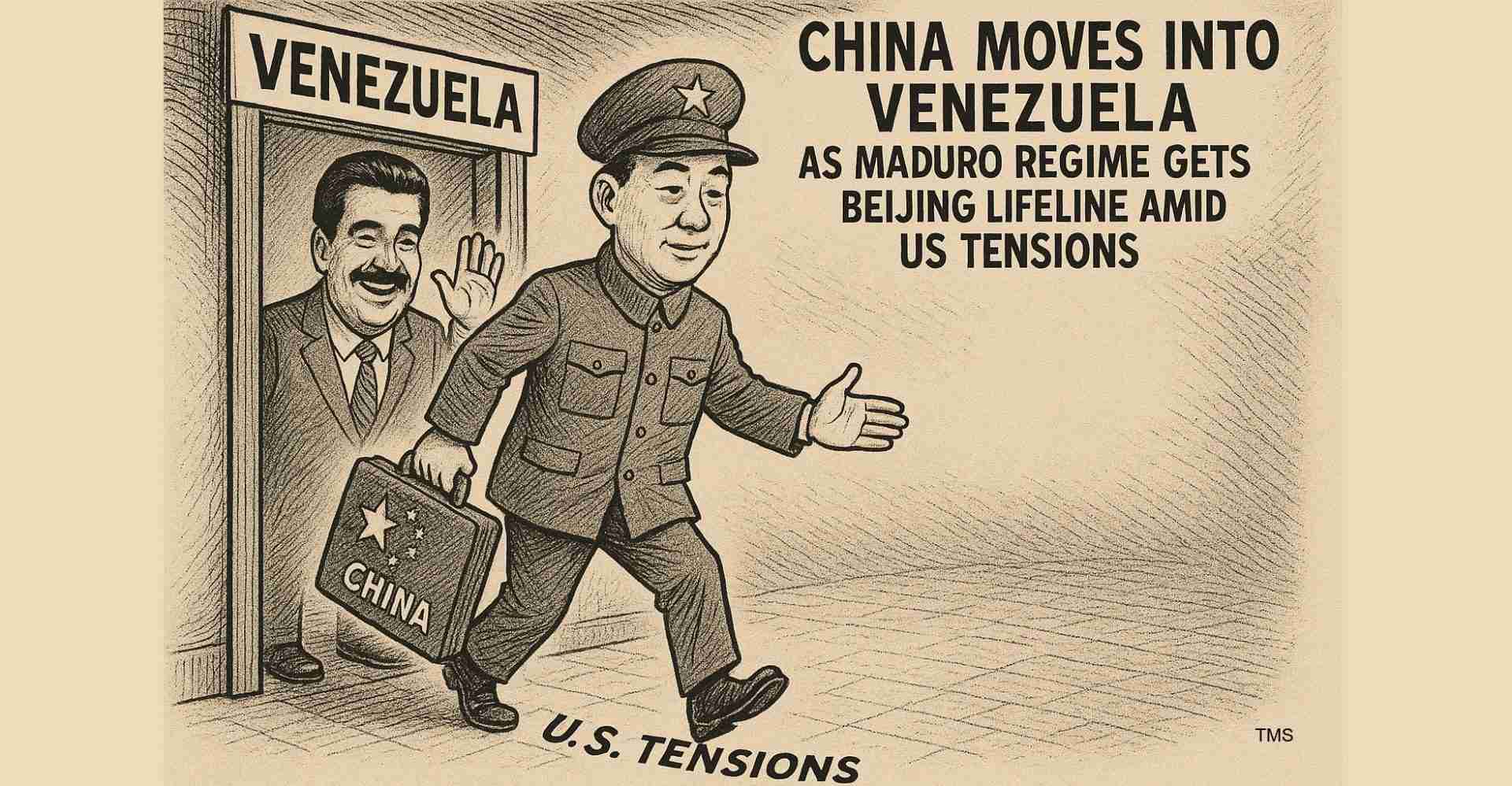
China deepens ties with Maduro as Beijing offers a lifeline amid U.S. tensions, raising questions about control of Venezuela’s economy
China has deepened economic and strategic ties with Nicolás Maduro’s Venezuela, offering trade, investment and legal tools that bolster Caracas amid US tensions — emphasizing joint ventures, SEZs and trade deals over large new cash loans.
Key takeaways
- Strategic upgrade: Beijing and Caracas formalized an “all-weather strategic partnership” in 2023, expanding institutional exchanges and diplomatic cover for the Maduro government via official statements from the China International Development Cooperation Agency and the Ministry of Foreign Affairs of the PRC.
- Debt and trade leverage: China is Latin America’s largest creditor to Venezuela (lending estimated at >$60 billion), but engagement now favors productive deals, SEZs and trade growth over new large-scale oil-backed loans (Global Policy Journal; Council on Foreign Relations).
- Trade surge: Venezuelan exports to China doubled between Sept. 2024 and Sept. 2025 while imports from China also climbed sharply, according to the Observatory of Economic Complexity.
- Limits and risks: Analysts caution China’s approach is significant but selective, constrained by sanctions risk, weak Venezuelan institutions and past project setbacks (El País).
Main content
Comprehensive partnership and political alliance
China and Venezuela have moved beyond transactional ties toward a closer strategic alignment. Beijing publicly labels the relationship “all-weather” and emphasizes mutual respect for sovereignty, while Caracas positions China as a long-term partner. These developments are reflected in increased diplomatic support for the Maduro regime, deeper institutional links, and exchanges between Communist Party of China delegations and Venezuelan officials (China International Development Cooperation Agency; Ministry of Foreign Affairs of the PRC).
Trade and economic engagement
China is now Venezuela’s largest economic partner in the region. Chinese lending since the early 2000s is estimated at more than $60 billion, much of it historically collateralized by future oil shipments (Global Policy Journal; Council on Foreign Relations).
Trade flows have surged: Venezuelan exports to China doubled between September 2024 and September 2025, while imports from China also rose substantially, highlighting a deepening commercial relationship (Observatory of Economic Complexity).
Productive agreements over direct loans
Chinese policy has shifted from the earlier model of large, state-backed oil loans toward *productive* arrangements: joint ventures, acquisitions, and special economic zones (SEZs). These SEZs offer tax incentives and operational flexibility to participating Chinese firms, and are promoted as means to generate manufacturing, logistics and jobs in Venezuela rather than simply providing liquidity (El País).
Legal instruments and trade deals
Two legal moves have strengthened the framework for Chinese investment: a China‑Venezuela Bilateral Investment Treaty (BIT) that entered into force in April 2025 and a Chinese announcement of a zero-tariff trade arrangement at the 2025 Shanghai Expo — intended to boost Venezuelan market access in China and signal commitment despite Western sanctions (Fietta Law; Fox News).
Oil sector: cautious engagement
Despite a history of oil‑backed finance, Chinese actors are cautious about large new purchases of Venezuelan oil fields. Operational difficulties, sanctions risk, and alternative opportunities in the region (for instance nearby Guyana) have reduced appetite for big upstream bets. Instead, Chinese firms often pursue service contracts, equipment sales, and indirect arrangements tied to trade and logistics (El País).
Geopolitical context: a counterweight to U.S. influence
Chinese leaders frame the Venezuela relationship as part of a broader Latin America engagement strategy, offering an alternative to what Beijing calls unilateral Western pressure. For Caracas, Beijing’s support creates diplomatic options and economic pathways around U.S.-led isolation. The result is a geopolitical triangle: Washington maintaining sanctions and pressure; Beijing extending support and investment; Caracas trying to balance both to ensure regime survival (El País; Global Policy Journal).
Voices and warnings
“This really looks like China is going to completely take over the Venezuelan economy,” Gordon Chang warned — a perspective echoed in conservative outlets. Yet many analysts urge nuance: while China holds leverage via debt and trade, it is acting more cautiously than some portray (Fox News; El País; CounterPunch).
Notable limitations and risks
China’s role is substantial but bounded. Weak Venezuelan governance, project execution problems, repayment delays, sanctions exposure and corruption risks all temper Beijing’s willingness to provide open‑ended budget support. Capital flows are increasingly channeled into trade‑related investments and joint ventures rather than broad fiscal bailouts (El País).
Implications for San Luis Obispo, California
While the China‑Venezuela relationship plays out on the global stage, it has indirect local consequences for places like San Luis Obispo County.
Economic impact
- Supply chains: Local businesses that import goods or parts from China may see steadier flows if Beijing expands trade routes and logistics ties across the Americas (Observatory of Economic Complexity).
- Agriculture and food: Farmers and food distributors could face indirect competitive pressures if Latin American production patterns shift under new SEZ-driven schemes (El País).
Political consequences
US-China-Venezuela tensions influence federal policy debates that matter to California. San Luis Obispo residents interested in national security or trade may see increased attention from representatives on export controls, port security and related federal measures (Council on Foreign Relations).
Social effects
The county’s ties to Latin America through migration and family networks mean that coverage of foreign partnerships can affect local narratives about migration, opportunity and economic drivers that push people to relocate (El País).
Cultural relevance
Universities and cultural organizations in San Luis Obispo may encounter new exchange opportunities or tensions tied to China-Latin America programs, including visiting scholars, business delegations and student programs in energy, agriculture and trade law (China International Development Cooperation Agency; Fietta Law).
Practical applications for residents
- Businesses: Monitor supply-chain shifts and tariff changes that could affect sourcing and pricing (Fox News; Observatory of Economic Complexity).
- Port and logistics planners: Watch for indirect impacts from changing shipping routes and expanded Chinese economic activity in the Americas (Council on Foreign Relations).
- Civic engagement: Press elected officials for clarity on how federal responses to these ties could affect local jobs, security and trade.
Bottom line: The China‑Venezuela partnership strengthens Caracas politically and commercially while revealing both leverage and limits in Beijing’s approach. For San Luis Obispo, effects will be indirect but worth monitoring across trade, policy and community conversations (El País; Global Policy Journal).