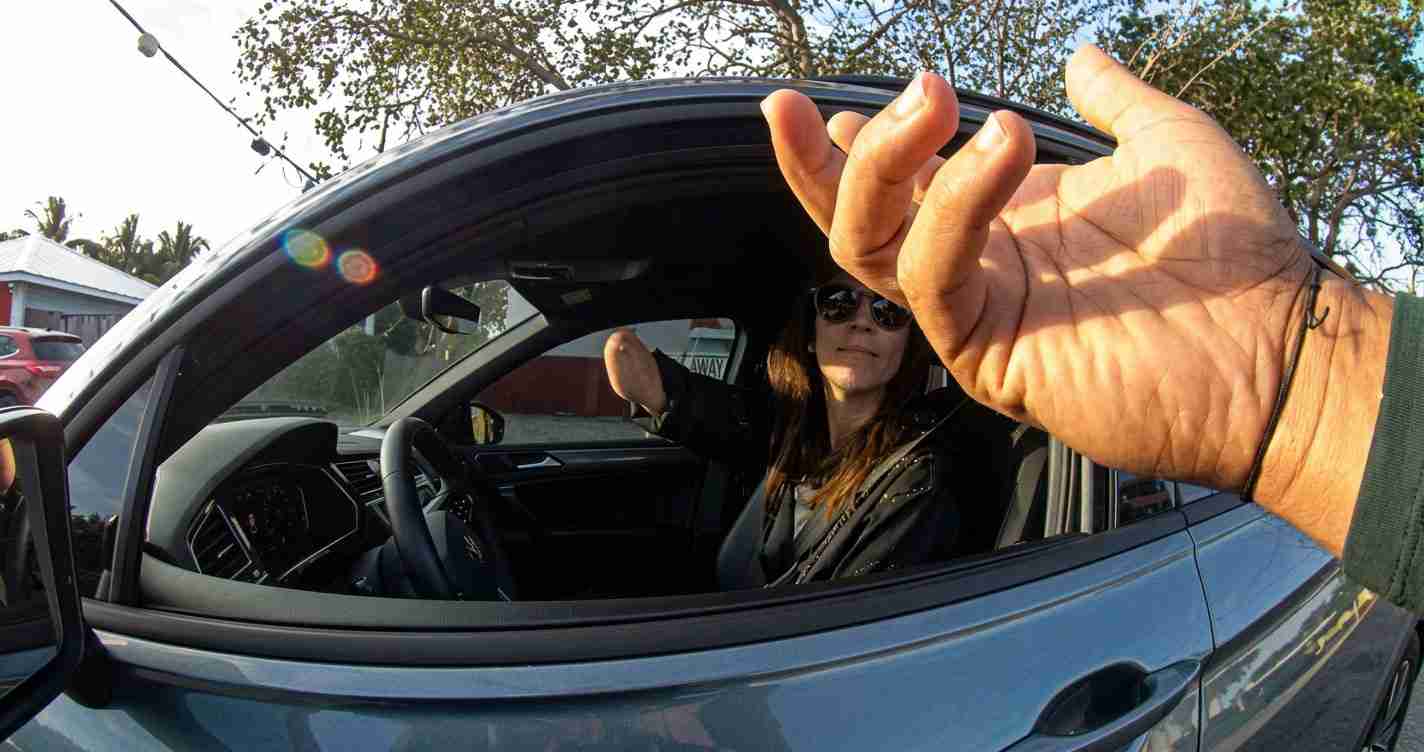
Viral bodycam: deputy insists woman held phone in right hand — she was born without one; citation later dismissed
Lede: A viral bodycam video from Lake Worth Beach shows a Palm Beach County deputy citing Kathleen Thomas on Feb. 11 for allegedly holding a phone in her right hand — despite Thomas being born without one; the citation was later dismissed.
- Officer issued a $116 citation under Florida Statute 316.305, later dismissed at the deputy’s request.
- Bodycam footage captured the exchange in which Thomas demonstrated she has no right hand, prompting widespread online criticism.
- Legal nuance: Florida law targets manual typing for non‑voice communications; merely holding a phone outside specific zones is less clearly prohibited.
- Local implications: The episode has sparked discussion about training, citation software, disability awareness, and public trust — including potential relevance for San Luis Obispo policy debates.
What the video shows
Body-worn camera footage released by local outlets records the traffic stop on North Dixie Highway in Lake Worth Beach on Feb. 11. The deputy told driver Kathleen “Katie” Thomas she was part of an operation for distracted driving and that he saw her “holding the phone with your right hand manipulating that phone.”
Thomas responded by lifting her right limb — which ends below the elbow — and saying, “So obviously not.” She asked, “So you want to just call this a day or…?” The deputy persisted:
“I don’t want to call a day. You had a hand up manipulating.”
He later said, “With the right hand, perhaps not,” but completed a citation labeled “Wireless Comm. Device/Handheld While Driving – First Offense.”
Watch the bodycam video and the full bodycam footage released online for the complete exchange.
Legal basis and why the charge was dismissed
Thomas was cited under Florida statute 316.305, which addresses wireless communications while driving, particularly manually typing or entering multiple letters, numbers, or symbols for non‑voice communications. Legal analysts told reporters that merely holding a phone — outside school or active work zones — is generally not the basis for a handheld ban.
Palm Beach County Sheriff’s Office spokespeople said the department reviewed the statutes and the “totality of the circumstances,” including differences between 316.305 and 316.306, and found ambiguity in how the violation was recorded in citation software. As a result, the deputy requested the charge be dismissed before a hearing.
Why the stop drew online criticism
After Thomas posted clips on TikTok and media outlets published the full footage, the clip spread widely. Critics focused on several concerns:
- Officer discretion: Should a stop be reconsidered when on‑scene evidence contradicts an officer’s observation?
- Statutory confusion: Citation labels and software can sow confusion about what the law actually bans.
- Bodycam transparency: The footage highlighted the role of cameras in allowing public review of stops and officer judgments.
Reporting and video were provided by CBS12 and KATV.
Status of the deputy and the case
Media coverage shows the citation was a $116 civil penalty and that the charge was dismissed at the deputy’s request. The deputy’s name has not been widely published, and there is no public record of internal discipline beyond the withdrawal of the charge. Coverage emphasizes the dismissal and the viral reaction rather than departmental personnel actions.
Public reaction and implications for San Luis Obispo, California
Though the stop occurred in Florida, the episode carries local lessons for San Luis Obispo County officials and residents. Key areas of potential impact include:
Economic impact
- Law enforcement costs: Dismissed citations consume staff time and paperwork, affecting budgets in smaller municipalities that rely on traffic fines for safety programs.
- Public trust and tourism: Viral incidents can shape perceptions; local businesses reliant on visitors may be sensitive to stories about perceived enforcement errors.
Political consequences
- Calls for audits of citation software, clearer statutory training, and oversight may surface at city or county meetings.
- Local candidates could use similar incidents as campaign issues, either advocating for stronger civilian oversight or better training and resources for law enforcement.
Social effects and cultural relevance
- Community trust: Stops perceived as unjust can erode confidence in local policing, particularly among vulnerable populations.
- Disability awareness: The case highlights the need for sensitivity training and protocols when officers encounter visible disabilities.
- Transparency: Body cameras play a central role in public review; communities may press for timely release policies.
Practical applications for residents
Residents in San Luis Obispo and elsewhere can take concrete steps:
- Know local law: California’s rules on cellphone use differ from Florida’s; follow hands-free and state-specific regulations.
- Document encounters: If cited unfairly, collect dashcam or phone video, witness information, and keep the citation to contest it.
- Engage officials: Attend public meetings, ask about citation software, training, and bodycam release policies to push for clarity and accountability.
Sources and footage
Reporting compiled from CBS12 reporting and video, KATV coverage, and the full bodycam footage and edited bodycam video.
For statutory detail, see Florida statute 316.305 and Florida statute 316.306.
Reporting sources: Times Media Service, CBS12, KATV, and public bodycam footage.