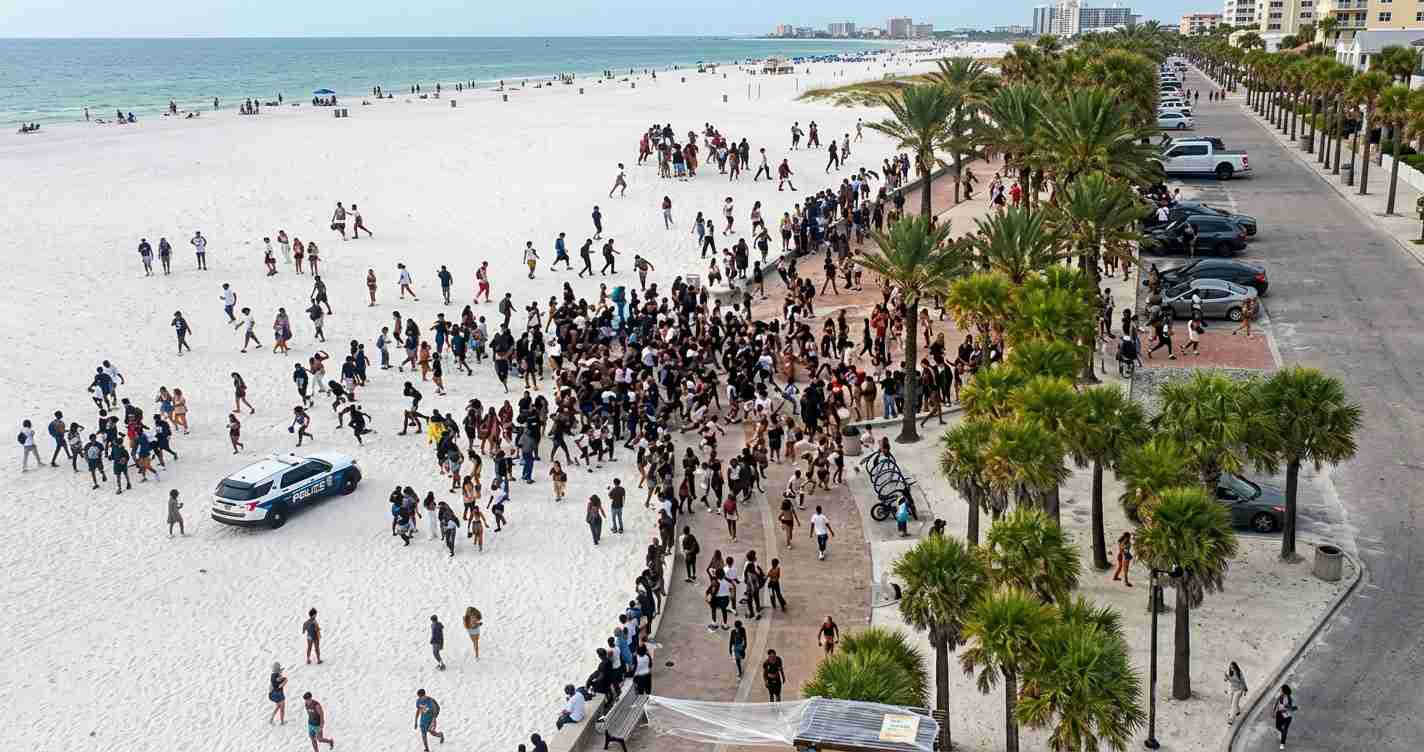
Florida police use real-time monitoring to stop planned pier “teen takeover” before it begins
St. Augustine Beach police used real-time social monitoring to identify and cancel a planned “teen takeover” at the city pier, pre-positioning officers and posting a clear “Canceled” warning online; no arrests or violence were reported ahead of the scheduled meeting.
- Event prevented: A planned Thursday 2 p.m. “teen takeover” at the St. Augustine Beach pier was flagged online and stopped before it began; police reposted the flyer with a large “Canceled” banner. (Fox News)
- How it was detected: The St. Johns County ARTIC real‑time intelligence center scanned social media and tipped off local police days in advance. (Fox News)
- Outcome and resources: Officers were pre‑positioned, cancellation messaging was pushed on social media, and there were no arrests or reported violence — but the response strained the small department’s resources. (Fox News)
- Broader context: The case reflects a national trend of policing viral youth gatherings with social monitoring, mutual‑aid coordination, and deterrent public messaging. (ABC News)
How police found the planned takeover
Regional intelligence played the central role. Chief Daniel Carswell credited the St. Johns County ARTIC — the Real‑Time Intelligence Center — which scans social media and other online sources “constantly” for threats and flagged the promotional flyer and online chatter days before the scheduled time. That lead time allowed the small department to prepare and to post a clear warning that the gathering was unsanctioned. (Fox News)
How the event was shut down
After ARTIC flagged the flyer, St. Augustine Beach police reposted the promotional image with a prominent “Canceled” banner and repeated messages that the event was not sanctioned. Chief Carswell warned that anyone who showed up “with the intent to cause chaos or causing disruption” would face “zero tolerance.” Officers were added to the pier area for the scheduled time; because the force is roughly 25 sworn officers, the response required calling staff in on days off and coordinating with neighboring agencies in case mutual aid was needed. Carswell described the effort as “a complete drain” on local resources. (Fox News)
Why police say teen takeovers are risky
Agencies call “teen takeovers” unpredictable: they are often organized online without permits or adult supervision and can swell from a few dozen to several hundred attendees. That uncertainty complicates staffing and safety planning for small departments. Officers point to incidents where takeovers escalated — for example, a May 2026 Curtis Hixon Park takeover in Tampa resulted in 22 arrests and the recovery of firearms, with charges ranging from affray to unlawful possession of a weapon. (CBS12)
National trend and policing responses
St. Augustine Beach’s approach reflects broader practices now common among law enforcement:
- Monitoring social media for flyers, hashtags, and posts promoting takeovers. (Fox News)
- Coordinating multi‑agency responses before potential events. (ABC News)
- Pre‑positioning patrols and using public messaging to deter attendance. (ABC News)
Some cities combine enforcement with alternatives: Tampa police and community groups organized “Takeover with a Purpose” events and Midnight Basketball to offer supervised options and reduce the appeal of unsanctioned gatherings. Youth‑justice experts emphasize that group gatherings are not inherently dangerous and can be made safer with planning and supervision rather than only suppression. (ABC News)
Resource strains on small departments
A preventive response still demands personnel: Carswell said unpredictability forces small departments to call in officers on days off or request help from nearby agencies, reducing patrols elsewhere. The department’s public messaging — reposting flyers marked “Canceled” and promising zero tolerance — aims to deter attendance and avoid physical confrontation before staffing becomes insufficient. (Fox News)
Legal and safety context
Jurisdictions have used tools such as curfew zones, disorderly conduct statutes, and mutual‑aid agreements when takeovers turn disorderly. For example, Washington, D.C. established juvenile curfew zones at night after similar patterns emerged. Civil‑rights and youth‑justice advocates caution that enforcement can risk criminalizing normal teen behavior and recommend pairing prevention with safe, supervised alternatives. (ABC News)
Reporting and sources
This account draws on statements from St. Augustine Beach Police Chief Daniel Carswell and reporting from local and national outlets. Key sources include coverage by Fox News Digital, a broader analysis by ABC News, local reporting on the Tampa incident by CBS12, and regional television reports. (regional television report 1; regional television report 2)
Implications for San Luis Obispo
Economic: San Luis Obispo’s tourism‑dependent economy could be harmed if an unsanctioned, disorderly gathering scared visitors or disrupted downtown activity. Early detection and fast public messaging — as used in St. Augustine via ARTIC monitoring — can reduce economic risk and reassure tourists and residents. (Fox News)
Political: Moderate local electorates often favor pragmatic solutions. The St. Augustine case shows tech-enabled prevention and interagency coordination can limit disorder without mass arrests, but officials will need to balance public‑safety measures with civil‑liberties concerns. Policies combining prevention and community alternatives may reduce political friction. (ABC News)
Social and cultural: Heavy‑handed enforcement risks alienating youth. San Luis Obispo leaders should consider outreach, supervised alternatives, and communication strategies that respect young people’s social life while prioritizing safety.
Practical applications for local agencies
- Strengthen monitoring: Consider partnerships with county or regional intelligence units for real‑time social media monitoring. (Fox News)
- Prepare messaging: Develop rapid public‑information templates that can mark events as canceled and clarify enforcement posture.
- Mutual aid: Create predictable mutual‑aid plans with nearby agencies for peak periods like spring break and festivals. (ABC News)
- Offer alternatives: Partner with schools and nonprofits to provide supervised events during high‑risk times to reduce the appeal of unsanctioned takeovers.
Conclusion
By watching online chatter, coordinating across agencies, and using clear public messaging, small beach towns can prevent unsanctioned events from becoming public‑safety emergencies while preserving community trust and protecting local commerce. The St. Augustine case underscores both the effectiveness and the resource demands of proactive monitoring and response.