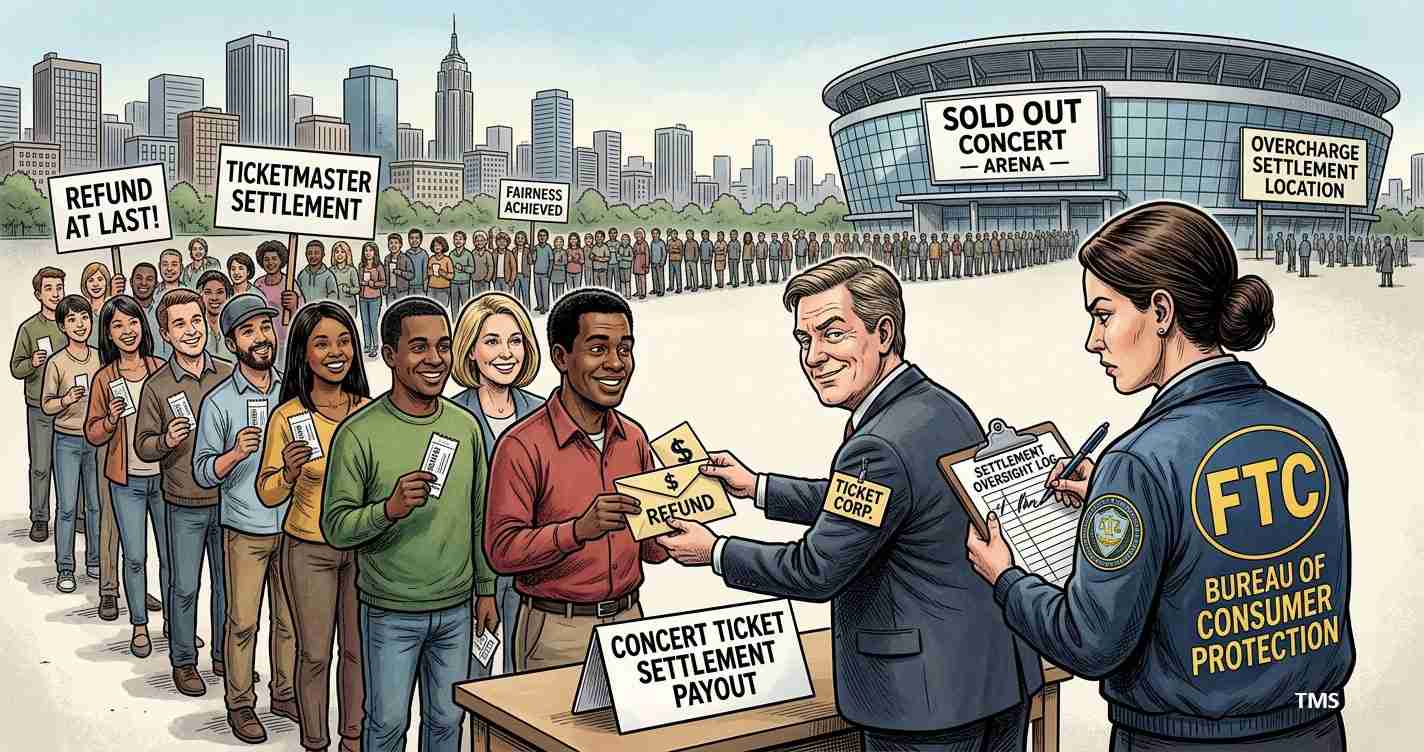
FTC’s Junk Fees Rule forces ticket platforms to show full price up front; proposed StubHub settlement would refund buyers after three-day lapse
The FTC’s Junk Fees Rule, effective May 12, 2025, requires live-event ticket sellers to display the full calculable price upfront; the agency’s proposed StubHub settlement would fund refunds after a three-day lapse in compliant displays.
- Upfront total price: The rule mandates the total calculable price be the most prominent figure at first display; see the FTC guidance.
- StubHub settlement: The proposed resolution would fund a $10 million consumer redress program for U.S. buyers who purchased between May 12–14, 2025 and issue refunds to eligible consumers.
- Wide scope and penalties: The rule applies to venues, primary sellers and secondary resellers; civil penalties can reach up to $51,744 per violation (see analysis).
What the FTC’s Junk Fees Rule requires
The rule, codified as 16 C.F.R. Part 464, is aimed squarely at eliminating hidden ticket fees and ensuring the “total price” is what consumers see first. The agency’s guidance states businesses must present the full calculable price — including mandatory service and processing fees that are unavoidable — as the most prominent figure in any ad, listing, or offer. Optional charges (upgrades, shipping, voluntary add‑ons) and government taxes may be shown separately but must be disclosed clearly before the consumer agrees to pay. For the FTC’s official FAQ, see the FTC guidance.
“The total price must be easier to read and understand than any advertised base price or fee line-item,” industry analysts note, underscoring the rule’s requirement that the combined total be visually dominant.
StubHub dispute and proposed redress
The FTC’s complaint and proposed settlement, filed in the U.S. District Court for the Southern District of New York, allege that for a limited number of transactions during May 12–14, 2025 some listings on the platform displayed ticket prices exclusive of mandatory fees in the initial price display. The proposed settlement would create a $10 million consumer redress program for eligible buyers who purchased U.S. live‑event tickets during that period and require refunds within 90 days to certain buyers whose total price was not disclosed on the initial display.
StubHub’s response: A company spokesperson told the FTC the firm disagrees with the agency’s view but acknowledged the settlement covers a limited set of transactions and said the company is refunding a portion of affected buyers’ fees to address the FTC’s concerns. Those comments appear in the agency’s public materials about the proposed settlement.
Legal and enforcement backdrop
The Junk Fees Rule follows an FTC vote finalizing the regulation on December 17, 2024. The final rule narrows earlier drafts and focuses on live‑event ticketing and short‑term lodging, among other fee‑prone markets, and is designed to stop bait‑and‑switch pricing that advertises a low headline price then adds mandatory fees at checkout. Legal advisories and analyses of the final rule are available from firms such as Holland & Knight and Foley & Lardner.
Civil penalties are available for violations and can be substantial — up to $51,744 per violation as of the rule’s effective date, giving the agency a meaningful enforcement tool (see Ballard Spahr / Barnes & Thornburg analysis).
Context: policy push and market effects
The FTC’s enforcement push follows broader political and regulatory attention on ticketing transparency, including a March 2025 executive order directing federal agencies to promote transparency in ticketing markets and curb rent‑seeking practices on secondary resale platforms. The agency has positioned the Junk Fees Rule as central to these efforts. Industry observers warn that strict upfront disclosure requirements may change how fees are displayed and packaged, potentially leading platforms to “bake” fees into headline prices — which could raise initial price displays but reduce surprises at checkout. See commentary from Spektrix and a sector overview at Brushfire.
Implications for San Luis Obispo, California
Economic impact: San Luis Obispo’s live‑events scene — from the Fremont Theater to Cal Poly events — may see listings that show higher headline prices but with fewer surprises at checkout. That clarity can make price comparisons easier and improve consumer trust.
Local businesses and promoters: Small promoters and venues that use third‑party ticketing widgets will need to update displays and point‑of‑sale scripts or work with platforms to ensure the total price is the most prominent figure. Some operations may require technical or legal help to implement compliant displays.
Consumers and affordability: Upfront transparency can help students, families and older adults budget for entertainment; while headline prices may appear higher, consumers gain clearer information to decide whether events fit their budgets.
Practical steps for locals: Look for the “total price” as the most prominent number on listings. If a local ticketing page does not display the total price clearly, ask the seller for a full price breakdown before purchase or choose alternative sellers that comply with the rule.
Reporting caveat on settlement details
Public filings and news indexes searched while preparing this story did not independently corroborate every specific term of the StubHub settlement described in the FTC’s public materials — including the exact dollar amount and precise list of eligible transactions. The FTC’s complaint and proposed settlement statements are the primary sources for the agency’s claims; StubHub’s statements were provided to the agency and cited in those filings.
Sources and further reading
- FTC: Rule on Unfair or Deceptive Fees — Frequently Asked Questions
- Ballard Spahr / Barnes & Thornburg analysis
- Holland & Knight: FTC final rule targets hidden fees in live-event ticketing
- Foley & Lardner LLP: FTC final Junk Fees Rule — live-event tickets & short-term lodging
- Brushfire: Breaking — FTC bans hidden ticket fees
- Spektrix: Ticketing legislation overview and Junk Fees Act perspective
Reporting note: This story draws on the FTC’s public materials and legal analyses of the Junk Fees Rule. The agency’s complaint and proposed settlement in the U.S. District Court for the Southern District of New York are the primary sources for the specific case referenced; StubHub’s statements were provided to the agency and cited in those filings.