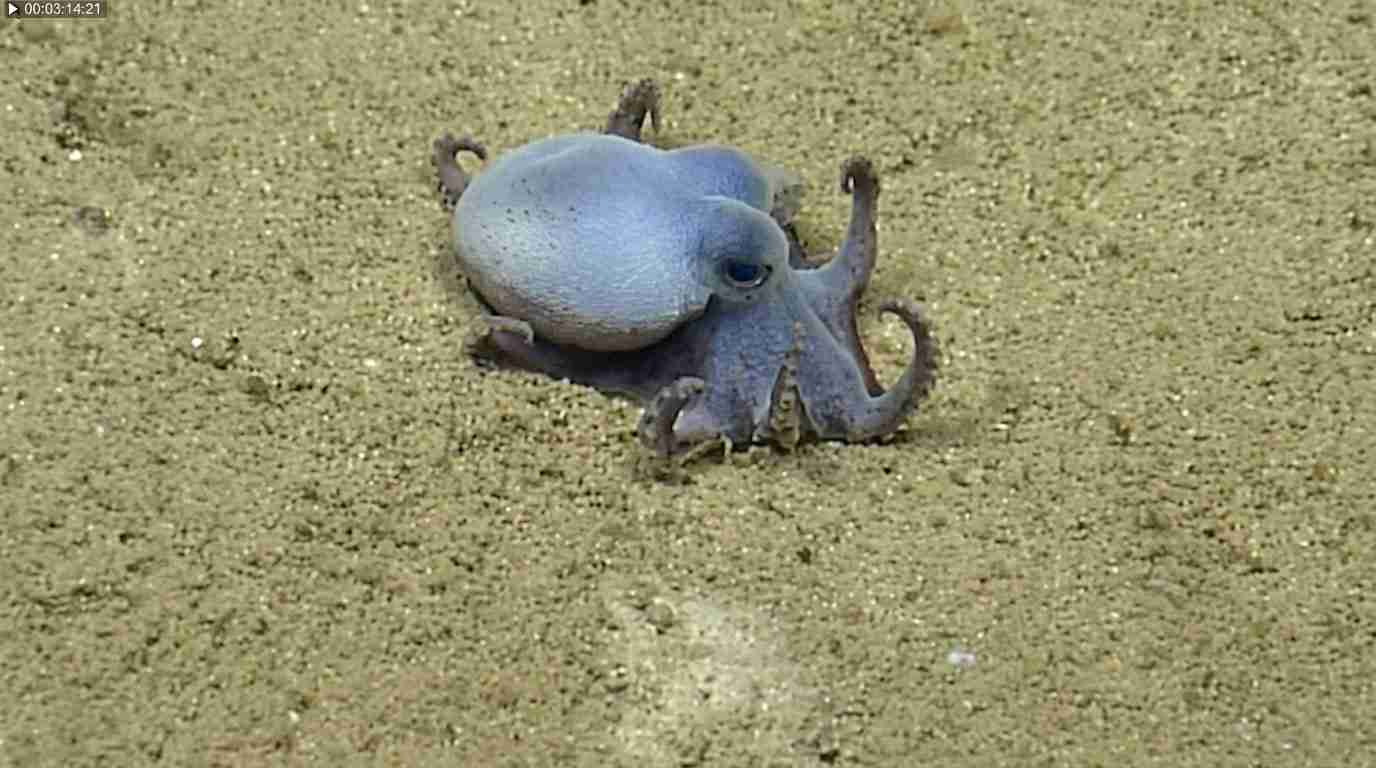
Tiny blue deep‑sea octopus Microeledone galapagensis named after Galápagos discovery
Scientists have named a new tiny blue deep-sea octopus, Microeledone galapagensis, first seen in 2015 near the Galápagos Islands at roughly 5,800 feet. Researchers used ROV collections and micro‑CT imaging to confirm its distinct anatomy.
- New species: Microeledone galapagensis, a small blue deep‑sea octopus described from Galápagos specimens.
- Discovery context: First observed in 2015 via ROV at about 5,800 ft (≈1,770 m) on sandy seafloor habitat.
- Methods: Dozens of ROV‑collected specimens studied with micro‑CT imaging by Janet Voight and collaborators.
- Significance: Reveals hidden deep‑sea biodiversity and highlights the power of non‑destructive imaging in taxonomy.
Discovery and expedition context
Microeledone galapagensis was first encountered during a remotely operated vehicle (ROV) survey off the Galápagos seafloor in 2015. Teams observed small blue octopuses roaming sandy bottom habitat in the bathyal zone — roughly 5,800 feet (≈1,770 m) deep — an environment of low light and high pressure where species often evolve unique adaptations.
Collection and handling of specimens
ROV teams collected dozens of individuals and transported them to the Charles Darwin Research Station in the Galápagos for study. Having multiple specimens across sizes allowed taxonomists to distinguish consistent anatomical traits from juvenile variation. These preserved animals became the basis for detailed anatomical investigation at international partner institutions.
Taxonomic work and the role of Janet Voight
When the animals could not be matched to known species, researchers turned to cephalopod expert Dr. Janet Voight at the Field Museum in Chicago. Voight and collaborators used high‑resolution micro‑computed tomography (micro‑CT) in the Field Museum’s X‑ray lab to create 3‑D images of internal structures without dissecting rare specimens. This non‑destructive imaging was central to documenting diagnostic anatomy.
See the Field Museum materials and related video: Field Museum video
What distinguishes Microeledone galapagensis
The formal taxonomic description documents a suite of characters separating this species from known octopuses. Diagnostic features include:
- Arrangement and shape of suckers and arm proportions.
- Beak and radula structure visible in scans and dissections.
- Reproductive organ form and details of digestive and nervous systems revealed by micro‑CT.
- Distinct small size and an unusual blue coloration at depth (many deep‑sea octopuses are pale or red).
Habitat, ecology and unknowns
So far this species is known only from sandy seafloor near the Galápagos where it was collected. Many life‑history details remain unknown — diet, reproductive behavior, lifespan and population size — and will require targeted ROV surveys and field work. Based on general deep‑sea octopus ecology, researchers suspect it feeds on small benthic invertebrates and moves primarily by crawling with occasional jetting.
Why modern imaging matters
Micro‑CT and other non‑destructive imaging techniques allow scientists to visualize soft tissues and internal anatomy in three dimensions without cutting rare specimens. These methods complement genetics and accelerate robust species descriptions, especially for costly, hard‑to‑collect deep‑sea animals.
Scientific and conservation significance
Each new species — including Microeledone galapagensis — adds to our understanding of deep‑sea biodiversity, evolutionary relationships, and conservation priorities. Discoveries from hotspots like the Galápagos help inform marine reserve planning and underscore that much of the deep ocean remains unexplored.
“As new technology — from ROVs to micro‑CT scanning and DNA sequencing — spreads, researchers expect many more species will be revealed.”
Context with other recent discoveries
This octopus joins recent marine finds that used CT scans and genetics to describe new deep‑sea snails, fish and invertebrates. Better imaging, expanded access to deep habitats, and international collaboration are reshaping our picture of marine diversity.
Implications for San Luis Obispo, California
The Galápagos discovery has several local implications for San Luis Obispo and the Central Coast:
- Scientific ties and research opportunities: CSU Cal Poly and local research groups could pursue partnerships and grants to access ROV work, micro‑CT imaging, or cephalopod studies.
- Fisheries and ocean health awareness: The find reminds coastal communities that global ocean health underpins local fisheries, tourism and economies.
- Conservation policy and public support: Undiscovered biodiversity strengthens arguments for precautionary management of deep‑sea activities like mining and bottom trawling.
- Education and outreach: Museums, aquaria and universities can incorporate the story and methods (micro‑CT) into exhibits and curricula to inspire STEM students.
- Tourism and civic pride: While deep‑sea species aren’t directly viewable by visitors, the discovery can be used in messaging about stewardship and regional scientific engagement.
Sources and further reading
- Oceana summary of recent marine discoveries (includes a mention of Microeledone galapagensis).
- Field Museum video on micro‑CT and cephalopod imaging.
- EurekAlert! — press distribution platform where the taxonomic findings were announced.
For readers seeking the technical description, the peer‑reviewed taxonomic paper announced via EurekAlert! and summarized in institutional materials contains the full diagnostic characters, measurements and illustrations that formally define Microeledone galapagensis.