Perseverance spots shiny “visitor from outer space” — metallic rock nicknamed Phippsaksla may be Mars meteorite
NASA’s Perseverance rover discovered a shiny metallic boulder nicknamed “Phippsaksla” near the Jezero Crater rim; SuperCam readings show high iron and nickel, indicating it may be a meteorite and a first for the rover’s mission.
Key takeaways
- Object: Shiny, metallic boulder nicknamed Phippsaksla.
- Location: Vernodden site, just beyond the rim of Jezero Crater on Mars.
- Composition: SuperCam laser detected high iron and nickel, a common meteorite signature.
- Significance: If confirmed, Perseverance’s first clear metallic meteorite find after nearly four years on Mars.
Main content
Discovery and how Phippsaksla stood out
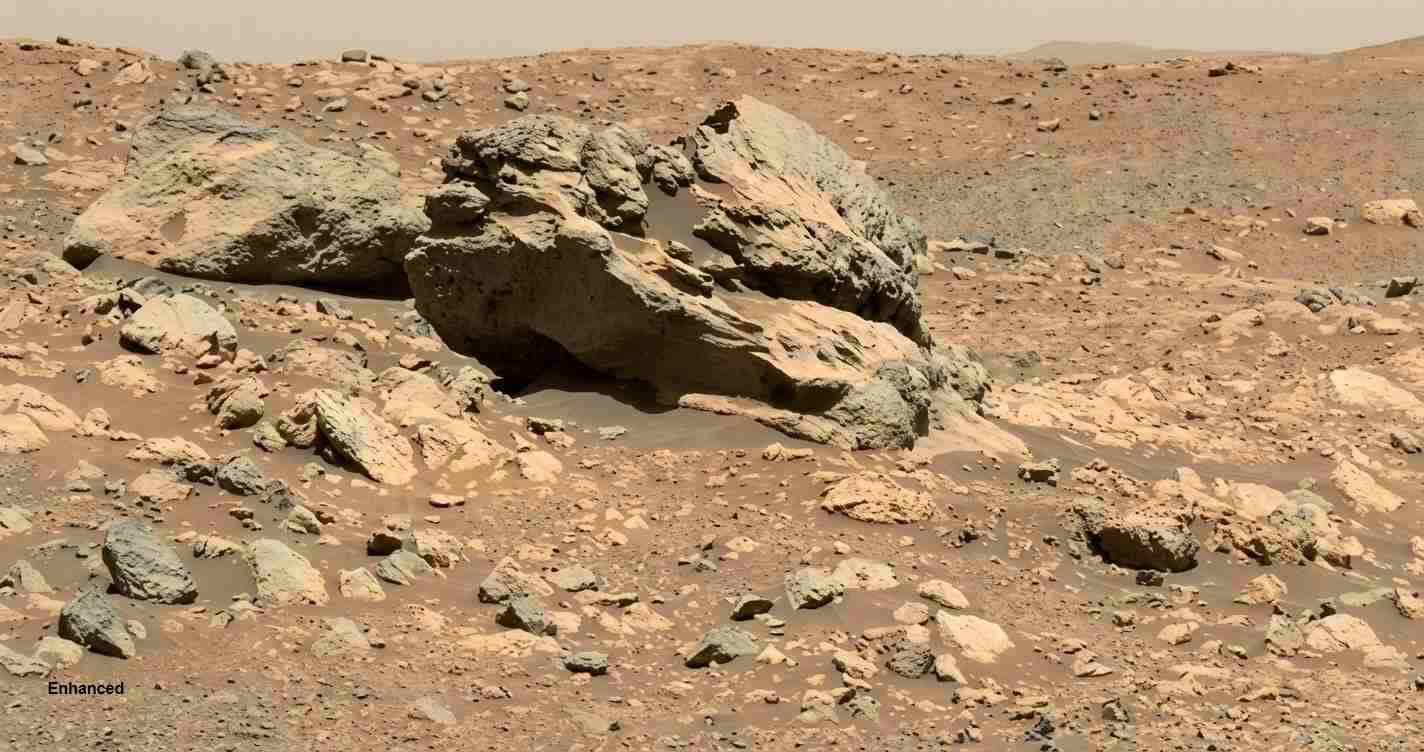
Perseverance encountered the rock while examining ancient bedrock at a site called Vernodden, located atop impact-formed bedrock near the rim of Jezero Crater. Unlike the flat, fractured local bedrock, Phippsaksla is glossy, rounded and roughly 80 centimeters (31 inches) across — visually distinct in rover imagery.
Initial reporting and discussion of the find appear in multiple outlets, including Fox News, Astrobiology.com and India Today.
How Perseverance analyzed the rock
Perseverance used its SuperCam instrument to fire laser pulses that vaporize minute amounts of surface material; the resulting light spectrum reveals elemental composition. SuperCam measurements on Phippsaksla indicated unusually high concentrations of iron and nickel — a combination frequently associated with meteorites that originate from the cores of larger space bodies.
“Iron and nickel together are a strong hint that a rock is not native Martian bedrock,” scientists note, reinforcing the idea that Phippsaksla arrived from space rather than forming in place.
Why the find matters to science
Meteorites deliver material from across the solar system to Mars. Studying metal-rich fragments such as Phippsaksla can reveal the composition of ancient asteroid interiors and contribute to models of early solar-system material mixing. Additionally, tracking how a metallic object weathers on Mars helps refine estimates of surface age and environmental effects under the planet’s thin atmosphere.
- Composition insights: Metal-rich meteorites probe asteroid cores and planetary building blocks.
- Weathering studies: Monitoring surface changes tests models of rusting, erosion and preservation on Mars.
- Contextual value: Adds to the catalog of meteorites discovered by rovers (e.g., Curiosity’s finds and those from Opportunity and Spirit) and helps compare preservation across Martian landscapes.
Context within the Perseverance mission
Perseverance landed in Jezero Crater in February 2021 to study an ancient lake and delta, search for evidence of past habitability, and collect samples for possible return to Earth. Official mission background is available from NASA’s Mars 2020 mission page, and general rover information can be found at the Perseverance rover entry.
While other rovers have previously found metallic meteorites (for example, Curiosity’s Lebanon and Cacao targets), team members say this is the first metallic fragment that Perseverance has so clearly flagged in its near four-year dataset.
Ongoing work and next steps
The science team will continue collecting SuperCam laser shots and higher-resolution imagery to refine chemical readings and monitor surface evolution. Researchers plan to compare Phippsaksla’s signature with meteorites cataloged from other Mars missions and terrestrial collections, and to model how a metallic rock might weather over decades or centuries on Mars.
For additional visual context, mission-related media and briefings can be watched on the mission’s video channels, including this related clip on YouTube.
Implications for San Luis Obispo, California
Local institutions and educators in the Central Coast can leverage the Phippsaksla story to boost public interest in planetary science. Potential benefits include:
- Economic and educational: Outreach events, museum exhibitions and school programs can attract visitors and students.
- Research partnerships: Universities such as Cal Poly San Luis Obispo could expand collaborations with NASA and meteorite research groups, creating internships and student research opportunities.
- Public engagement: Talks, watch parties and library programs can increase civic pride and STEM participation.
- Practical lessons: Use meteorite science to explain impact processes, erosion and landscape history in local planning and education.
Framing the discovery for a politically moderate audience emphasizes apolitical STEM outreach and supports building local expertise in science, technology, engineering and math.
Sources and reporting notes
This report draws on mission and media coverage: Fox News, Astrobiology.com, India Today, mission background at NASA, the Perseverance rover overview, and related media including a mission video on YouTube.
Further reporting
The Perseverance team will publish follow-up findings as more SuperCam data and imagery become available. Local educators and communicators in San Luis Obispo should monitor the NASA mission page and mission briefings for updates to plan outreach and curriculum tied to any confirmation or further analysis of Phippsaksla.