Your next heart test might start with a T‑shirt: AI smart T-shirt heart monitoring aims to catch hidden rhythm disorders
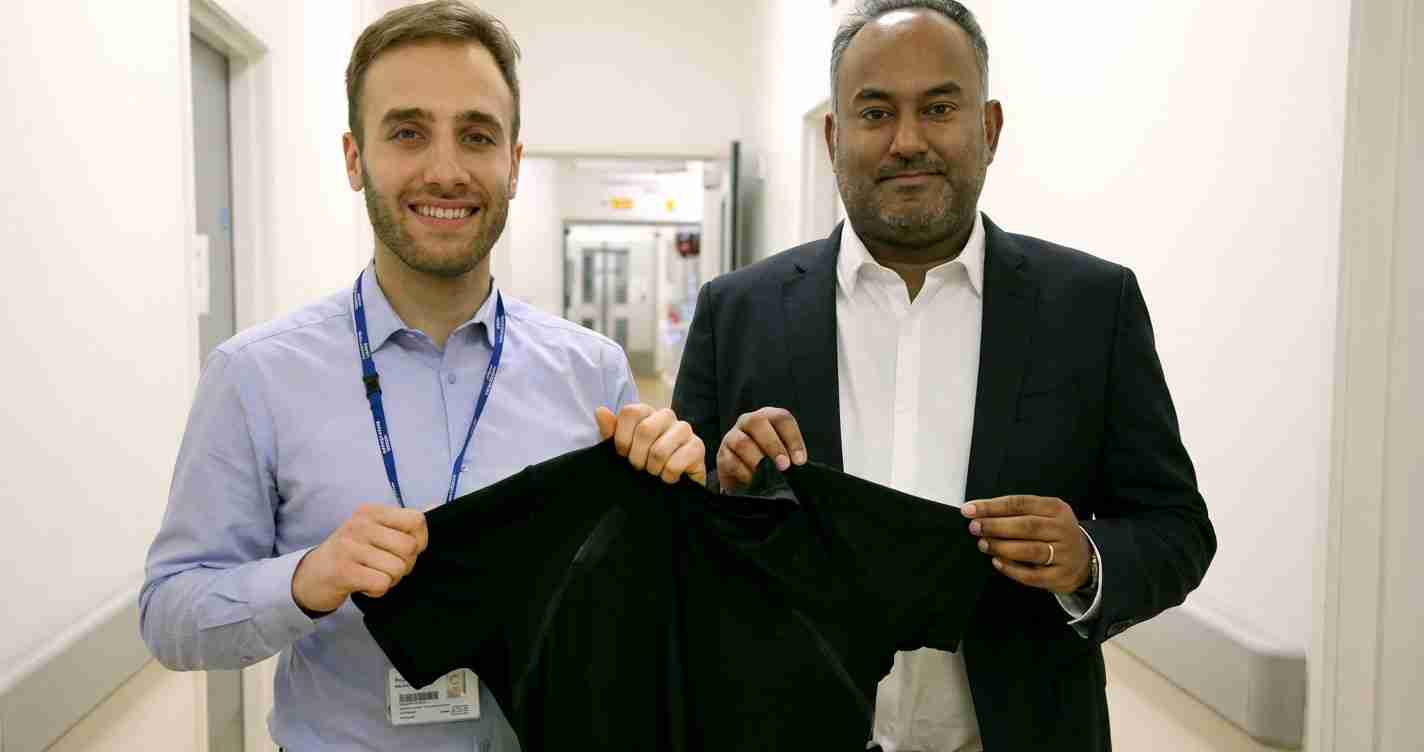
Researchers at Imperial College London are developing an AI‑powered smart T‑shirt with up to 50 woven ECG sensors to provide comfortable, continuous heart monitoring and detect intermittent inherited rhythm disorders earlier, potentially preventing sudden cardiac deaths.
Key takeaways
- Comfortable, continuous monitoring: A washable sports T‑shirt with up to 50 ECG‑style sensors records electrical signals for days or weeks.
- AI analysis: Algorithms trained on ECGs from over 1,000 people aim to spot intermittent inherited rhythm disorders such as Brugada syndrome.
- Early testing and trials: A feasibility study of ~200 volunteers will test wearability and detection for up to three months.
- Not yet clinical: Researchers estimate possible clinical availability in about five years, pending trials and regulatory approval.
Key information
Project lead: Professor Zachary Whinnett, National Heart & Lung Institute, Imperial College London (with NHS consultant role).
Funding: More than £340,000 from the British Heart Foundation (BHF), with support from NIHR Imperial Biomedical Research Centre.
Technology: A washable, sportswear‑style T‑shirt with up to 50 ECG‑style sensors woven into the fabric that records continuous electrical signals (project details).
AI training: Algorithm trained on ECG data from more than 1,000 people, including those with inherited conditions such as Brugada syndrome (training dataset).
Trials: A feasibility study will involve about 200 volunteers wearing the shirt for up to three months at Hammersmith Hospital’s Peart‑Rose Research Unit (study announcement).
Timeline: Researchers estimate clinical availability within about five years, pending further trials and regulatory approval (timeline).
How the smart T‑shirt works
Most clinic ECGs are brief snapshots, often taken for only a few minutes. Inherited heart rhythm disorders can be intermittent, so dangerous patterns may appear briefly and be missed. The smart T‑shirt changes that by enabling long‑term, comfortable recording.
The garment integrates as many as 50 tiny ECG‑style sensors into soft sports fabric. You can wear it under clothes, sleep in it and wash it. It records continuous electrical signals from the heart for days or weeks. An AI algorithm then analyzes the large dataset to flag patterns that indicate inherited rhythm disorders such as Brugada syndrome (more).
Why continuous ECG monitoring matters
Current home ECG systems use adhesive electrodes and a recorder worn on the waist; they work for short periods but can be uncomfortable and inconvenient. That reduces the likelihood of long monitoring and may miss intermittent abnormalities.
Longer monitoring fills gaps: days or weeks of rhythm data increase the chance of detecting subtle or short‑lived abnormalities. The team says continuous data enables AI to spot patterns missed by a single clinic ECG or a 24–48 hour monitor (BHF/Imperial coverage; BHF announcement).
Training the AI and testing the shirt
The AI was trained on diverse ECG data from more than 1,000 people, including those with inherited rhythm disorders and those without. This diversity helps the algorithm learn to distinguish normal variations from high‑risk patterns (training details).
Next: a feasibility study with ~200 patients and volunteers at Imperial’s Hammersmith Hospital research unit, wearing the smart T‑shirt continuously for up to three months. Researchers will assess detection accuracy and the shirt’s practicality for everyday life (study details).
Professor Whinnett: “We hope the device will be a practical and comfortable solution that helps find inherited conditions earlier.”
Professor James Leiper (BHF): “This work will leverage the power of AI to help clinicians unmask these hidden conditions.” (BHF comment).
Scope of the problem
Inherited heart rhythm disorders are individually rare but collectively significant. Researchers estimate about 340,000 people in the UK live with inherited rhythm disorders. Symptoms include chest pain, dizziness, breathlessness or fainting, and undetected cases can lead to sudden cardiac death (Imperial; BHF).
The BHF notes inherited conditions are linked to the deaths of around 12 young people under 35 each week in the UK (source).
Safety, regulation and next steps
The smart T‑shirt is not yet a commercial medical device. Researchers emphasize it must pass rigorous trials and regulatory review before clinical use. Initial studies focus on adults; if successful, the program could expand to children and other conditions such as atrial fibrillation (regulatory note).
Independent outlets have covered the project, often reworking Imperial/BHF material (Fox News; MedicalXpress). The team and funders stress careful validation to avoid false alarms or missed cases when moving from trials to real‑world use (validation).
Design and patient experience
A core innovation is wearability. The shirt uses standard sports fabric, not rigid patches, allowing volunteers to work, sleep and exercise while it records. Sensors are woven into the fabric so users don’t need to attach adhesive electrodes daily (design notes).
Researchers will measure detection accuracy and user experience. If patients find the T‑shirt easier than adhesive systems, compliance with longer monitoring should improve, yielding more useful data for clinicians and AI.
Implications for San Luis Obispo, California
- Local screening and diagnosis: Cardiologists and primary care doctors could benefit from tools that detect intermittent inherited rhythm disorders, improving referrals and ambulatory testing.
- Access to continuous ECG monitoring: Community clinics and regional hospitals might pilot wearable monitoring when the technology reaches clinics, reducing travel to larger centres.
- Young people and community safety: School nurses, sports medicine programs and youth athletic organizations could use improved screening data to protect student athletes.
- Health equity and costs: A reusable, washable shirt could lower barriers for those with inflexible jobs or transport limits; local planners must address access, coverage and follow‑up.
- Public health planning: County health officials could include wearable monitoring in education about sudden cardiac events and train clinicians on interpreting prolonged ECG data.
- Practical steps for residents: People with family histories of unexplained sudden death, fainting or palpitations should discuss options with their doctor; new monitoring options remain under development.
Sources and further reading
Imperial College London news releases on the project: AI‑assisted smart T‑shirt being developed and AI T‑shirt could improve heart monitoring.
British Heart Foundation announcement: Smart T‑shirt could reveal heart conditions.
Related media coverage: Fox News overview; MedicalXpress report.
Conclusion
Promise with caution: The AI smart T‑shirt is a promising approach to detecting inherited heart rhythm disorders earlier through comfortable, extended monitoring. However, careful validation, regulation and fair access will determine whether it becomes a routine clinical tool.