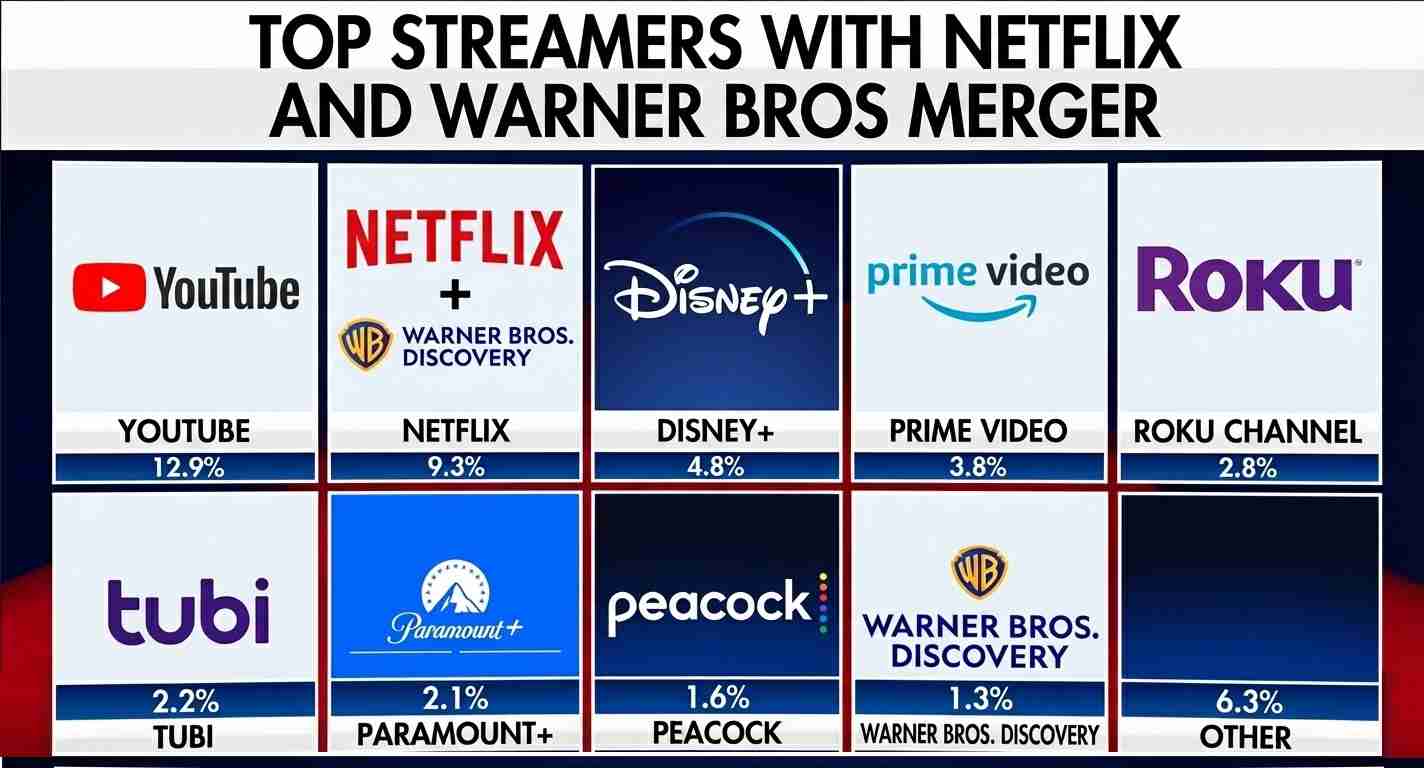
Trump administration reportedly skeptical of Netflix’s $72B bid for Warner’s studios, raising antitrust hurdles for HBO Max and DC deal
Netflix’s proposed acquisition of Warner Bros. Discovery’s film and TV studios, including HBO and HBO Max, for roughly $72 billion faces intense opposition from the Trump administration, which is preparing a stringent antitrust review over market control concerns.
Key takeaways
- Netflix agreed to buy Warner’s studio and streaming arm in a roughly $72 billion equity deal (about $82.7B including debt), according to industry reports (New Indian Express, Urban Hollywood 411, Illustrated Daily News).
- The plan depends on a 2026 split of Warner Bros. Discovery so Netflix would buy the “Warner” half that includes HBO, HBO Max and DC Studios (New Indian Express, Illustrated Daily News).
- The White House is said to be “highly skeptical”, signaling a tough antitrust posture that could prolong or block the deal (Urban Hollywood 411, Illustrated Daily News).
What the deal would include
Under the proposed structure, Netflix would acquire Warner’s studio and premium streaming business after Warner Bros. Discovery completes a split. That would give Netflix control of HBO, the HBO Max library and originals, DC Studios, and major franchises such as Game of Thrones, Harry Potter and big theatrical tentpoles. Reporting on the terms comes from New Indian Express, Urban Hollywood 411 and Illustrated Daily News.
How this changes Netflix’s role in Hollywood
Analysts say the merger would transform Netflix into one of the world’s largest entertainment companies, combining a leading global streamer with a top legacy studio and premium cable brand. This represents a strategic pivot from Netflix’s historical focus on building catalog to buying major legacy assets. Sources include The Condia and New Indian Express.
Industry observers warn that owning both distribution and top intellectual property could give Netflix outsized leverage over talent, theaters, distributors and rival streamers — raising questions about bargaining power and the future of independent production deals (The Condia, Illustrated Daily News).
Why the Trump administration is reportedly skeptical
Multiple reports say the White House is likely to scrutinize the deal heavily under a tough antitrust posture. Three main concerns are cited by analysts and industry insiders:
- Market concentration in streaming — Combining Netflix and HBO Max would unite two of the largest streaming services, creating a powerful horizontal concentration in video streaming. Regulators may view this as a threat to competition (New Indian Express, Illustrated Daily News).
- Control of premium IP and studios — Netflix would own legacy studio output and franchises that draw mass audiences, raising concern about a single company holding “must‑have” content (The Condia, New Indian Express).
- Political and competitive favoritism — Reports link the skeptical stance to political dynamics: the White House reportedly favors the Ellison family, which backed a rival acquisition of Paramount Global in August 2025, creating extra headwinds for Netflix (Urban Hollywood 411).
Taken together, reporting suggests the deal will face intense regulatory review in the U.S. and abroad, with no assurance it will be approved (Illustrated Daily News).
Industry worries — producers, unions and critics
Producers and labor groups have signaled concern. Anonymous producers told Congress that a Netflix–Warner consolidation could amount to monopolistic control and weaken incentives for theatrical releases. The Producers Guild of America has asked the deal to demonstrate protections for workers and theatrical distribution (The Condia, New Indian Express).
Critics warn of possible job losses in overlapping divisions, reduced content diversity, and greater bargaining leverage for the combined company in setting fees and participation terms (The Condia).
Netflix and Warner Bros. Discovery defend the deal
Netflix co‑CEO Ted Sarandos framed the move as a rare chance to bring leading storytellers and franchises under one roof to reach global audiences. He and other executives say they will maintain theatrical releases where contracts require it and that Netflix is making a long‑term bet on IP (The Condia, Illustrated Daily News).
Warner Bros. Discovery CEO David Zaslav said the sale would ensure Warner stories reach audiences for generations through Netflix’s global reach (New Indian Express).
What this would mean for HBO Max, DC and other franchises
If regulators approve the deal, Netflix would control HBO’s original programming and library — including Game of Thrones and its spin‑offs — as well as DC Studios and the DC Universe slate. That could place Batman, Superman and other DC characters under Netflix’s production and distribution plans (The Condia, New Indian Express).
Commentators say such concentration could create a single platform where Friends, Game of Thrones, Harry Potter-adjacent content, and Netflix originals live together — potentially boosting subscriber value but also risking higher prices as Netflix absorbs greater IP and production costs (The Condia).
Financial and legal risks in the deal
Reporting indicates Netflix accepted a large breakup fee. If regulators block the transaction or the deal is abandoned, Netflix could owe Warner billions — a sign both sides view regulatory risk as real (Illustrated Daily News).
Timeline and next steps
Warner Bros. Discovery plans a two-company split in 2026; Netflix would buy the “Warner” half after the split is complete. Industry reports set an optimistic closing window of roughly 12–18 months after separation, with some pointing to Q3 2026 if regulators consent. Regulatory reviews and likely legal fights could stretch the timetable (New Indian Express, Urban Hollywood 411, Illustrated Daily News).
Implications for San Luis Obispo, California
Economic impact: The merger could ripple through California’s entertainment ecosystem. While San Luis Obispo County is not a major studio hub like Los Angeles, local businesses that serve film and TV productions — caterers, rental houses, set builders and hotels — could see shifts in demand. If Netflix centralizes production or shifts more titles to streaming, some regional shooting or post‑production work might move to major hubs or in‑house Netflix facilities. Conversely, big new franchises under Netflix could create opportunities for location shoots.
Jobs and local businesses: Consolidation can lead to staff reorganizations. If overlapping divisions are merged or centralized, some roles may be cut, affecting regional post‑production vendors, location managers and contract workers who travel to the Central Coast for shoots. Local unions and guild members may monitor hiring and contracting standards closely.
Cultural and community effects: HBO shows and Warner franchises often use California locations and talent. Changes in distribution and production strategies could affect local film festivals, university programs and community screenings. Local schools and film programs in San Luis Obispo might gain internship paths if Netflix expands production in California, or see fewer opportunities if work concentrates elsewhere.
Political and regulatory interest: San Luis Obispo voters and local leaders who follow state economic policy may weigh in on antitrust concerns and job protection measures. California’s state regulators and lawmakers have previously expressed interest in media mergers; local officials could pressure federal regulators to consider regional economic effects. The Trump administration’s antitrust posture and national political ties make the review unusually political, shaping how stakeholders lobby or respond.
Practical effects for viewers: For Central Coast viewers, the most visible change would be content access. If Netflix acquires HBO Max and its library, popular shows like Game of Thrones, DC series and Warner films could move to a single platform — simplifying choices but possibly pushing subscription prices higher over time.