
Passengers left scrambling after Waymo robotaxi luggage, looping incidents at airports raise safety and service questions
Two Waymo robotaxi incidents at San Jose Mineta and Phoenix Sky Harbor exposed luggage mishandling and a looping vehicle, prompting concerns about reliability, remote customer support, and liability in driverless airport transportation for time-sensitive travelers and operational oversight.
Key takeaways
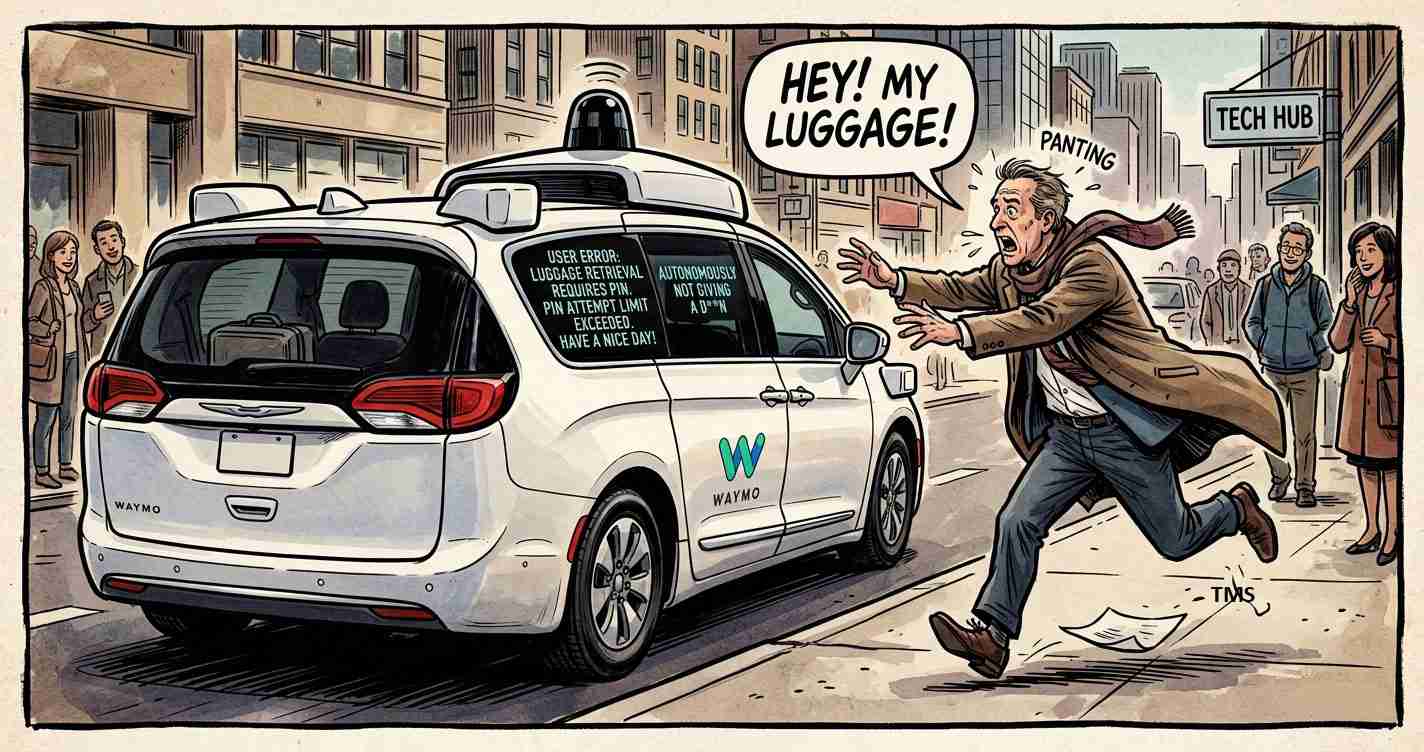
- Trunk malfunction: A reported rider, Di Jin, said a Waymo trunk failed to open at San Jose Mineta and the vehicle left with his suitcase; Waymo later located the bag and agreed to cover shipping after dispute.
- Remote control limits: In Phoenix, passenger Mike Johns recorded a Waymo circling a lot; customer service reportedly intervened remotely and regained control after several minutes.
- Policy gaps: Waymo’s help pages note limits on trunk behavior and lost-and-found liabilities, leaving uncertainty about prompt return and reimbursement for lost items.
- Wider implications: These episodes raise questions about equipment reliability, the speed and authority of remote support, and regulatory oversight for airport robotaxi operations.
What happened at SJC: luggage left behind
Account: According to reports to journalists, Di Jin took his first Waymo ride from Sunnyvale to San Jose Mineta International Airport (SJC). When the vehicle reached the curb Jin said the trunk would not open despite pressing the physical trunk release and using the app. By the time he stepped away the driverless car had departed with his suitcase inside.
Customer support and recovery: Jin said he contacted Waymo immediately and was told the vehicle was already returning to a depot and could not be turned around. Waymo later emailed that the luggage had been secured at a company depot. Initial offers reportedly included two free rides to retrieve the bag or shipping at the rider’s cost; after dispute Waymo agreed to cover shipping.
Important: Waymo did not comment on the specific incident when contacted by reporters. The incident details were shared with CyberGuy reports.
How the trunk is supposed to work
Waymo’s public help documentation explains trunk controls: riders can open the trunk with a physical button above the rear license plate or by tapping “Open trunk” in the app; the trunk is also designed to open automatically when the trip ends.
Limits noted by the company: the trunk may not open if a rider exits before the vehicle has officially pulled over and the trip has ended. Waymo’s lost-and-found page says support teams will try to reunite riders with items but “cannot guarantee items will be found, delivered immediately or returned undamaged,” and that Waymo “isn’t responsible for items left behind after a trip ends.” See the Waymo Help Center for details.
The Phoenix episode: a car that wouldn’t stop circling
In a separate December 2024 incident, Mike Johns — a tech entrepreneur — said his Waymo began circling a parking lot about eight times at Phoenix Sky Harbor International Airport. Johns recorded video, posted it on social media, and called Waymo support asking whether the vehicle had been hacked.
Johns’ clip shows an exchange with a customer service agent who apologized and reported attempting to steer the car remotely. After several minutes control was reportedly regained and the vehicle stopped; Johns made his flight but described the episode as unsettling.
Johns said he was not charged for the trip and did not receive a clear follow-up message, though a Waymo spokesperson told CBS News the company attempted outreach.
Why these incidents matter
Both episodes highlight anxieties tied to driverless travel, especially for time-sensitive airport trips. With human drivers, passengers can physically intervene or flag a problem; robotaxi riders depend on remote support and software controls, which can create dangerous or inconvenient gaps when systems fail.
Main concerns:
- Equipment and software reliability: physical parts like trunk latches and navigation systems can fail and passengers lack an onboard human to react.
- Customer service limits: remote agents can sometimes regain control, but delays can be significant for airport passengers.
- Liability and reimbursement: current policies that disclaim responsibility for item value leave passengers negotiating remedies after a lapse that may not be their fault.
Regulators, industry and company responsibilities
As driverless services scale, regulators and agencies face new oversight questions. California’s Department of Motor Vehicles oversees AV testing and deployment while the National Highway Traffic Safety Administration monitors safety and reporting implications.
Experts suggest companies deploying robotaxis should:
- Build clearer and faster customer intervention paths for airport trips.
- Provide mandatory remote-stop functionality to guarantee immediate halting.
- Station on-call ground staff at major airport hubs and offer clearer in-app confirmations for trunk status.
What passengers can do now
- Keep essentials on your person: stay with carry-on items and keep documents and a change of clothes in a personal bag.
- Confirm trunk status: use the app to verify trip status and that the trunk has opened before stepping away.
- Document failures: if the trunk fails, notify support via the app, call immediately, photograph the vehicle and keep trip details.
- Negotiate shipping: if time allows, insist on company-paid shipping when items are left due to equipment failure rather than passenger error.
Implications for San Luis Obispo, California
San Luis Obispo County relies on steady connections to Bay Area airports. Reports of Waymo airport incidents could shift traveler preferences away from robotaxis toward human-driven taxis, personal cars, or shuttle services — at least for time-sensitive trips.
Local effects to watch:
- Traveler behavior: more residents and visitors may choose services that guarantee quick human contact.
- Transit and hospitality demand: hotels, shuttles and limousine operators could see short-term increases in bookings.
- Economic ripple effects: small businesses dependent on predictable flight connections could face scheduling impacts.
- Policy and safety: local officials can advocate for regional standards, stronger customer-recovery rules, and clearer disclosures about lost property handling.
Sources and further reading
- Waymo Help Center
- California Department of Motor Vehicles, Autonomous Vehicles
- National Highway Traffic Safety Administration, Automated Vehicles
- CyberGuy reports (coverage of Waymo incident)
- CBS News (coverage of Phoenix incident)
Reporting and verification
This article is based on reported passenger accounts, summaries of Waymo’s public help pages and media coverage. Waymo did not comment on one incident when contacted by reporters. Official company help pages and regulatory resources are cited where available.
Preserved facts: all original facts, information and URLs from the reporting have been retained; see the linked sources above for direct references.


