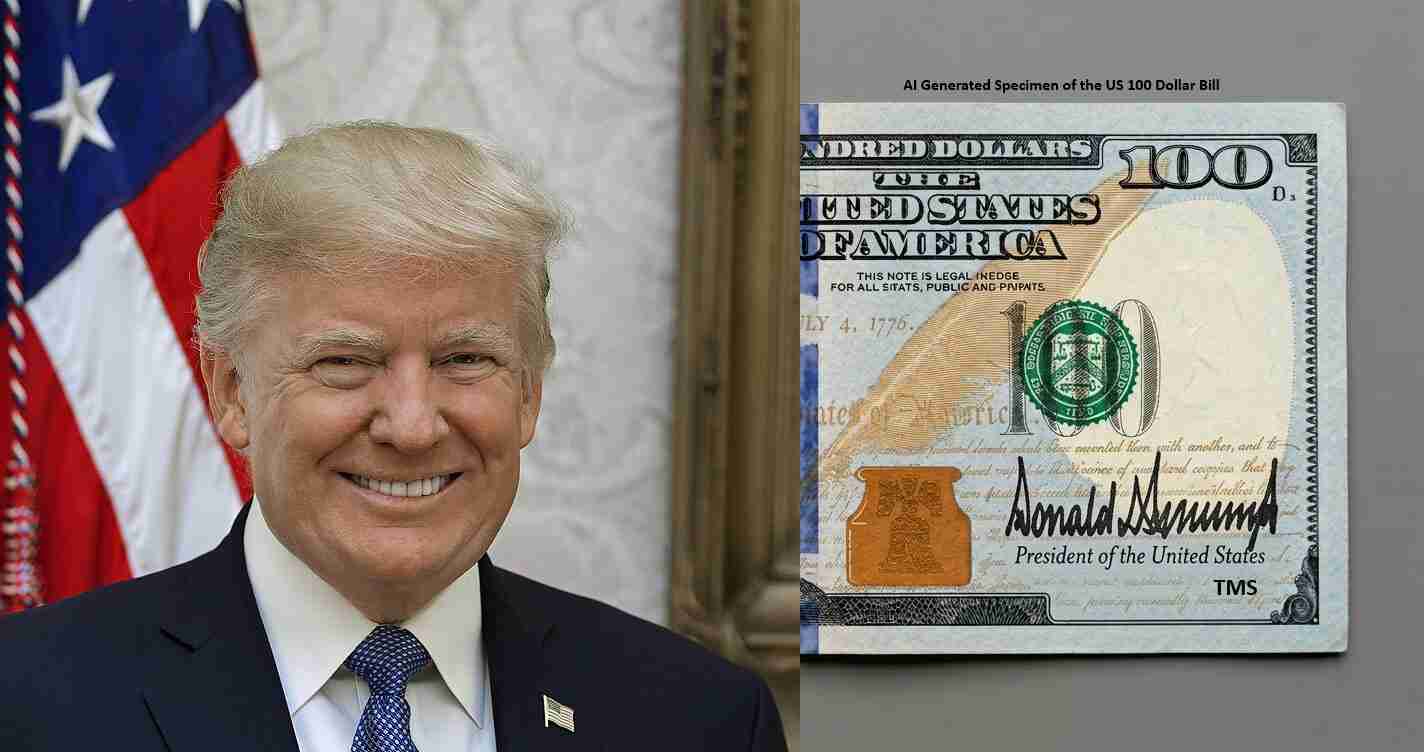
Trump signature to appear on U.S. dollar bills for 250th anniversary, a first for a sitting president
The U.S. Treasury announced March 26, 2026, that President Donald Trump’s signature will appear on new paper currency for the nation’s 250th anniversary — the first time a sitting president’s signature will grace U.S. dollar bills.
- Signatures of President Donald J. Trump and Treasury Secretary Scott Bessent will appear on semiquincentennial notes (CBS News).
- The Treasurer’s signature is being replaced on paper currency for the first time in 165 years (ABC News; CBS News).
- Production begins with $100 bills in June 2026; other denominations follow in coming months (ABC News; CBS News).
- The Bureau of Engraving and Printing will phase in notes while older signatures remain in circulation (ABC News).
What the Treasury said
Treasury Secretary Scott Bessent framed the change as recognition for the administration’s economic record. In a statement reported by CBS News, Bessent said:
“Under President Trump’s leadership, we are on a path toward unprecedented economic growth, lasting dollar dominance and fiscal strength and stability.”
He called issuing bills bearing the president’s signature for the Semiquincentennial “the most powerful way to recognize the historic achievements” of the country and of President Trump.
Treasurer and administration remarks
U.S. Treasurer Brandon Beach praised the move as “not only appropriate, but also well-deserved, given his mark on history as the architect of America’s Golden Age economic revival,” according to CBS News. The public statements focus on symbolism and economic messaging rather than detailed legal memos.
How the change will be implemented
The Bureau of Engraving and Printing will phase in new notes. Production is scheduled to begin with $100 bills in June 2026; other denominations will be printed in the months that follow. During the transition the bureau will continue producing notes that carry the signatures of former Treasury Secretary Janet Yellen and Treasurer Lynn Malerba, so banks and businesses will see a mix of old and new signatures in circulation (ABC News; CBS News).
Legal and historical context
Replacing the Treasurer’s signature on paper currency breaks long-standing practice. Historically, U.S. bills show signatures of the Secretary of the Treasury and the Treasurer of the United States. According to reporting, removing the Treasurer’s signature is the first such change in 165 years (ABC News; CBS News).
Federal law prohibits placing the likeness of a living president on regular circulating currency, but it does not prohibit signatures or commemorative coins. A federal Commission of Fine Arts recently approved a 24-karat commemorative gold coin featuring President Trump; the Treasury is also considering a $1 coin featuring the former president, which is legal under current rules (ABC News).
Reactions and open questions
The Treasury positions the signature change as a semiquincentennial commemoration and an acknowledgment of the administration’s economic messaging. Reporters and observers note the decision is without modern precedent and raises questions about politicization of national symbols, precedent, and the administrative process behind removing the Treasurer’s signature.
Officials have not released detailed internal legal opinions or memos explaining the reasoning and approvals that led to replacing the Treasurer’s signature, leaving open questions about how administrative, legal and historical norms were navigated (ABC News; CBS News).
Production coordination and timeline
The Bureau will need to update plate designs, coordinate production schedules, and manage distribution through banks, ATMs, retail cash systems and Federal Reserve channels. That process can take months, and many notes with prior signatures will remain in circulation until the rollout is complete.
Coins, commemoration and separation of roles
Alongside paper currency changes, the administration is pursuing commemorative coins tied to the semiquincentennial. The Commission of Fine Arts’ approval of a 24-karat gold commemorative coin with President Trump’s image highlights the legal distinction between commemoratives (permitted) and regular circulating currency (restricted for living presidents) (ABC News).
Implications for San Luis Obispo, California
Economic impact
San Luis Obispo County handles cash across tourism, small businesses and farmers markets. Local banks, credit unions and retailers will receive the new notes through normal distribution channels. The phased rollout means merchants and banks will encounter a mix of old and new notes for months. Collectors and local coin shops may see increased interest; local vendors could note short-term curiosity or demand for bills bearing the president’s signature. The Treasury’s plan does not alter the legal value of existing notes (ABC News; CBS News).
Political consequences
San Luis Obispo’s mix of political views and civic engagement means local officials, county supervisors, and congressional representatives may be called on to respond. The change could surface in campaign messaging, public forums and town halls as community groups plan semiquincentennial events.
Social and community effects
Residents, educators and civic groups may use the change as a topic for debate and learning. High schools and colleges, including Cal Poly, may include the rollout in curricula about monetary history and national symbolism. Historical societies and museums might add programming that features early bills when they enter circulation.
Cultural relevance
San Luis Obispo’s summer events—Fourth of July celebrations, parades and downtown festivities—may weave semiquincentennial themes into programming. For many residents the change will be primarily symbolic; for others it will prompt discussion about tradition and the role of elected leaders in national iconography.
Practical implications for residents
- Cash handling: Businesses and banks should expect mixed batches of notes for months; new notes are legal tender and require no special action (ABC News).
- Collecting and tourism: Local coin and currency dealers may see heightened interest; tourists may seek semiquincentennial bills as souvenirs.
- Education and outreach: Schools and libraries can use the rollout to teach about currency design and the Bureau of Engraving and Printing’s role.
Reporting notes and sources
This article draws on reporting from ABC News and CBS News, which covered the Treasury announcement, statements by Treasury Secretary Scott Bessent and Treasurer Brandon Beach, production timing for $100 bills beginning in June 2026, and the Bureau of Engraving and Printing’s ongoing work.