Federal Judge Halts Trump National Guard Portland Deployment, Citing Limits on Presidential Power
A federal judge has temporarily blocked the Trump administration’s plan to federalize 200 Oregon National Guard members for a 60-day mission in Portland, pausing the movement while courts review whether the president lawfully invoked Title 10 authority.
Key takeaways
- Deployment paused: A U.S. district court issued a temporary restraining order halting the planned federalization of 200 Oregon National Guard troops for a 60-day mission. (See court order)
- Legal challenge: Oregon leaders — Governor Tina Kotek, Attorney General Dan Rayfield and Portland Mayor Keith Wilson — sued, arguing the president exceeded his authority; they asked for immediate injunctive relief. Oregon, Portland sue after Trump deployment of National Guard
- Federal justification: The administration said Title 10 permits federal activation to protect federal property and personnel, citing threats to immigration facilities. Trump administration authorizes Oregon National Guard for deployment in Portland
- Broader stakes: The outcome could clarify the balance between federal power and state control of the Guard, with implications for responses to protests nationwide.
Background: What the administration ordered
On Sept. 28, 2025, the Department of Defense sent a memo to Governor Tina Kotek stating the president had authorized the federal activation of 200 Oregon National Guard troops under Title 10 of the U.S. Code.
The memo described Portland as a “war-ravaged city” and said the troops would protect federal immigration facilities and personnel from protesters the administration labeled “domestic terrorists.”
Trump administration authorizes Oregon National Guard for deployment in Portland
State and local opposition: A swift legal challenge
Oregon officials — including Governor Tina Kotek, Attorney General Dan Rayfield and Portland Mayor Keith Wilson — filed suit on Sept. 28, arguing the federal action exceeded presidential authority and that no present emergency justified federalization.
The complaint contended the administration relied on old footage and overstated risks to federal facilities, threatening the long-standing principle that governors generally control their Guard unless a clear legal trigger exists.
Oregon, Portland sue after Trump deployment of National Guard
Public reaction and protests in Portland
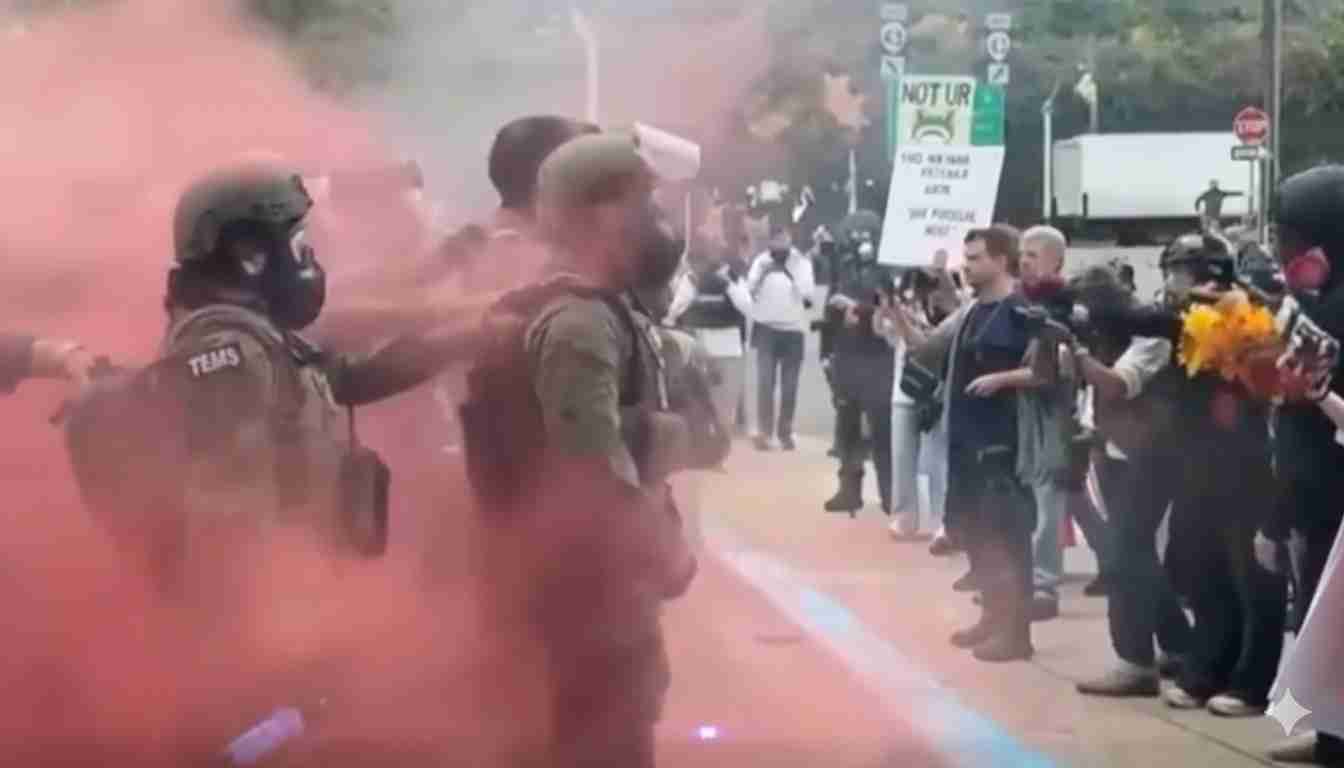
News of the deployment drew hundreds to the site outside the U.S. Immigration and Customs Enforcement (ICE) building in Portland.
Many protesters decried federal militarization as an attempt to intimidate local governments and activists; counterprotesters also gathered.
Portland police reported several uses of crowd-control tools and at least two arrests linked to alleged assaults during demonstrations.
Supporters said federal action was needed to protect federal employees and property, while opponents warned of escalation and erosion of local authority.
Trump administration authorizes Oregon National Guard for deployment in Portland
The judicial fight: Who reviewed the case
The case was initially assigned to U.S. District Judge Michael Simon, who recused after concerns were raised about his wife’s public comments on the deployment.
It was reassigned to U.S. District Judge Karin Immergut, who issued a temporary restraining order on Oct. 4, 2025, pausing the planned federalization and movement of Oregon National Guard troops to Portland.
In her order, Judge Immergut found that Oregon’s claim — that the president exceeded his authority under the Constitution and federal law — “raised serious legal questions that should be reviewed” before troops could be sent.
U.S. judge halts Trump administration from deploying National Guard in Portland
Core legal questions: Presidential authority dispute
At issue is when the president may federalize a state National Guard — especially over a governor’s objections — and what threshold of threat to federal property or personnel justifies that step.
The administration relies on Title 10 and argues protecting federal facilities and employees justifies activation. Oregon counters the facts here do not meet statutory or constitutional standards and that the move intrudes on state control and local governance.
Legal scholars say the case could clarify the balance between federal power and state authority over the Guard. Past precedent draws lines, but the specific facts — a 200-person deployment near federal immigration facilities tied to protests — raise fresh questions about domestic military roles and political uses of federal forces.
What this means for Portland and the broader debate
The TRO does not resolve the underlying merits; it pauses the deployment while the court evaluates legal claims. The matter is likely to move quickly through the courts because it involves active military orders and high political stakes.
How judges interpret Title 10 and presidential powers here could influence future Guard uses in politically sensitive situations, including protests and demonstrations — and will draw attention from civil liberties groups and state officials nationwide.
Implications for San Luis Obispo, California
Economic impact
San Luis Obispo residents and businesses are unlikely to see direct economic effects from the halted Oregon deployment.
However, the case could influence federal choices about deploying troops in other states during protests, potentially affecting travel, events and tourism if federal activations lead to unrest in nearby West Coast cities.
Political consequences
The dispute highlights a presidential authority question that could enter regional politics.
San Luis Obispo leaders who value local control may consider state-level policies or resolutions clarifying attitudes toward federal interventions during civil unrest.
Social and cultural effects
Residents concerned about civil liberties or the use of armed forces in public life may follow the Portland case closely.
Local advocacy groups could use the outcome to support campaigns on policing, protest rights and civilian oversight; conversely, proponents of federal protection may press for firmer responses where threats arise.
Practical applications for residents
Emergency managers and municipal officials should note that precedent from this case could alter how quickly federal forces are expected to deploy during protests.
That may affect mutual aid plans, communication strategies and coordination with state and federal partners. Residents should monitor guidance from the California National Guard and local authorities for any operational changes.
Reporting sources and further reading
- Trump administration authorizes Oregon National Guard for deployment in Portland — Oregon Public Broadcasting
- Oregon, Portland sue after Trump deployment of National Guard — Oregon Public Broadcasting
- U.S. judge halts Trump administration from deploying National Guard in Portland — India Today
“The court finds Oregon’s claim raises serious legal questions that should be reviewed before troops could be sent,” — U.S. District Judge Karin Immergut (temporary restraining order, Oct. 4, 2025).
The legal and political dispute over the Oregon National Guard deployment continues as the court considers whether the administration exceeded its authority. The outcome will be closely watched by state leaders, legal scholars and communities across the West Coast.