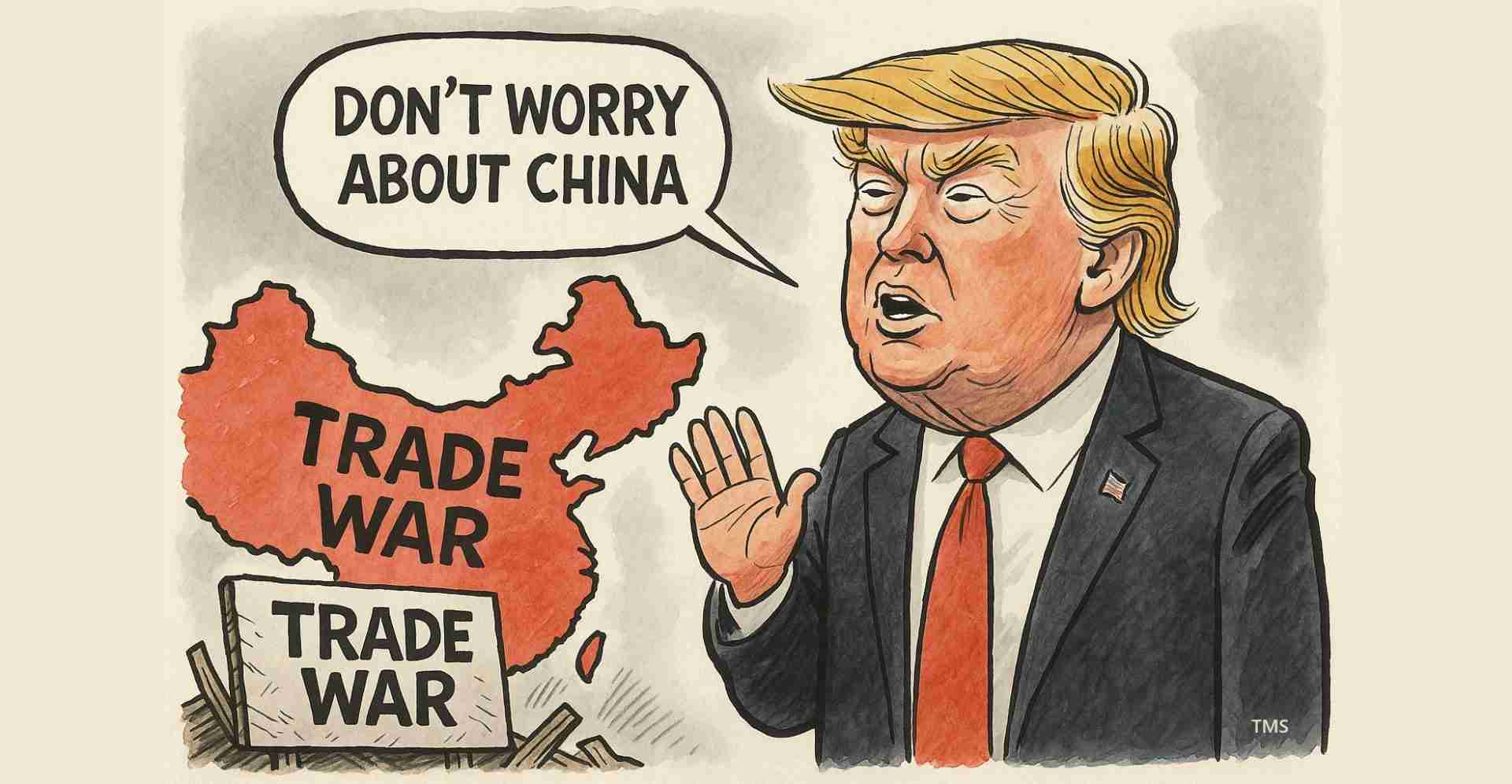
Trump says “Don’t worry” after Beijing restricts rare earths; 100% tariff threat intensifies US-China trade dispute
US-China trade tensions escalated after President Trump threatened 100% tariffs on Chinese imports in response to Beijing’s new restrictions on rare earth exports, raising fears of supply-chain disruption and casting doubt on planned high-level diplomacy between the two countries.
- Trump proposed doubling levies to a 100% tariff on Chinese imports in response to Beijing’s rare earth export curbs.
- China warned of countermeasures while pledging to allow exports for legitimate civilian uses and urging dialogue.
- Rare earths underpin critical tech and defense supply chains, and restrictions risk global production delays for EVs, renewables and electronics.
- Local economies like San Luis Obispo may face higher costs, supply disruptions and calls for workforce and industry support.
Trump’s tariff threat and public assurances
President Trump announced a plan to double existing levies on Chinese goods, proposing a 100% tariff rate in response to Beijing’s curbs on rare earth exports. That proposal represents a sharp escalation in the ongoing US-China trade dispute and would multiply financial costs on traded goods if enforced. The administration framed the move as a response to what it called strategic leverage by China over essential technologies. Fox Business reporting provides details on the announcement and administration rationale: Fox Business.
Public reassurances
While advancing the tariff threat, the president sought to calm markets and public anxiety. In social posts he said, “Don’t worry about China, it will all be fine!” and added the U.S. “wants to help China, not hurt it,” describing Beijing’s restrictions as a temporary setback tied to leadership decisions. The conciliatory tone aimed to reassure investors and consumers even as policy hardened.
China’s defiant reply
Beijing’s Commerce Ministry responded quickly, urging the U.S. not to resort to “threats” and warning of “corresponding measures.” Officials stated China “does not want a tariff war, but we are not afraid of one,” while emphasizing a preference for dialogue as the right path forward. The ministry also said it would continue to issue export licenses for legitimate civilian uses of rare earths, but signaled that further U.S. actions could prompt retaliatory steps to defend Chinese interests. The original report is available from Fox Business.
Why rare earth minerals matter
Rare earth minerals are a group of 17 elements used across modern technology: magnets for electric motors, components for wind turbines, catalytic converters, precision-guided munitions and smartphone parts. China controls roughly 70% of global rare earth mining and nearly 90% of the world’s processing capacity, giving it disproportionate influence over a bottleneck in the global tech and defense supply chain. Experts warn that export restrictions could slow production of electric vehicles, renewable energy hardware and some defense equipment worldwide, creating ripples for manufacturers, parts suppliers and research labs. Reporting: Fox Business.
Diplomatic uncertainty and supply chain risk
The exchange of sharp rhetoric raises questions about upcoming diplomacy, including a planned meeting between President Trump and President Xi Jinping that had been viewed as a potential de‑escalation opportunity. If talks stall, businesses and policymakers may face prolonged uncertainty. Companies might reorganize supply chains, stockpile critical parts, or accelerate efforts to source rare earths and processing capacity outside China—moves that require time, capital and policy support.
Domestic political reaction
U.S. political responses have been mixed. Some leaders backed a hardline approach: Vice President JD Vance described China’s dominance in key supply chains as “the definition of a national emergency” and said the U.S. has “far more cards” in a prolonged confrontation. Other lawmakers and industry groups are weighing economic costs against national security needs. Trump’s public reassurances appear aimed at balancing strength and stability while avoiding sudden market shocks.
What this means for businesses and consumers
If tariffs rise to 100%, import costs would jump and likely push up prices for electronics, electric vehicles and other high-tech goods. Companies that rely on rare earth components could face higher manufacturing costs and longer lead times. Defense contractors using specialized magnetic and electronic components could see project delays if alternative suppliers are not quickly available.
Responses companies may consider:
- Accelerate recycling and recovery of rare earths;
- Diversify suppliers and invest in non-Chinese processing capacity;
- Lobby for policy support and funding to build domestic capability.
Implications for San Luis Obispo, California
Economic impact
Local manufacturers, tech firms and startups in San Luis Obispo County could see higher component costs and slower production schedules if tariffs rise or rare earth supplies tighten. Clean energy and EV projects may face increased equipment costs, potentially delaying local initiatives or raising consumer prices.
Political consequences
Local elected officials may face pressure from businesses and residents to seek federal relief, support workforce transitions, or secure funding. Institutions such as Cal Poly San Luis Obispo could play a role in attracting research and training dollars tied to efforts to build domestic capacity for critical minerals and processing.
Social effects
Jobs and small businesses could be affected if supply disruptions force reduced hours or delayed contracts. Indirect impacts may hit tourism and hospitality if broader economic stress reduces discretionary spending.
Cultural relevance
San Luis Obispo’s focus on sustainability and resilience shapes local debate: the rare earth supply issue intersects with community priorities around recycling, circular economy initiatives and clean-technology manufacturing.
Practical applications for residents
- Monitor prices and timing for electronics and vehicles;
- Businesses should review supplier contracts and contingency plans;
- Watch for workforce-development opportunities if federal/state initiatives fund domestic processing or recycling projects.
Sources
Reporting in this article is based on details from Fox Business.
Reporting note
This article draws on reporting by Fox Business on President Trump’s tariff threat and China’s response, including details about rare earth export restrictions and statements from U.S. and Chinese officials.
“We do not want a tariff war, but we are not afraid of one,” Beijing’s Commerce Ministry said while urging dialogue and promising to permit exports for legitimate civilian uses.