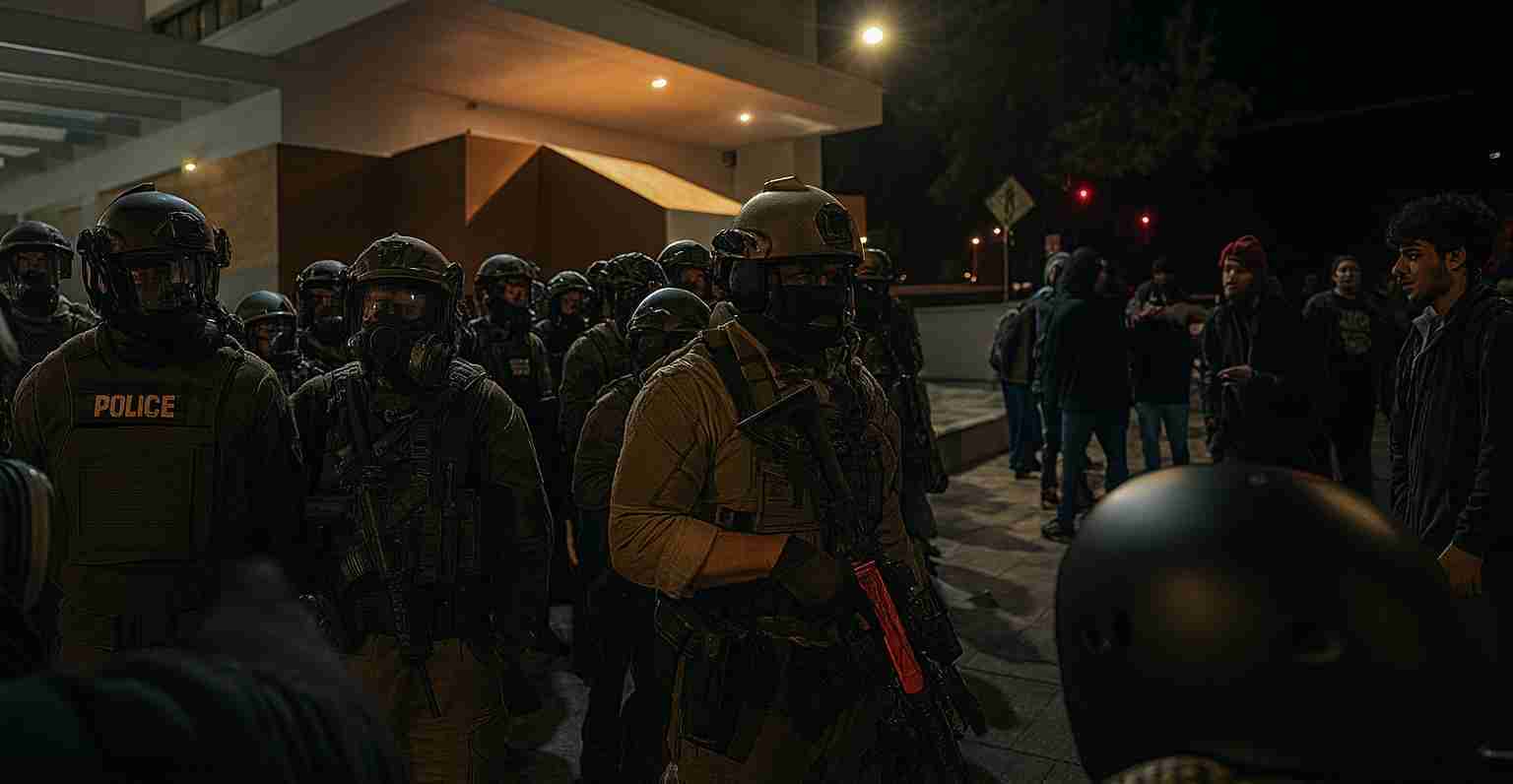
9th Circuit Court ruling allows Trump National Guard deployment in Portland despite Oregon Governor objections
The 9th Circuit Court of Appeals ruled the Trump administration may federalize and deploy the Oregon National Guard in Portland despite Governor Tina Kotek’s objections, permitting federal intervention at protests near the city’s ICE building amid ongoing legal debate.
- Decision: A three-judge Ninth Circuit panel allowed federalized National Guard deployment in Portland.
- Legal focus: The case centers on whether the president can federalize the Oregon Guard over Governor Tina Kotek’s objections to protect federal property.
- Reaction: Civil liberties groups, including the ACLU, described the opinion as undermining state authority and raised concerns about federal overreach.
- Records: The court’s full 36-page opinion, including majority and dissenting views, is publicly available.
What the case argued
Federal officials moved to federalize the Oregon National Guard and send troops to Portland, asserting the action was necessary to protect federal property and enforce federal law near the Immigration and Customs Enforcement (ICE) office amid protests. Federalization means the president brings state Guard units under federal control.
Governor Tina Kotek objected, arguing the Guard should not confront protesters and that the administration had not shown the extreme circumstances required to override the governor’s authority. Kotek’s objections were central to the lawsuit challenging the deployment. Reporting and legal summaries are available from OPB.
Lower court decision and legal standard
U.S. District Judge Karin Immergut previously blocked the deployment, concluding the administration had not demonstrated an invasion, rebellion, or that federal forces were insufficient — statutory conditions tied to presidential authority to federalize the Guard. That injunction temporarily kept troops from being sent under federal control. (See OPB.)
On appeal, the Ninth Circuit reviewed how to interpret those statutory conditions and how much deference courts should give the president’s judgment about threats to federal property and operations.
The 9th Circuit decision and the judges’ questions
A three-judge Ninth Circuit panel heard arguments and, according to transcript and reporting, expressed skepticism about the lower court’s narrow limitation on presidential power. The panel permitted the deployment, signaling a broader reading of presidential authority when federal interests are implicated.
Panel makeup: The panel included Judges Ryan Nelson and Bridget Bade (both Trump appointees) and Judge Susan Graber (a Clinton appointee). (See reporting from OPB and ABC News.)
The court’s published opinion runs 36 pages and includes majority and at least one dissenting view. Civil liberties groups noted the opinion was divided. The full opinion is available as a PDF from the Ninth Circuit.
Legal basis and limits explained simply
Federal law authorizes presidential activation of National Guard troops under narrow conditions historically tied to invasion, rebellion, or situations where federal forces are insufficient. The dispute here is how those rules apply when protests target federal property, and whether the president’s determination of a federal interest should override a governor’s refusal.
Scope: The Ninth Circuit panel’s ruling favors a broader presidential role for the facts in Portland, but it is fact-specific and does not automatically resolve similar disputes in other states. Civil liberties groups warn the decision could be cited to justify broader federal control over state Guard units in future cases (see the ACLU statement).
Reactions from advocates and officials
The ACLU said the decision “undermines state and local authority over their own National Guard units” and raises “serious concerns” about federal overreach.
Supporters of the administration argued that federal agencies must be able to protect federal installations and enforce federal law. Local reporting noted panel questioning suggested judges were inclined to give the executive branch room to act when federal interests are at stake. (See ABC News.)
Scope, limitations, and related orders
The Ninth Circuit’s opinion resolves the federal challenge involving Oregon specifically and does not address separate litigation in California that has blocked federalized National Guard troops under similar claims. Those separate orders remain in place for now, according to civil rights groups (see ACLU).
Full public records, including the court’s PDF opinion, provide detailed legal reasoning and explain where judges agreed and where they split. The opinion is posted by the Ninth Circuit.
Why this matters locally
The ruling touches on how the nation balances protection of federal property, public order, and state authority. Practically, the decision means the federal government may proceed with the planned deployment in Portland unless further legal steps block or modify that action.
Implications for San Luis Obispo, California
- Policy ripple effects: The 9th Circuit decision could shape how federal officials approach protests or federal property in California cities; it signals a willingness by a Ninth Circuit panel to allow federalization in certain protest contexts. (Sources: OPB, ACLU.)
- Legal and political consequences: County and city officials may face new tensions if federal forces seek to act locally; the ruling reduces one legal barrier to federalized deployments and may complicate negotiations among state, local, and federal authorities. (See the court opinion.)
- Public safety and civil liberties: Residents who attend protests may be affected if federalization becomes more common; civil liberties groups warn of risks to peaceful protest and local control.
- Law enforcement coordination: The decision may prompt reviews of memorandums of understanding and communication channels among local police, state National Guard, and federal partners to reduce confusion during crises.
- Civic conversation: Voters and civic groups may push for public discussion or local resolutions clarifying expectations around protest management and federal property protection.