DoorDash Grandma Delivers McDonald’s to White House, Praises ‘No Tax on Tips’ Policy as Lifeline for Gig Workers
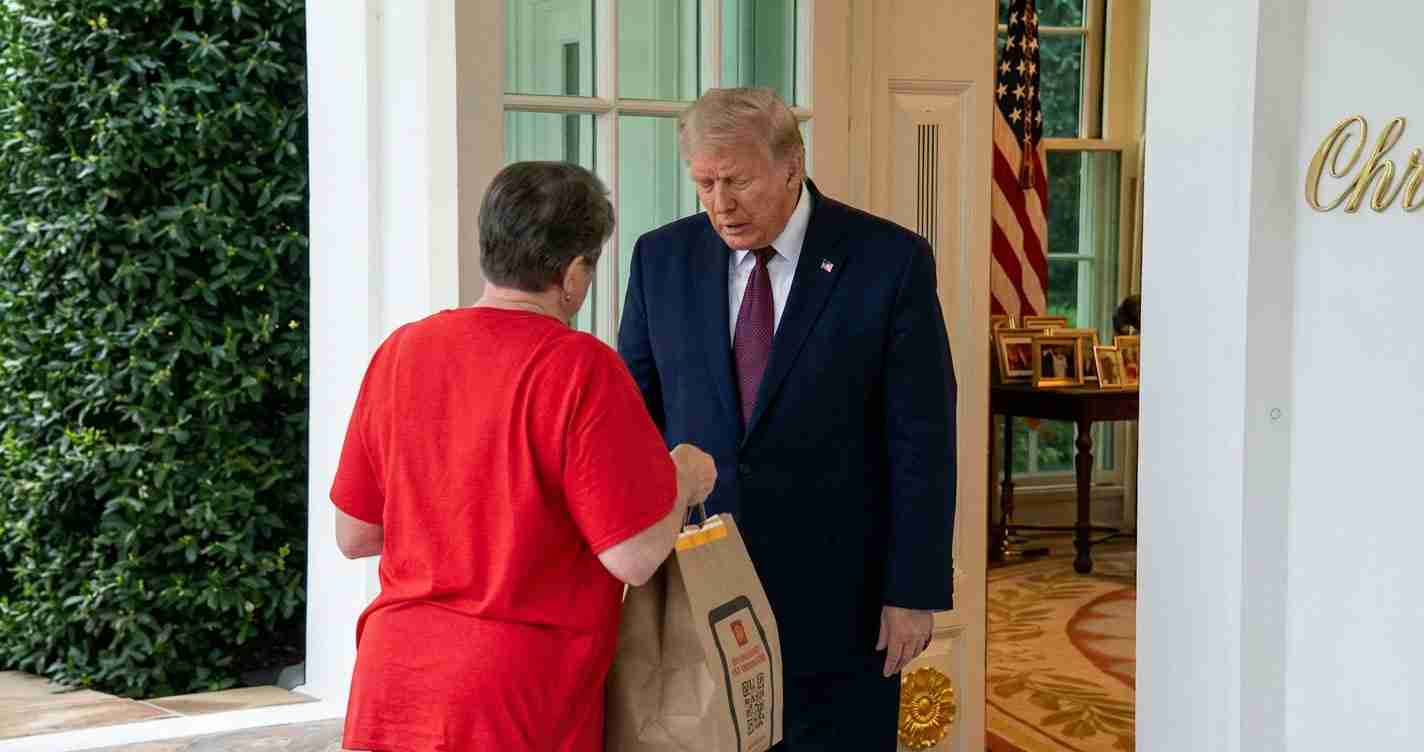
Sharon Simmons, the “DoorDash Grandma,” became the first DoorDash driver to deliver McDonald’s to the White House on April 13, 2026, praising a new “no tax on tips” policy she says has been a financial lifeline for gig workers.
Key takeaways
- Historic visit: Sharon Simmons delivered McDonald’s to the White House on April 13, 2026, and met President Donald Trump during an event highlighting the policy, per DoorDash’s press release and CBS News.
- Personal impact: Simmons says the change let her keep roughly $11,000 in tips last year and expects to save about $3,000–$4,000 this tax season (self-reported to media).
- Policy scope: The “no tax on tips” rule is part of the administration’s One Big Beautiful Bill, temporarily effective through 2028 and tied to broader fiscal debates.
Main coverage
How the White House photo-op unfolded
Simmons, an Arkansas grandmother of 10, arrived at 1600 Pennsylvania Avenue holding a McDonald’s bag as part of a staged visit the White House used to spotlight the no-tax-on-tips component of President Trump’s tax package. Video and reporting show the president accepting the order, asking Simmons about voting and policy, and giving a cash tip; staff later shared the food. Simmons told reporters she felt “honored” to represent Dashers and to demonstrate how the policy has helped her family (DoorDash press release; CBS News).
Simmons’ DoorDash story and finances
Simmons began dashing after the pandemic for schedule flexibility and supplemental income, with company materials noting she started in 2021 or 2022 and has completed more than 14,000 deliveries. Tips constitute a large portion of her earnings; she told media she believes she received more than $11,000 in tips last year and expects to save roughly $3,000–$4,000 this tax season because tips are temporarily excluded from taxable income (DoorDash; Fox News).
“I started dashing to help other people,” Simmons said, also noting she balances work while caring for a spouse confronting cancer.
What the policy changes are
The no-tax-on-tips provision is embedded in the administration’s One Big Beautiful Bill. Key components include:
- Temporary exclusion of tips from taxable income through 2028.
- Temporary removal of taxes on overtime pay for the same period.
- An increase in certain credits and deductions, such as a higher standard deduction for seniors and a raised child tax credit.
The administration argues these moves put more money into workers’ pockets and boost consumer spending; the DoorDash release and tax guidance adjustments by the IRS reflect the change.
Claims of benefit and how they’re calculated
DoorDash and the White House point to aggregate savings estimates and company statements that the policy created substantial tax relief for drivers nationwide. Simmons’ figures—about $11,000 in tips and $3,000–$4,000 in tax savings—are self-reported and match examples the company has highlighted. Independent verification of individual savings requires review of private tax filings and has not been provided by an independent tax expert in coverage reviewed.
Critics’ concerns: revenue and deficit effects
Opponents warn the provision reduces federal revenue and could widen the national deficit. Economists cited in coverage say tax cuts can stimulate short-term spending but raise questions about long-term fiscal balance; the White House counters that economic growth and immediate household relief justify the measures (Fox Business).
Political context of the event
The visit served as a human face for a signature policy and was framed by supporters as evidence the tax change helps everyday Americans. Critics described the exchange as political theater; media noted the president raised unrelated cultural topics during the visit—an aside that drew criticism from some outlets, including LGBT-focused press (The Advocate).
Questions raised by the visit — an investigative look
- Representativeness: How typical is Simmons’ experience across gig workers? Outcomes vary by hours, tips and other income; no peer-reviewed distributional study is yet public.
- Duration: Will the policy outlast its 2028 sunset? Simmons hopes so, but permanence requires congressional action.
- Fiscal trade-offs: Short-term consumer benefits may not offset long-term revenue losses without faster-than-expected growth.
DoorDash’s role and messaging
DoorDash issued a statement celebrating Simmons’ visit and emphasizing the company’s reliance on tips and its role in drivers’ incomes. The company used the event to reinforce messaging that the change increases driver take-home pay; the White House and DoorDash materials together created a coordinated narrative about relief for service workers (DoorDash release).
Implications for San Luis Obispo, California
Economic: Local Dashers, hospitality staff and part-time tipped workers could see larger take-home pay while the policy is in effect, potentially increasing household spending in San Luis Obispo.
Political: Local leaders and voters may weigh short-term relief against federal deficit concerns; the issue could surface in local debates and candidate forums.
Social & practical: Households that rely on gig income—including retirees—may find immediate relief for bills and medical costs, but uncertainty about the 2028 sunset could complicate long-term planning. Local nonprofits and tax-preparation programs should advise residents to track guidance and consider workshops during the policy window.
Sources and further reading
- DoorDash press release: Dasher visits White House to celebrate no tax on tips
- Fox News: DoorDash driver hails key Trump policy after delivering McDonald’s to White House
- CBS News: DoorDash worker delivers Trump McDonald’s
- Fox Business: DoorDash grandma praises Trump tax break after $11K savings
- The Advocate: Coverage of the White House event and media reaction
Reporting: Times Media Service; sources as listed above.