Quad God’s Fall: Ilia Malinin’s Stunning Free Skate Drops Favorite to Eighth in Men’s Figure Skating Finals
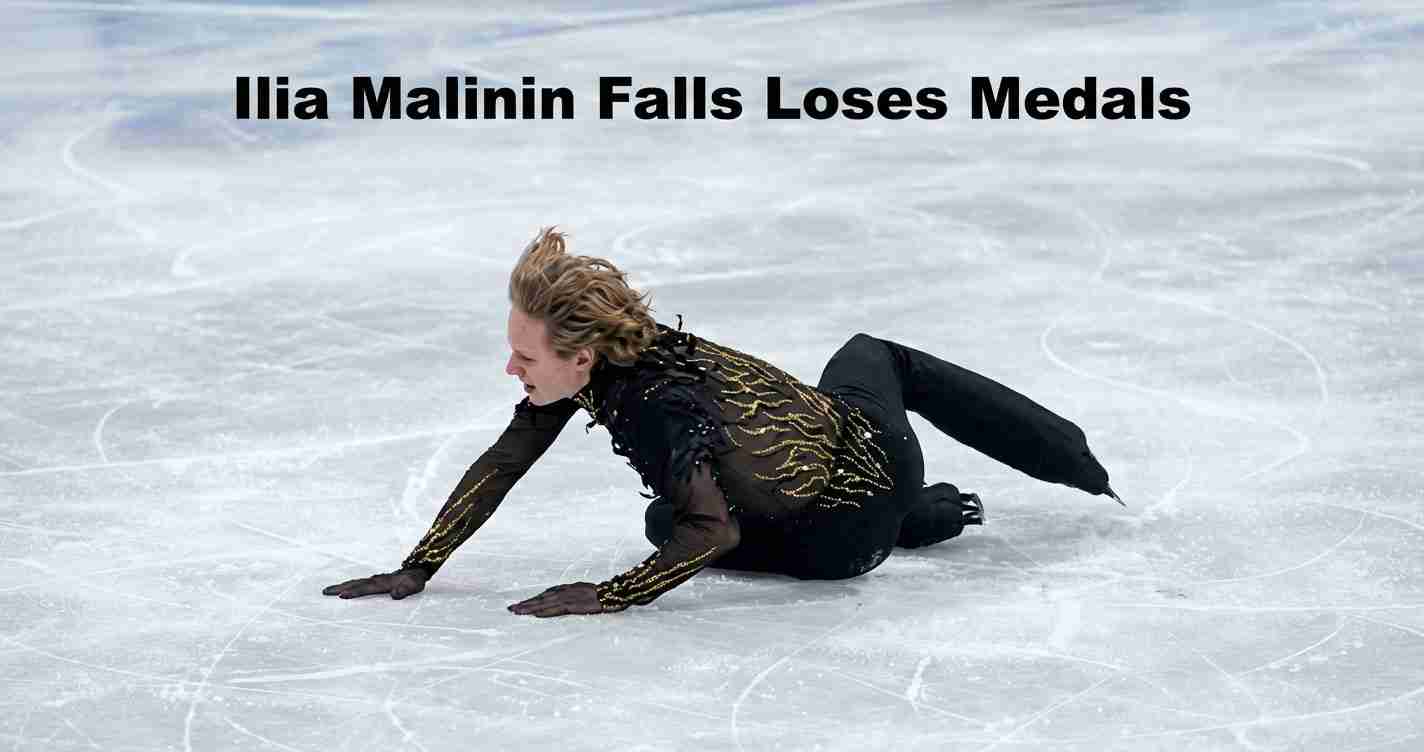
Ilia Malinin, the American “Quad God” and short-program leader, suffered multiple falls and under-rotations in the men’s free skate at the 2026 Winter Olympics in Milano Cortina, scoring 156.33 and dropping to eighth with a 264.49 total.
- Short program: Malinin led with 108.16 after the short program (CBS Sports).
- Free skate collapse: Malinin scored 156.33 in the free skate, totaling 264.49 and finishing eighth (CBS Sports).
- Podium: Mikhail Shaidorov (KAZ) won gold with 291.58 (free skate 198.94); Yuma Kagiyama (JPN) silver; Shun Sato (JPN) bronze (CBS Sports).
Free skate breakdown: what went wrong
Malinin opened his free skate strongly, landing a clean quad flip — an element that typically sets a high-scoring tone for him. But the program began to falter shortly after the opening jump.
Judges and viewers observed a single axel where a double (or higher) was expected, and a planned quad loop was downgraded to a double loop. Those early downgrades eroded technical base value and increased pressure on the remainder of the program.
“The turning point came when Malinin fell on an attempted quad Lutz; he fell again shortly after, and a cascade of under-rotations and negative GOE produced a far lower free score than expected.”
He finished the free skate with 156.33 points — well below his world-record free skate of 238.24 and beneath the 200-plus free scores he posts in strong performances (CBS Sports).
Final standings and the podium
Mikhail Shaidorov of Kazakhstan produced the evening’s cleanest and most powerful free skate, posting a free score of 198.94 and a total of 291.58 to claim Olympic gold. Japan’s Yuma Kagiyama won silver and teammate Shun Sato earned bronze. Malinin’s total of 264.49 left him off the podium despite pre-competition expectations (CBS Sports).
Context on Malinin: the Quad God and the backflip
Malinin rose rapidly through the ranks by consistently landing multiple quadruple jumps, earning the nickname “Quad God”. He regularly posts totals in the 300s and holds a personal best total of 333.81, including a world-record free skate of 238.24 set in December (CBS Sports).
A notable element in Malinin’s choreography is the backflip. After an ISU rule change for the 2024–25 season, the backflip was reclassified as a choreographic element rather than a banned somersault-type jump, allowing legal performance without the previous penalty. Malinin’s clean backflip landings marked a historic return of a move long absent from elite competition (CBS Sports).
Why this upset matters
Three themes emerge from Malinin’s unexpected finish:
- Risk vs. reward: Technical ambition (multiple quads) raises scoring ceiling but magnifies the cost of mistakes.
- Pressure of favoritism: Being the favorite at an Olympic final can amplify mental and physical strain, where small errors cascade.
- Strategy implications: Coaches and federations may reassess the balance between technical load and program consistency after this result.
What we still do not know
As of the final scoreboard, there were no widely reported statements from Malinin or his coaching team detailing causes such as illness, equipment issues, or injury. Nor was there public confirmation of any program changes after the short program. Reporters will likely seek post-competition comments and training notes to clarify contributing factors. For now, the clear facts are: early downgrades, two falls, negative GOE, a free skate of 156.33, and an eighth-place Olympic finish (CBS Sports).
Implications for San Luis Obispo, California
Economic: Local sports bars and cafes broadcasting the event may see temporary patronage boosts. Increased interest in figure skating could produce modest revenue gains for community rinks and youth programs.
Political: The result is unlikely to change policy, but city and county leaders may use the moment to highlight the value of recreational facilities and youth-sport investment.
Social and cultural: Coaches and families in San Luis Obispo can use Malinin’s setback as a teaching moment about resilience, mental health, and managing competitive pressure. Though skating is not the region’s dominant sport, the narrative will resonate with local audiences.
Practical applications: Trainers may emphasize program reliability over maximum technical load, and local programs could increase mental performance coaching. Community rinks might use Olympic clips to teach risk management and recovery after mistakes.
Reporting note and sources
This account is based on live results and reporting from Winter Olympics coverage. Full event details, scores and context are drawn from published updates. For the official score breakdown and live reporting, see CBS Sports.