Echinus Geyser Roars Back: Yellowstone’s Largest Acidic Geyser Erupts About 40 Times After Six-Year Silence
Echinus Geyser, Yellowstone’s largest acidic geyser, reactivated in February 2026 after nearly six years of dormancy, producing roughly 40 eruptions and indicating a cleared hydrothermal system while scientists confirm Yellowstone’s volcanic status remains normal for now.
- Reactivation: Echinus began erupting Feb. 7, 2026, and surged to frequent eruptions mid‑month — ~40 eruptions recorded in February.
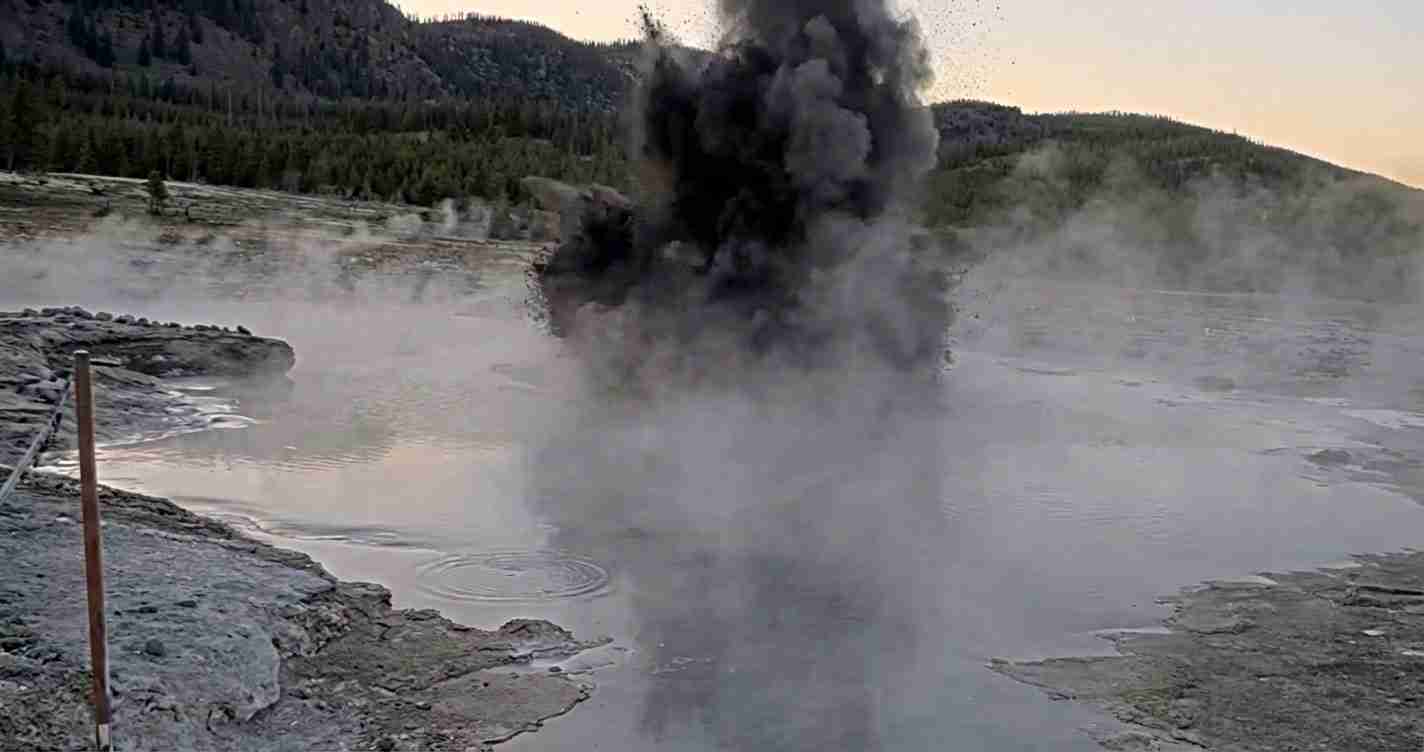
- Nature of activity: Eruptions came every 2–5 hours, lasted 2–3 minutes, and reached about 20–30 feet (6–10 m).
- Cause & monitoring: Scientists say a “clogged” hydrothermal system likely cleared; USGS/YVO monitoring shows no signs of volcanic unrest.
- Safety: Park officials remind visitors to stay on boardwalks and follow NPS advisories.
What happened at Echinus Geyser
Echinus Geyser in Yellowstone’s Norris Geyser Basin surprised researchers when it resumed activity in early February 2026. The first visible burst on Feb. 7 ended almost six years of little or no activity; smaller bursts followed on Feb. 9, 12 and 15 before the system stepped up on Feb. 16.
From Feb. 16, observers reported eruptions every 2–5 hours, each lasting about 2–3 minutes and propelling water roughly 20–30 feet (6–10 m) high. In total, observers tallied approximately 40 eruptions during February, with activity tapering near month’s end. After each burst, the pool level fell sharply and typically refilled in about an hour.
Reporting and monitoring updates are available from multiple sources, including U.S. Geological Survey / Yellowstone Volcano Observatory, NDTV and local coverage by KTVQ.
Why scientists think it reawakened
Researchers from the USGS / Yellowstone Volcano Observatory and partner scientists point to a clearing of a clogged hydrothermal plumbing system. Over time, channels in geyser conduits can fill with mineral deposits, sediments or debris; when a blockage shifts or flushes, trapped steam and water escape and trigger renewed eruptions.
USGS caution: Clearing of a geyser’s plumbing does not indicate magma movement or increased likelihood of volcanic eruption. Monitoring shows normal background seismicity and deformation for Yellowstone.
February also saw dozens of small earthquakes — the largest about M2.4 — but scientists emphasize that this seismicity is consistent with hydrothermal processes rather than changes in the magma system (video summary; USGS/YVO).
How Echinus works and what makes it unique
Echinus is an acidic geyser — its pool measures about pH 3.3–3.6, similar in acidity to orange juice or vinegar, and its water temperature reaches roughly 176.5°F (80.3°C). Unlike many acid systems that corrode cones, Echinus combines acidic gases with neutral waters, allowing it to retain a durable, spiny cone that resembles a sea urchin.
Silica-rich deposits create the spiny cone while iron, aluminum and arsenic minerals produce a vivid red rim at the pool edge. These visual markers make Echinus distinctive but also underscore the danger of leaving boardwalks: the park warns visitors not to touch or approach formations (GeyserTimes; NDTV).
History of Echinus and past phases
Named in 1878 by mineralogist Albert Charles Peale for its urchin-like shape, Echinus was more active and predictable in the late 20th century. In the 1970s it erupted every 40–80 minutes, and in the 1980s–1990s some eruptions reached up to 75 feet and lasted far longer. Activity declined after 1998 when a secondary water source was lost, producing long dormancy periods. Short active phases occurred in 2010–2011 and 2017–2019, with the most recent pre‑2026 eruption recorded in December 2020 (KTVQ; GeyserTimes).
Monitoring and the broader Norris Geyser Basin activity
Echinus sits in the Back Basin of the Norris Geyser Basin, one of Yellowstone’s most changeable hydrothermal areas. The basin has shown other notable activity recently, including a Steamboat Geyser eruption on Feb. 27 and small explosions that formed a new blue pool in 2024–2025.
Scientists use temperature probes, seismographs and ground deformation monitoring — systems upgraded after earlier surges — to track changes. Park and USGS teams continue to publish updates and interpret data for the public (USGS/YVO; video coverage).
Visitor safety and public guidance
Safety first: The National Park Service emphasizes that hydrothermal areas are fragile and hazardous — thin crust and scalding water can cause severe injury. Visitors should stay on boardwalks, follow posted signs and check the NPS geyser activity page before travel (NPS geyser activity and safety information).
Implications for San Luis Obispo, California
Although physically distant, Echinus’s return may have local effects in San Luis Obispo County:
- Economic: Short-term travel interest or inquiries to tour operators; increased online engagement and regional trip planning rather than mass tourism.
- Political: The event highlights federal science and park services; clear communication from USGS/YVO and the NPS can build public trust across political lines.
- Social & cultural: Local educators, museums and outdoor groups may use the story as a teaching moment on geology, stewardship and safety.
- Practical: Students, amateur geologists and photographers in the region (including Cal Poly) may follow updates and use the event for remote study and outreach.
Public safety reassurance for San Luis Obispo readers
There is no hazard to San Luis Obispo from Echinus or other Yellowstone hydrothermal events. The USGS and Yellowstone scientists report no change in the volcano’s overall status; local emergency plans on the West Coast need not change because of Yellowstone geyser activity. The primary impacts are interest, education and possible travel planning.
Sources and further reading
- U.S. Geological Survey / Yellowstone Volcano Observatory: Echinus Geyser back in action
- NDTV feature: World’s largest acidic geyser in Yellowstone erupts after 6 years
- KTVQ Billings: World’s largest acidic geyser erupts again in Yellowstone
- GeyserTimes entry for Echinus
- National Park Service: Geyser activity and safety information
- Video coverage and compilation of recent activity