USFS issues Southern California rattlesnake warning after spike in encounters, including two recent deaths
The U.S. Forest Service has warned Southern California residents and visitors after an unusually warm early spring triggered a spike in rattlesnake activity, producing multiple serious encounters — including two recent fatalities — and prompting urgent safety guidance.
- Early warm weather has drawn rattlesnakes out of dormancy weeks sooner than usual, increasing sightings and bites.
- Recent cluster includes at least four bites since mid‑March and two fatal incidents in Orange and Ventura counties.
- Safety steps — stay on trails, keep pets leashed, watch where you step, and call 911 immediately for bites.
What the USFS said
“As temperatures rise, rattlesnakes become more active in the forest. Stay alert, watch where you step and keep pets close.”
That advisory was posted by San Bernardino National Forest rangers, who noted that warmer, sunnier conditions have brought snakes out of dormancy earlier than normal. The forest spans roughly 800,000 acres across Riverside and San Bernardino counties and rangers say activity typically grows in March and April, but this year it arrived sooner and more intensely in some areas.
Deadly incidents and recent bites
This spring’s surge followed several serious encounters across the region:
- Orange County: A 25‑year‑old man died after a rattlesnake bite while mountain biking in Irvine in early March (Fox 11 Los Angeles).
- Ventura County: Gabriela Bautista, 46, of Moorpark was bitten on March 14 at Wildwood Regional Park; she died five days later from “rattlesnake venom toxicity in an accidental manner” (Fox 11 Los Angeles).
- Riverside County: A hiker north of Moreno Valley was bitten and required hospitalization earlier in the month (CBS Los Angeles).
- Ventura County (Newbury Park): A teenage girl was recently bitten near the Wendy Drive trailhead and received medical attention (Fox 11 Los Angeles).
Fire officials report four bites since mid‑March alone, compared with nine total bites in all of 2025, prompting renewed warnings from forest and park agencies (Fox 11 Los Angeles; CBS Los Angeles).
Why snake activity is up
Rattlesnakes are cold‑blooded and rely on ambient temperatures to regulate body heat. Officials point to an early, pronounced warming trend across Southern California as the main driver of increased sightings and encounters (KESQ; CBS Los Angeles).
Identifying rattlesnakes
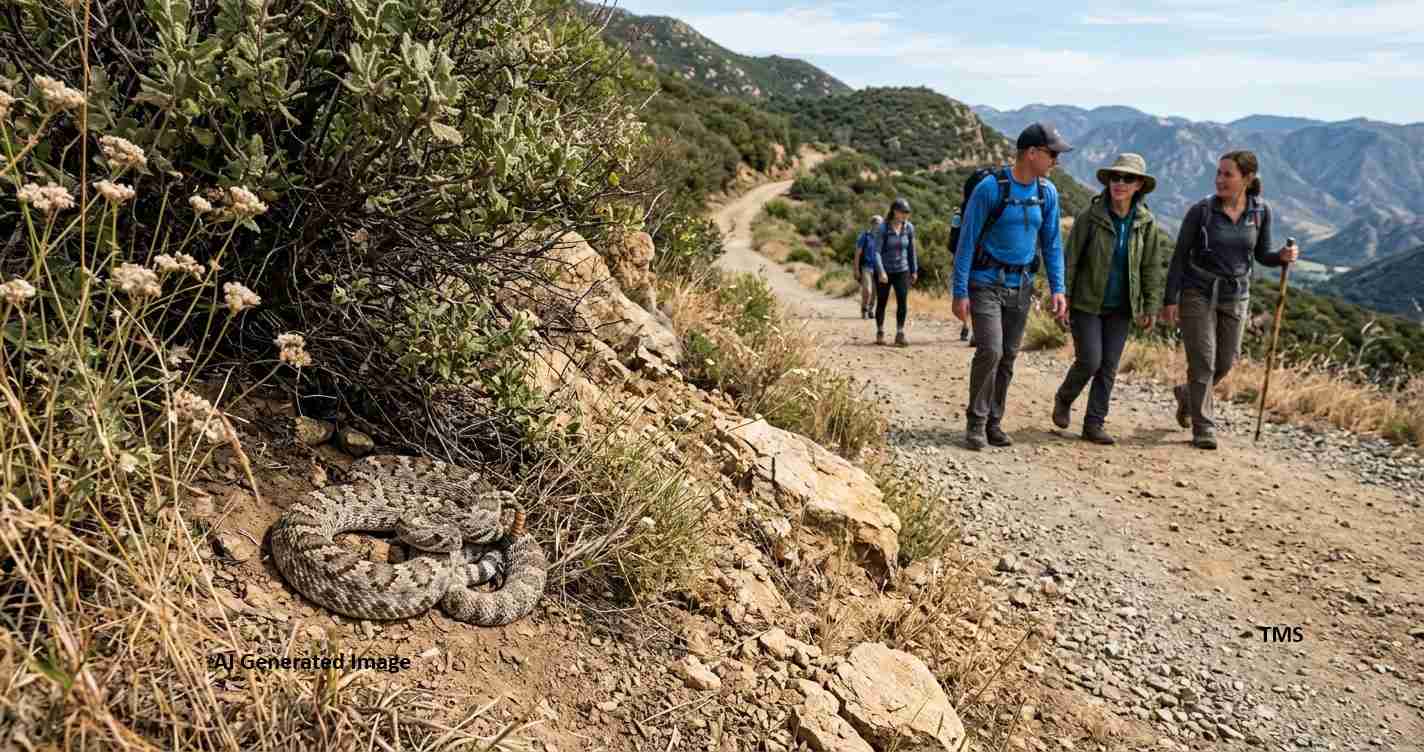
The most common species encountered in Southern California are the Western Diamondback and Southern Pacific rattlesnakes. Key identifiers:
- Distinct rattle at the tail tip (when present)
- Broad, triangular head
- Diamond‑shaped or blotched patterns along the back
Note: Rattlesnakes can strike farther than many expect and may be silent before striking. They are also capable swimmers; remain alert even if you do not hear a rattle (CBS Los Angeles).
Rattlesnake safety tips
Prevention and avoidance
- Stay on marked trails and open paths; avoid tall grass, heavy brush, rock piles and leaf litter (CBS Los Angeles).
- Watch where you step and place your hands when climbing over rocks or downed logs.
- Give rattlesnakes at least six feet of space; calmly move away (CBS Los Angeles; KESQ).
- Keep pets close and on leash; dogs are more likely to be bitten when exploring underbrush or rock crevices.
- Wear long pants and sturdy boots on known rattlesnake trails.
- Never attempt to touch, tease or kill a rattlesnake; disturbing wildlife can raise the chance of defensive strikes and may be illegal in some parks (CBS Los Angeles; KESQ).
If someone is bitten
Call 911 immediately. Do not wait for symptoms. Recommended first aid:
- Keep the victim calm and still; movement spreads venom.
- Keep the bitten limb at or slightly below heart level.
- Cover the bite with a clean, dry dressing and keep the person warm and at rest.
- Do not give food or drink. Do not apply tourniquets, cut the wound, attempt to suck out venom, apply ice, or immerse the wound in water. Avoid alcohol or caffeine (CBS Los Angeles; Fox 11 Los Angeles).
Symptoms of envenomation can include puncture marks, swelling and severe pain, nausea, vomiting, breathing difficulty, vision changes, excessive sweating and numbness or tingling. Seek medical care immediately if a venomous bite is suspected (CBS Los Angeles).
Context and statistics
Officials say the spring cluster is notable compared with last year: four bites since mid‑March versus nine bites during all of 2025. That rise has led agencies to issue repeated reminders and increase public outreach across parks and trails (Fox 11 Los Angeles; CBS Los Angeles).
Implications for San Luis Obispo, California
Economic impact
San Luis Obispo County’s outdoor‑recreation economy could see behavioral shifts: fewer weekend hikers and bikers may visit parks and beaches if perceived risk rises, potentially reducing revenue at businesses that serve outdoor visitors.
Political consequences
Local officials and park managers may face pressure to increase signage, staffing and public education. City councils or county supervisors could be asked to review funding for trail maintenance, emergency response times and outreach without restricting access to public lands.
Social effects
Families, school groups and outdoor clubs may alter spring activities. Parents and organizers could change plans for hikes or youth mountain‑biking outings; pet owners may shorten walks or avoid certain trails.
Cultural relevance
Outdoor recreation is central to San Luis Obispo’s culture. Clear, practical guidance — like the USFS tips — helps preserve access to nature while reducing risk. Local hiking groups and outfitters can amplify consistent, evidence‑based messages.
Practical applications for residents
- Update group plans: Brief participants on rattlesnake safety and carry communications on longer outings.
- Trail signage: Add seasonal notices about snake activity with basic first‑aid instructions and emergency numbers.
- Pet precautions: Keep dogs leashed and on established trails, especially during warmer hours.
- Emergency readiness: Review local hospital and urgent‑care capabilities for envenomation treatment and know fastest routes from trailheads to medical centers.
Source list
- CBS Los Angeles: “Southern California rattlesnake bites prompt US Forest Service warning”
- KESQ: “Forest Service warns outdoor enthusiasts to watch for rattlesnakes”
- Fox 11 Los Angeles: “Second Southern California rattlesnake death reported; Moorpark hiker”
For now, outdoor users in Southern California and visitors to nearby regions such as San Luis Obispo are urged to treat the early‑season warming as a cue to follow rattlesnake safety tips and prepare for a more active snake season than in recent years.