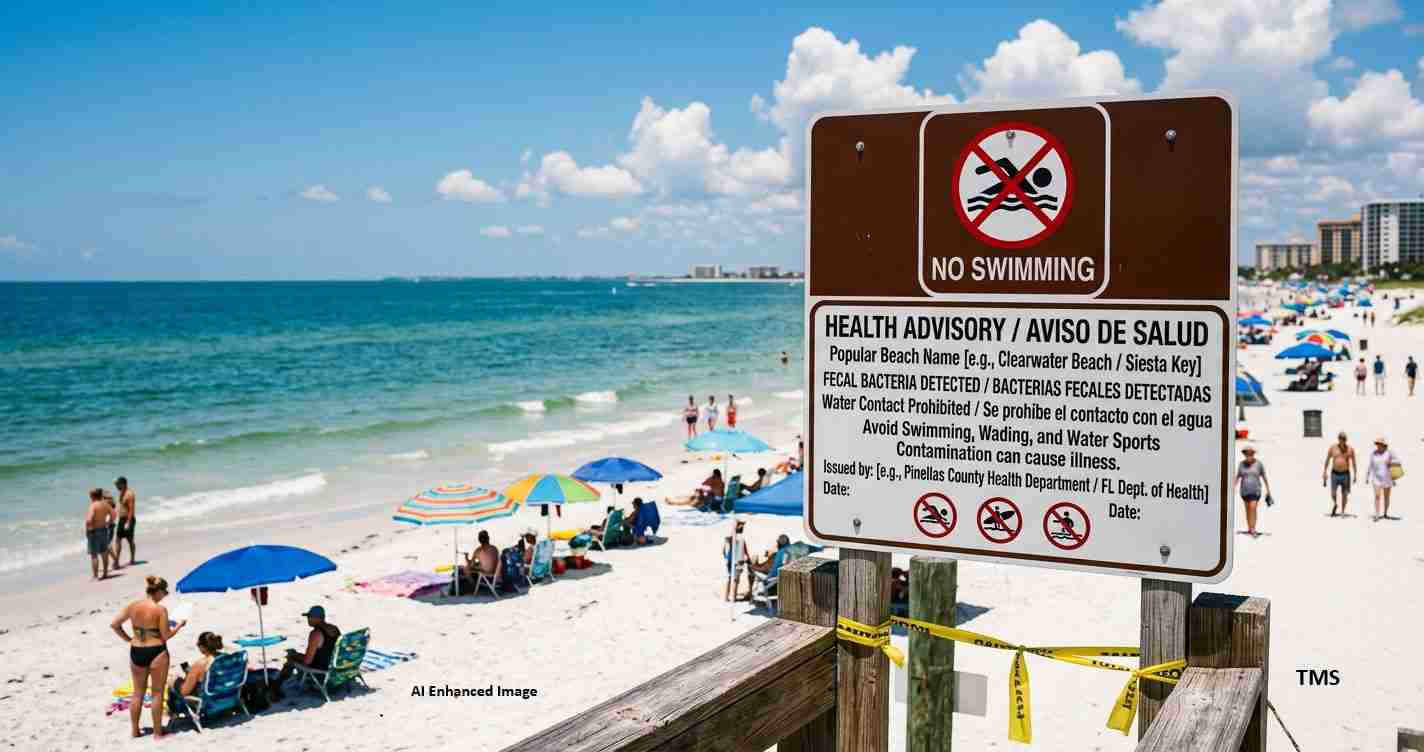
Bay County beach advisory: Laguna Beach, Beach Drive and Carl Gray Park flagged for high enterococci levels; officials warn against swimming
Bay County officials issued health advisories for Laguna Beach, Beach Drive and Carl Gray Park in Panama City Beach after routine tests detected elevated enterococci bacteria; beaches remain open but authorities warn against swimming or water contact until levels normalize.
Key takeaways
- Routine testing found elevated enterococci at Laguna Beach, Beach Drive and Carl Gray Park; the Bay County Florida Department of Health water programs posted advisories.
- Advisory, not closure: Beaches remain open for land-based use, but officials advise avoiding swimming or water contact until follow-up tests clear the sites.
- Possible causes: Recent heavy rain and stormwater runoff can raise bacterial counts; follow-up sampling will determine when it’s safe.
What happened
On Tuesday, routine water sampling in Bay County detected elevated levels of enterococci bacteria at three Panama City Beach-area sites: Laguna Beach, Beach Drive and Carl Gray Park. The Florida Department of Health in Bay County issued health advisories for those locations to inform the public of increased risk and to recommend avoiding water contact. See the Bay County Florida Department of Health water programs page for the advisory listing.
Testing and what the advisory means
Bay County health officials perform routine sampling at popular recreation sites. When a sample exceeds the state’s enterococci threshold, the department posts an advisory to notify beachgoers. An advisory is a warning rather than an order: beaches typically remain open for shore-based activities (walking, sunbathing, fishing from the shore) but officials recommend avoiding swimming and other water contact until follow-up sampling shows levels have returned to acceptable ranges. For statewide listings, consult the Florida Healthy Beaches county results.
Why enterococci matters
Enterococci are bacteria that live in the intestinal tracts of warm-blooded animals and are used nationwide as an indicator of fecal contamination. The U.S. Environmental Protection Agency on indicator bacteria in recreational water explains that elevated enterococci counts can signal the possible presence of harmful bacteria, viruses or parasites. Symptoms from exposure can include gastrointestinal illness, ear/nose/throat infections, rashes and wound infections; vulnerable people face higher risk.
Recent weather and runoff concerns
Florida’s Gulf Coast experienced heavy rainfall and localized flash flooding in the week before the advisory. Stormwater runoff can transport bacteria from streets, lawns, pet waste and other surfaces into storm drains that discharge to nearshore waters, increasing enterococci levels. State and county guidance note that bacterial spikes commonly follow heavy rain events; officials monitor weather and sampling results to assess persistence and cause.
What officials are doing
Bay County health officials will continue sampling the affected sites and post updates when additional results are available. The advisory remains in effect until follow-up tests show enterococci have fallen to acceptable ranges. Beach managers and local governments may also inspect stormwater systems and sanitation infrastructure if contamination sources are suspected.
“Advisories are posted to protect public health — we urge people to avoid water contact until tests confirm it’s safe,” officials said in consumer guidance posted by the county.
Health advice for beachgoers
- Stay out of the water at Laguna Beach, Beach Drive and Carl Gray Park until authorities lift the advisory. (Bay County Florida Department of Health water programs)
- Avoid swallowing seawater and keep children from doing so.
- Shower after any water contact.
- Keep cuts, scrapes and open wounds away from ocean water.
- People with weakened immune systems, chronic illnesses, or recent surgeries should avoid water contact and consult a doctor if they become ill after exposure.
Local context: Panama City Beach tourism and public health
Panama City Beach relies on beach recreation for tourism and local business. Even advisory-only notices can change visitor behavior and affect lodging, restaurants and outfitters. The Bay County health department’s public advisories aim to protect residents and tourists by providing clear guidance about swimming health risks following heavy rain and flooding.
Implications for San Luis Obispo, California
Though the advisory affects Bay County, the situation is a reminder for coastal communities nationwide — including San Luis Obispo — that heavy rain can quickly affect coastal water quality. Local leaders and tourism stakeholders should monitor water-quality reports, communicate proactively, and consider infrastructure investments (stormwater treatment, sewer inspections, septic upgrades) to reduce future risks.
Investigative angle: questions officials are watching
- Was the spike isolated to the three sampling sites, or are other nearby sites showing elevated bacteria?
- Did recent stormwater flows or sewage incidents occur near the sampling locations?
- Are wildlife or domestic animals contributing to the bacterial load?
- How quickly do bacteria levels decline with drier weather and reduced runoff?
Sources and where to check for updates
For official updates and follow-up results, consult these resources: