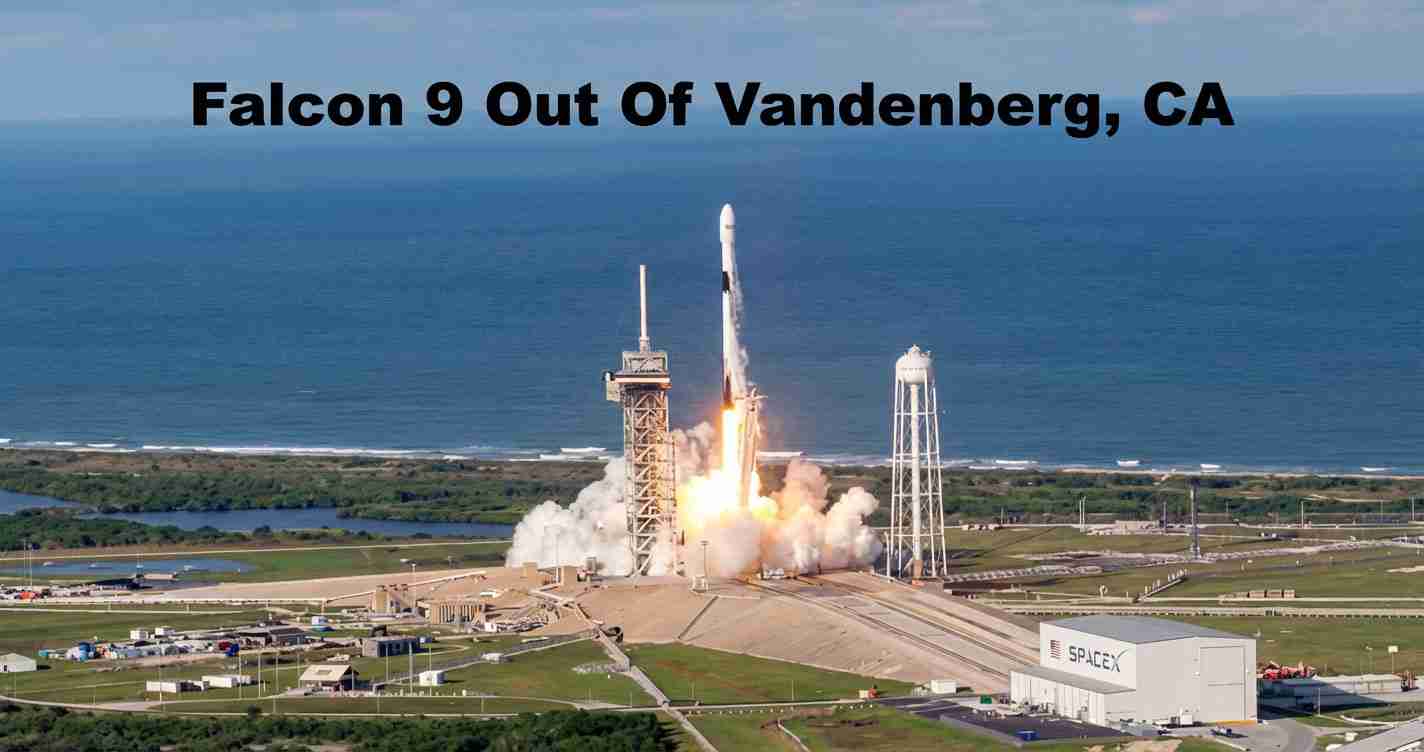
Nighttime Falcon 9 Lights Up California Sky — SpaceX Launch from Vandenberg Delivers 25 Starlink Satellites
SpaceX launched a Falcon 9 from Vandenberg Space Force Base at 2:10:39 a.m. PST on March 1, 2026, deploying 25 Starlink V2 Mini satellites into low‑Earth orbit while the first-stage booster B1082 safely landed on OCISLY.
- Launch & payload: Falcon 9 Block 5 lifted 25 Starlink V2 Mini satellites on the Starlink Group 17-23 mission.
- Booster recovery: First stage B1082 landed on the droneship Of Course I Still Love You about eight minutes after liftoff.
- Visibility: Nighttime ascent was widely seen across Southern and Central California; some reports of possible sonic booms.
- Reusability: B1082 flew its 20th mission, highlighting SpaceX’s rapid-turnaround reuse strategy.
Mission overview and flight timeline
SpaceX’s Falcon 9 lifted off from SLC-4E at Vandenberg at 2:10:39 a.m. PST on March 1 after a four-hour launch window that opened at midnight PT. The pre-launch sequence included propellant loading roughly 38 minutes before liftoff, second-stage liquid oxygen loading at T‑minus 16 minutes, engine chill at T‑minus 7 minutes, and final pressurization and checks in the last minute before ignition. Live commentary and the mission feed were available on the SpaceX webcast and independent live coverage.
Flight profile
The two-stage Falcon 9 followed a southward inclination trajectory tailored for Starlink insertion. After stage separation the first stage performed a boostback and reentry burn before landing on the droneship Of Course I Still Love You about eight minutes after launch. SpaceX confirmed nominal orbit insertion for all 25 satellites during the webcast and via social updates (SpaceX webcast, Spaceflight Now).
Booster history and reusability
The recovered first-stage booster, B1082, completed its 20th flight on March 1. Its recent history includes missions such as USSF-62, OneWeb Launch 20, NROL-145 and multiple prior Starlink flights. The 31-day turnaround since its previous flight underscores SpaceX’s emphasis on rapid reuse to lower costs and increase cadence. For mission logs and scheduling see the mission coverage and launch trackers like RocketLaunch.
Starlink payload and constellation growth
Twenty-five Starlink V2 Mini satellites were added to SpaceX’s broadband constellation, which now numbers nearly 9,000 satellites according to company updates and tracking services. These small LEO satellites provide the low-latency performance needed for broadband in underserved areas. SpaceX has launched Starlink groups from both the West Coast and Florida for more than six years; see the SpaceX launch page and independent coverage.
How residents could see — and hear — the launch
Because the launch occurred during a dark window, many Californians saw the Falcon 9’s bright ascent and trailing plume. Viewers across Santa Barbara, San Luis Obispo and Ventura counties reported good visibility depending on clouds. Forecasted weather and cloud cover influence sightings, and occasional sonic booms from recoveries can be heard on the ground under certain atmospheric conditions. Local viewing guidance and trackers were provided by outlets such as Spaceflight Now and KSBY.
“Launch nights are community events for many residents, but late‑night liftoffs can also disrupt sleep and require public-safety planning,” local coverage noted.
Live streams and where to watch
SpaceX streamed the launch live on its website and through the X TV mobile app, beginning about five minutes before liftoff, and posted mission updates on X. Independent outlets and space channels also carried feeds on platforms such as YouTube. For official feeds and mission details visit the SpaceX launch page or watch the Spaceflight coverage.
Launch schedule context — more flights from Vandenberg and Florida
This flight was the first Vandenberg launch in March 2026. Additional Starlink missions were scheduled in early March, including planned launches on March 4, 8 and 12 with similar ~25-satellite payloads. RocketLaunch and SpaceX manifests list other rideshare and government missions for spring, including Transporter-class flights and SDA Tranche 1 military payloads. See RocketLaunch and SpaceX’s manifest.
Regulatory and operational notes
FAA planning documents noted a backup opportunity the next day if weather or technical issues required a scrub. FAA and SpaceX advisories coordinate airspace and maritime warnings for launches and recoveries. Local authorities sometimes issue guidance for beaches, roadways and recreational areas near the coast during launches; the military base manages range safety and notifications. Pre-launch advisories were carried by local media such as KSBY.
Implications for San Luis Obispo, California
Economic impact
Regular launches at Vandenberg bring short bursts of economic activity: hotels, restaurants and service businesses near viewing spots often see increased demand. Organized viewing events and tourism tied to launches offer additional opportunities for local suppliers and hospitality providers. Sources include local coverage and launch schedules (KSBY, RocketLaunch).
Political and regulatory effects
Frequent commercial launches require coordination among SpaceX, the U.S. Space Force, FAA and local governments. Residents and officials balance benefits such as jobs and tourism against concerns including noise, light and environmental impacts. Continued growth of Starlink could spur more local engagement with regulators and military leadership on range safety and coastal access.
Social and community effects
Launch nights double as community events: schools, astronomy clubs and civic groups often host viewing parties. At the same time, late-night launches can disrupt sleep and present public-safety issues when crowds gather at beaches or cliffs. Local public-safety offices typically offer guidance to help residents plan and stay safe.
Practical planning for residents
If you plan to watch a Vandenberg launch from San Luis Obispo County, check cloud forecasts and visibility maps from flight-tracking sites, and follow public-safety guidance about parking, road closures and beach access. For home viewing, use SpaceX’s webcast and third-party live coverage available via the SpaceX launch page or major video platforms like YouTube.
Sources and further reading
- SpaceX launch page
- Spaceflight Now live coverage
- SpaceX official webcast (YouTube)
- Spaceflight coverage (additional video)
- Local pre-launch coverage (KSBY)
- Vandenberg schedule and launch tracking (RocketLaunch)
Reporting from Vandenberg, California.