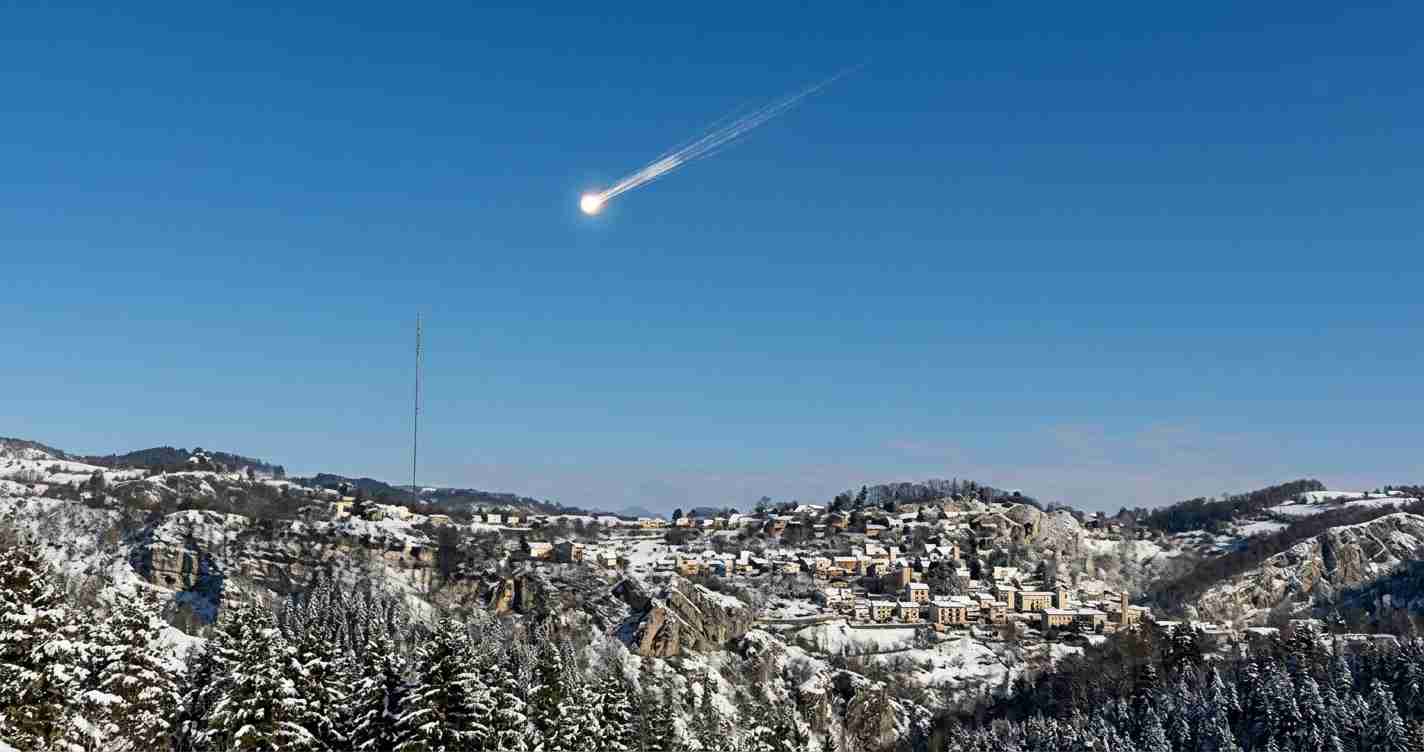
Valley City meteor fragments rattle Northeast Ohio with daylight fireball, sonic booms heard across the region
On March 17, 2026, a roughly six-foot, seven‑ton meteor fragmented above Medina County, Ohio, producing a daylight fireball and powerful sonic booms heard from Cleveland to Pittsburgh; NASA confirmed widespread sightings and began tracking fragments.
Key takeaways
- Date & time: March 17, 2026, just before 9 a.m. ET (about 8:57–9:00 a.m.).
- Object: ~six feet in diameter, ~seven tons; fragmentation released energy ≈ 250 tons of TNT.
- Effects: Daylight fireball, loud sonic booms and pressure waves across the Ohio Valley; no reported injuries.
- Sources: Confirmed and compiled by NASA; coverage and video collections by Signal Cleveland and the Los Angeles Times.
Eyewitness reports and visibility
The fireball was bright enough to be seen in daylight and was reported across a broad region. NASA logged observations from Delaware, Indiana, Illinois, Kentucky, Maryland, Michigan, New York, Ohio, Pennsylvania and the District of Columbia.
Observers described a flash of intense light, followed within seconds to a minute by loud booms and rattling. National Weather Service staff in Cleveland and Pittsburgh reported both visual sightings and felt vibrations from the pressure wave.
“Startling but not immediately harmful,” said multiple residents who shared videos and timestamps; social media and local outlets flooded with recordings from dashcams and municipal cameras.
Trajectory, fragmentation and fragments
Analysts mapped the path beginning roughly 50 miles above Lake Erie near Lorain, tracking southeast about 34 miles through the upper atmosphere before fragmenting near Valley City, at an altitude near 30 miles above the ground.
Most of the original mass burned up during breakup; surviving pieces continued southward toward Medina County. Officials cautioned that while fragments likely reached lower altitudes, no confirmed meteorites had been recovered as of late-afternoon updates.
Why the booms were heard
Meteoroids travel tens of thousands of miles per hour—far faster than sound. As a dense object compresses and heats air, it creates light and pressure waves; the fragmentation event released energy estimated at about 250 tons of TNT, producing a ground-reaching pressure wave and audible sonic booms.
Experts note that audible booms from distant fireballs are uncommon because altitude and distance usually attenuate sound; this event combined size, composition and trajectory to produce both daylight brightness and ground-level sound for many observers.
Expert perspectives and rarity
Local and national astronomers called the event unusual. Observers including Carl Hergenrother and regional experts emphasized differences from satellite re-entries and noted how fragment separation can produce multiple booms as pieces follow slightly different paths.
Regional scientists described the combination of daylight visibility and audible impact as a “once-in-a-lifetime” experience for many in Northeast Ohio, underscoring the scientific value of collected footage and eyewitness data.
Search for fragments, safety and reporting
Medina County and neighboring jurisdictions coordinated preliminary searches. Officials advised caution: meteorites may be hot on landing and should be reported to law enforcement or university geology departments rather than moved extensively.
Emergency management agencies reported no injuries or structural damage despite heavy call volumes. Residents were asked to submit photos and video to local news outlets and scientific groups to aid trajectory reconstruction and search planning.
Northeast Ohio meteor sonic boom and regional response
The phrase “Northeast Ohio meteor sonic boom” trended regionally as people compared experiences and shared locations and timestamps. Public safety officials emphasized there was no immediate hazard, while directing the public on how to report potential finds.
Coordinated data collection by NASA and regional partners will continue as officials compile videos, eyewitness reports and instrument logs to refine the trajectory and locate likely fall zones.
Implications for San Luis Obispo, California
Though the event occurred over Ohio, it offers lessons for communities such as San Luis Obispo:
- Public awareness: Ensure communication plans can quickly inform residents if a similar event is observed on the Central Coast.
- Education & science: Use the event as a teachable moment for schools, museums and observatories to collect community photos and video.
- Emergency call handling: Prepare dispatch centers for sudden spikes in 911 and nonemergency calls and provide verified information to avoid diverting resources.
- Infrastructure readiness: Review messaging on securing loose items and general preparedness for strong pressure waves.
Sources and further reading
For compiled reporting and video collections, see Signal Cleveland and coverage by the Los Angeles Times. NASA’s Meteoroid Environments Office confirmed widespread sightings and is coordinating data analysis.
Officials continue to analyze incoming data. Residents with photos, video or observations are encouraged to share them with local news outlets and scientific organizations compiling evidence to better understand the meteor’s final path and any recoverable fragments.