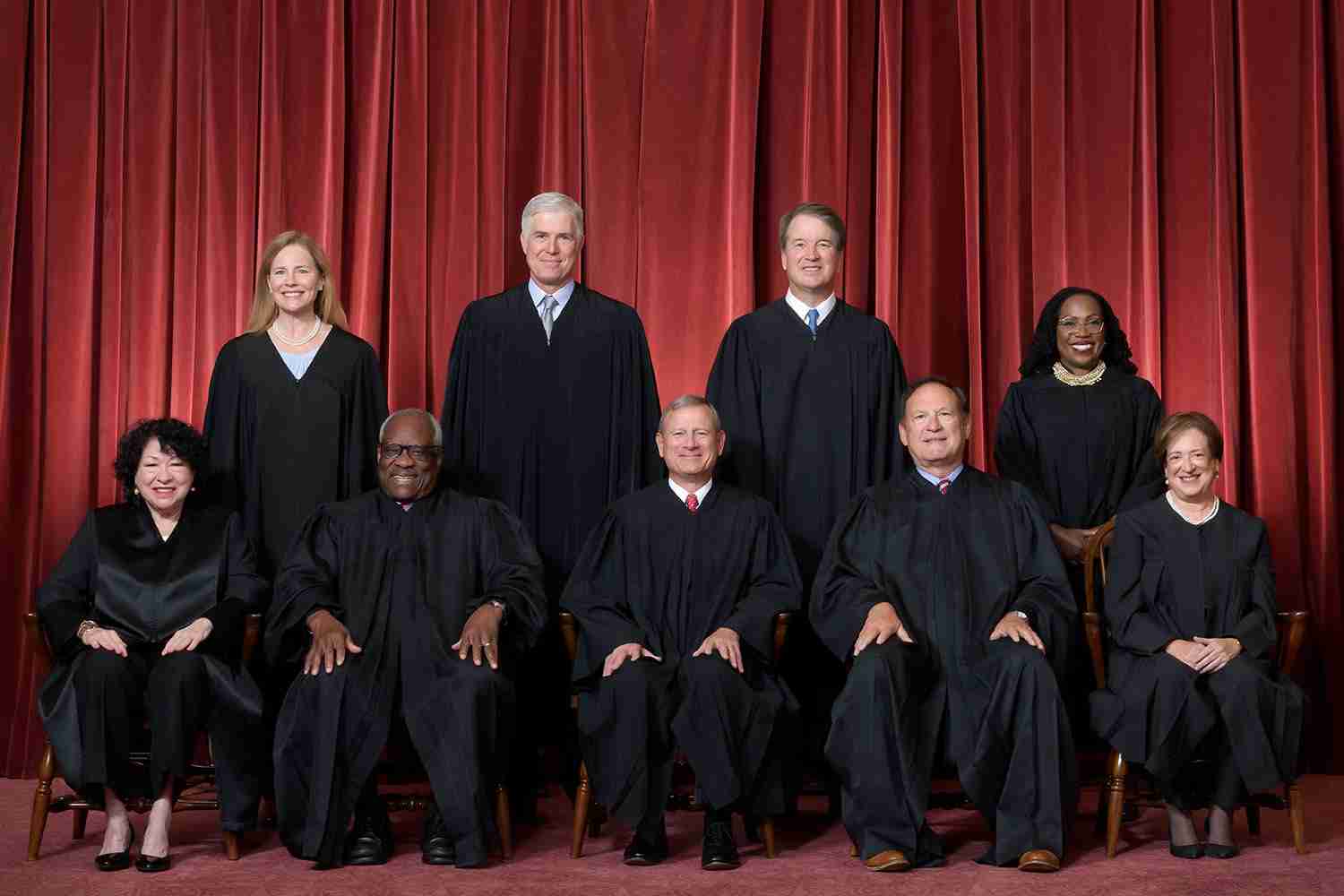
Supreme Court Refuses “Trump Guard” Federalization, Blocks National Guard Deployment to Illinois
On Dec. 23, 2025, the Supreme Court refused an emergency request to federalize Illinois National Guard troops, thereby upholding lower‑court orders that the Trump administration lacked lawful authority to deploy federalized Guard units in Illinois.
Key takeaways
- Supreme Court action: The Court denied the government’s emergency application in Trump v. Illinois, leaving lower‑court restraining orders intact.
- Legal finding: Justices concluded the administration “failed to identify a source of authority” to federalize the Guard under the facts presented.
- Vote split: The denial was effectively 6–3, with Justices Alito, Thomas and Gorsuch dissenting.
- Local impact: The ruling reinforces state control over Guard units and limits routine federalization for single‑state law‑and‑order issues.
What the courts decided
The dispute began in October when the White House moved to federalize about 300 members of the Illinois National Guard under 10 U.S.C. §12406(3), asserting the troops were needed “to protect federal personnel and property in Illinois, particularly in and around Chicago.” The U.S. District Court for the Northern District of Illinois issued a temporary restraining order (TRO), finding the statutory prerequisites were not shown. The Seventh Circuit largely denied the government’s request to lift the TRO, and the administration then sought emergency relief from the Supreme Court. The Court declined, leaving the lower‑court rulings intact while litigation continues.
Legal emphasis: The Court emphasized that using the military to “execute the laws” is an exceptional measure and requires clear statutory or constitutional authority — which the government did not convincingly demonstrate here.
“Donald Trump did not have the authority to deploy the federalized guard in Illinois,”
— Governor J.B. Pritzker
For the full opinion and orders, see the Supreme Court opinion and orders in Trump v. Illinois (Emergency Application No. 25A443), decided Dec. 23, 2025.
Vote and dissents
Three justices — Samuel Alito, Clarence Thomas and Neil Gorsuch — wrote separate statements saying they would have granted the emergency stay, arguing for a broader reading of presidential authority in emergencies. The controlling result, however, is that the TRO remains in place while the underlying litigation proceeds in the lower courts.
Why the case matters
Legal experts and civil‑liberties advocates say the ruling reinforces long‑standing limits on federal military power within the United States. The decision makes clear the Executive must point to a clear source of authority before federalizing state Guard units, particularly over state objections. Civil‑liberties groups described the administration’s justification as a pretext for placing federal troops in a Democratic‑led city and state and praised the courts for rejecting that rationale.
Politically, the denial marks a notable setback for the former president, contrasting with several prior emergency appeals he had won at the Supreme Court earlier in the year.
Reactions from Illinois leaders and advocates
Governor J.B. Pritzker: He welcomed the ruling as an affirmation of state authority and said the president lacked the authority to deploy federalized troops in Illinois. See the statement from Governor Pritzker.
Civil‑liberties groups: The ACLU of Illinois called the decision a vindication of constitutional limits on military force, and the national ACLU issued a statement praising the Court’s refusal to permit what it described as an improper domestic use of the military. See the ACLU of Illinois press release and the ACLU national statement.
National Guard federalization and legal framework
At the heart of the dispute is the balance between federal power and state control of the National Guard. Normally, governors command their state Guard units for emergencies, natural disasters and public‑safety needs. Federalization converts state Guard members into federal troops under the President’s command. Laws like the Insurrection Act and statutes such as 10 U.S.C. §12406 can permit federal action, but courts require clear facts or statutory backing before allowing such moves. The district court and the Supreme Court’s refusal to grant emergency relief emphasize that federalization is not a routine tool for single‑state law‑and‑order issues.
Implications for San Luis Obispo, California
Economic impact
- Direct economic effects on San Luis Obispo will be limited; the blocked deployment involved Illinois Guard troops and Chicago operations, not California forces.
- The decision may influence national guard policy and state budgeting for emergency readiness, potentially affecting local resource planning.
- Local contractors who support California National Guard activities are unlikely to see immediate change, but the ruling reduces the chance of surprise federal mobilization that could disrupt state missions.
Political consequences
- The ruling strengthens state authority, reinforcing positions taken by Gov. Gavin Newsom and other California leaders.
- For moderate voters in San Luis Obispo, the opinion may ease concerns about sudden federal intervention in local affairs and shape intergovernmental communication during crises.
Social effects
- The decision may calm community fears about federal troops being used in U.S. cities to police protests or unrest.
- Civil‑liberties groups in California may become more active in monitoring local deployments, increasing civic engagement on public‑safety policy and police accountability.
Cultural relevance
San Luis Obispo’s civic culture values local control; the Court’s decision aligns with the idea that local leaders should decide how to keep communities safe. University campuses and public events can view the ruling as a reminder that domestic military deployments are rare and legally constrained.
Practical applications for residents
- Local officials and first responders should continue standard emergency planning; the ruling does not change routine preparations for fires, earthquakes, or major events.
- Residents should follow guidance from San Luis Obispo County and city government during protests or emergencies; officials would notify the public if operations changed.
- Voters concerned about Guard policy can contact state legislators and the governor’s office to inquire about readiness and legal protections for state control.
Sources and further reading
- Supreme Court opinion and orders, Trump v. Illinois, No. 25A443
- ACLU of Illinois press release and analysis
- ACLU national statement
- Governor J.B. Pritzker statement
Reporting: Washington. Times Media Service.