Trump says tariff-funded dividend checks could start by mid-2026, but plan faces economic and legislative hurdles
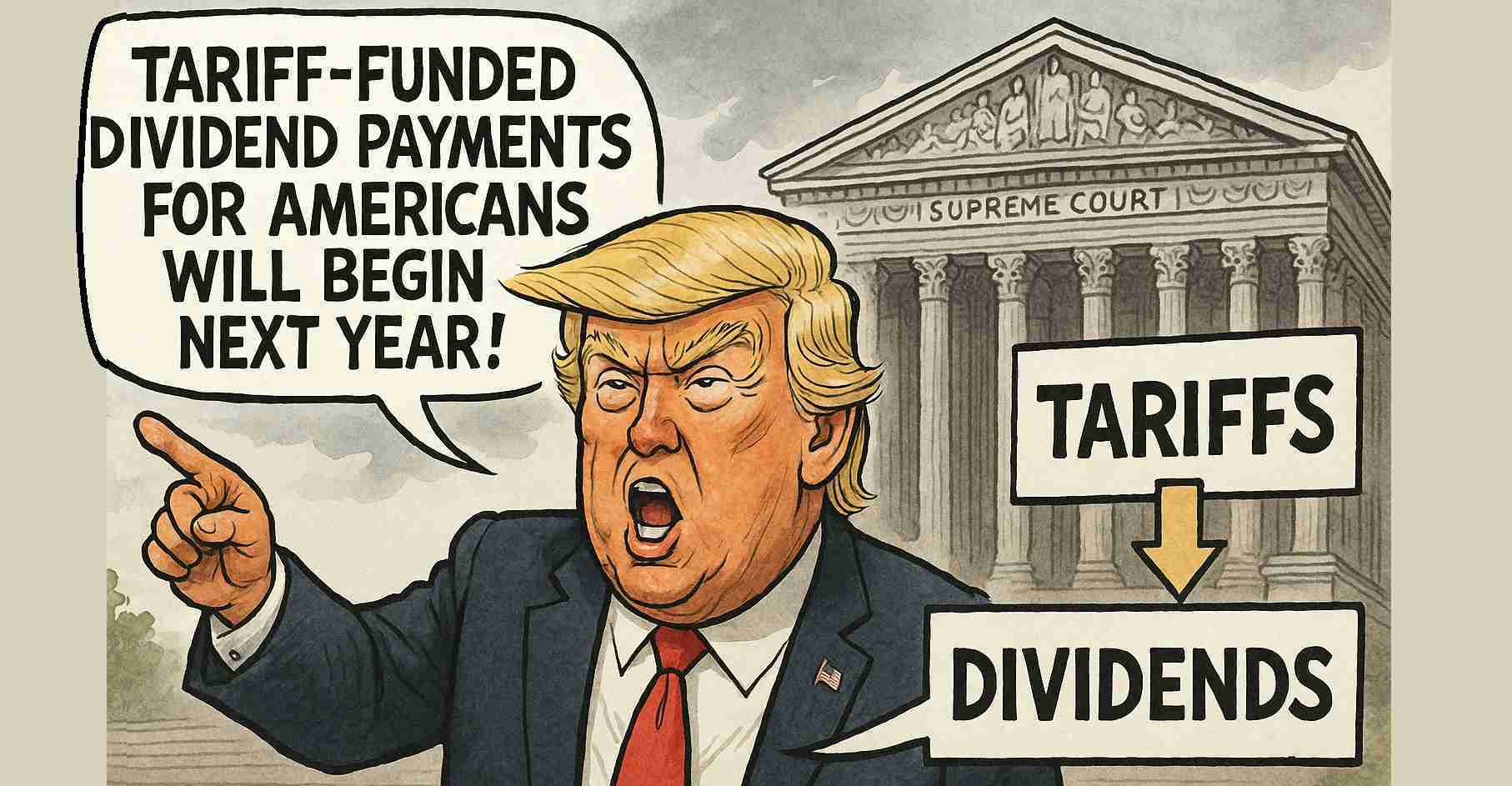
Former President Donald Trump proposed $2,000 “tariff dividend” checks for moderate- and middle-income Americans funded by higher import tariffs, potentially beginning by mid-2026; economists warn of inflation risks and Congress would need to approve any payments.
- Proposal: Tariff revenues would fund roughly $2,000 dividend checks for moderate- and middle-income Americans (ABC News affiliate report).
- Timing: Payments not before the 2025 holidays, with a likely rollout by mid-2026, per the administration (ABC News affiliate report).
- Concerns: Economists caution such payments could stoke inflation and tariff revenue is uncertain, while direct payouts require congressional authorization (ABC News affiliate report).
- Alternatives: Administration officials have floated direct checks, recurring dividends, or tax cuts as possible forms of returned tariff revenue (ABC News affiliate report).
Details of the proposal
During an Oval Office event, Trump reiterated that tariff revenues could be returned to Americans as dividends aimed at moderate-income households. He suggested an amount around $2,000 per person and framed the idea as relief for families and a way to reduce debt. The White House press secretary, Karoline Leavitt, said the administration is “mulling all options,” including direct payments or tax cuts funded by tariffs. Treasury Secretary Scott Bessent told reporters that dividends could take “lots of forms,” leaving open whether the final approach would be one-time checks, recurring payments, or tax reductions (ABC News affiliate report).
Rising tariffs and the legal backdrop
The proposal arrives amid rising tariffs tied to the Trump trade agenda. The Supreme Court is currently reviewing elements of those trade policies, creating legal uncertainty about the future scope and defensibility of tariff collections. That review could affect whether tariff revenue remains at recent levels and whether the legal basis for such collections endures (ABC News affiliate report).
Economists, inflation concerns and budget questions
Many economists expressed immediate skepticism. A central worry is that injecting large sums into the economy could add to inflationary pressures. Some experts reference research indicating pandemic-era stimulus checks contributed to higher inflation, and they caution that a similar fiscal injection—regardless of its funding source—could push prices up rather than materially ease household budgets (ABC News affiliate report).
Beyond inflation, analysts question whether tariff collections would be large and stable enough to sustain $2,000 payouts. Tariff revenue depends on import volumes and rates; if higher tariffs reduce imports or invite retaliation, revenues could fall. Experts also note that dedicating tariff income to regular payments would alter federal budget treatment and likely require congressional rules to be sustainable (ABC News affiliate report).
Legislative and administrative hurdles: Congressional approval required
Any plan to disperse direct payments or enact offsetting tax cuts would require legislation or appropriations from Congress. While the executive branch can levy tariffs under trade law, it cannot unilaterally create a program to send checks or change tax policy without congressional action. That means lawmakers in both parties would need to agree on eligibility, payment amounts, frequency, and budget accounting (ABC News affiliate report).
Administration signals: Officials have suggested multiple paths but offered no concrete legislative strategy. Leavitt said options remain under consideration and Bessent indicated the final design could be tax cuts rather than direct checks—an admission of flexibility but also of the plan’s current lack of specifics (ABC News affiliate report).
Political messaging and timing
The mid-2026 timeframe has clear political significance as it precedes key elections. Supporters position the proposal as relief for working and middle-class families and as proof tariffs can both protect domestic industries and generate revenue. Critics call it a campaign promise lacking policy detail and point to the economic and legal barriers that could prevent implementation (ABC News affiliate report).
Unanswered questions
- Eligibility: Who qualifies as “moderate income”? No thresholds have been disclosed.
- Frequency: One-time payment or recurring dividend?
- Mechanism: Direct deposit, mailed checks, or tax credits?
- Budget treatment: Dedicated dividend fund or general receipts?
- Trade fallout: Could retaliation cut tariff revenue?
All of these details would shape legislative negotiations and the plan’s real economic impact (ABC News affiliate report).
Implications for San Luis Obispo, California
San Luis Obispo County’s economy—anchored by agriculture, tourism, small businesses and university communities—could see several effects:
- Economic impact: A $2,000 check could provide short-term relief for households facing high housing, food and fuel costs and may boost local retail and hospitality sales; however, inflation risks could erode benefits, especially for renters and low-income residents (ABC News affiliate report).
- Political consequences: The program could become a talking point in county and state races, pressuring local representatives to take positions based on perceived local impact.
- Social effects: Direct payments targeted at moderate-income earners could ease short-term stress, but higher prices would disproportionately affect those spending most income on necessities.
- Cultural relevance: Tariffs resonate with farming and small-manufacturing interests in the county, who may favor protection but worry about higher input and consumer costs.
- Practical preparations: Local officials and community groups may need to update outreach, eligibility systems, and business planning if Congress approves a tariff dividend program.
Perspective
“Sending large sums into the economy could add to inflationary pressures,” economists warn, stressing that tariff revenue can be volatile and that congressional authorization would be required to make any payments reality (ABC News affiliate report).
Sources and reporting
This article is based on reporting and statements from the former president and administration officials, commentary from economists and budget experts, and coverage by the ABC News affiliate report.