Tesla to end Model S and Model X production as Fremont plant pivots to Optimus robot manufacturing
Tesla will end production of the Model S and Model X by the end of Q2 2026, CEO Elon Musk said, as the Fremont plant is repurposed to build Optimus humanoid robots and new production lines.
- Production end: Musk said on the Q4 2025 earnings call that Model S and Model X production will stop by end of Q2 2026.
- Factory pivot: Fremont space will be converted to support Optimus humanoid robot manufacturing and additional lines.
- Financials: Tesla’s Q4 revenue fell 3% to $24.9 billion and full-year 2025 revenue declined about 3% to $94.8 billion (Fox Business).
What Musk said and why
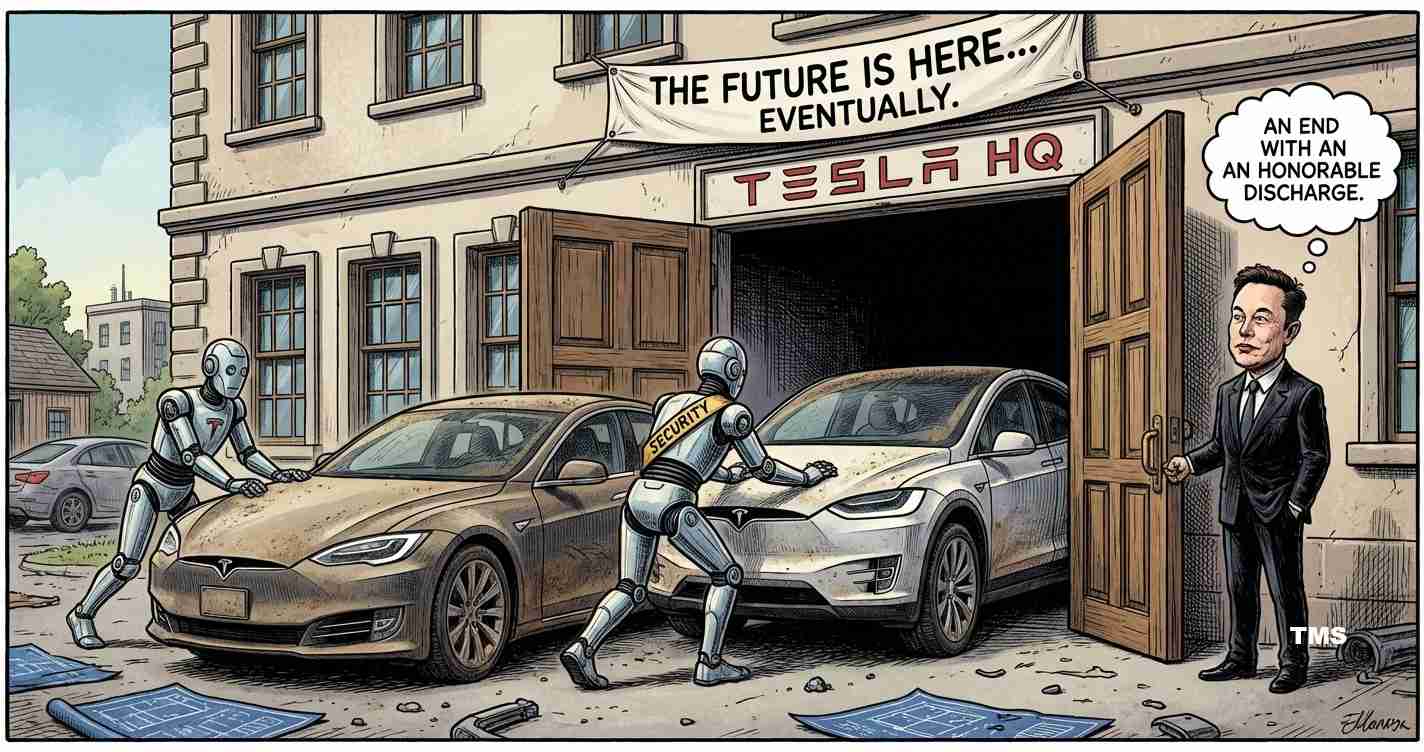
On the Jan. 28, 2026 earnings call, Musk described ending the S and X programs as giving them an “honorable discharge,” and urged interested buyers to place orders soon. The change was framed as part of a broader pivot toward autonomy and robotics, with manufacturing capacity redeployed to new technologies (Q4 2025 earnings call transcript, Electrek analysis).
Company plans and factory changes
Tesla told investors it will invest in the “infrastructure needed to support clean energy and transport and autonomous robots,” and plans six new production lines across vehicles, robots, energy storage and batteries in 2026 (Fox Business).
Tesla and Musk say the Optimus program needs a mostly new supply chain with minimal overlap with existing vehicle parts, and that robot production could scale to far higher unit volumes than the low-volume S and X lines did (Fox Business, Electrek).
Sales and financial context
Tesla’s shift follows a quarter and year of declining revenue and lower EV sales. Q4 EV sales fell about 16% year-over-year; total vehicle deliveries in 2025 were 1.64 million, down 9% from 2024. Q4 revenue was $24.9 billion and full-year 2025 revenue was about $94.8 billion (Fox Business).
Model S and Model X accounted for under 3% of 2025 deliveries. Combined “other models” deliveries—covering S, X, Cybertruck and Semi—fell through 2025 (Q4 2024: 23,640; Q1 2025: 12,881; Q2 2025: 10,394; Q3 2025: 15,933; Q4 2025: 11,642; FY 2025: 50,850) (Electrek).
Model history and market position
The Model S launched in 2012 and the Model X in 2015. Together they were once Tesla’s flagship vehicles and helped establish early leadership in EVs. Over time, lower-cost Model 3 and Model Y became the volume sellers, leaving S and X as low-volume, high-price models. Tesla has not announced replacements for either model (Autoblog, CarBuzz).
Reactions and coverage
The announcement drew broad coverage and debate. Industry outlets and owner communities reported and dissected the news, including Fox Business, Electrek, CarBuzz, Edmunds, Autoblog, and owner forums and videos (earnings call video, Tesla Motors Club thread).
“an honorable discharge” — Elon Musk describing the S and X programs on the Q4 2025 earnings call (Fox Business).
Product details and pricing
Tesla introduced modest mid-2025 updates to the S and X—new paint, a front bumper camera, small range improvements and roughly a $5,000 price increase—but sales continued to dwindle as buyers favored other models and competitors expanded in the luxury EV market (Electrek, Edmunds).
Optimus and the robotics bet
Musk has long promoted Optimus as a major future product. Tesla expects to ramp mass production after unveiling Optimus Gen 3 this quarter and projects robot production lines capable of far greater unit volumes than the S/X lines managed (Fox Business, Electrek).
Implications for San Luis Obispo, California
While Fremont is the site of factory changes, ripple effects could reach the Central Coast. Below are local implications for SLO County.
Economic impact
- Local EV market and sales: Ending S and X production could tighten supply of new units, potentially raising demand and prices for used S/X cars in the short term—affecting local dealers and private sellers (Electrek, CarBuzz).
- Service and parts: Tesla will continue support for existing vehicles, but parts availability and long-term service planning may shift; local service centers and independent shops should monitor changes (Edmunds).
- Jobs and supply chain: Suppliers and contractors feeding Bay Area operations could see contract changes if Tesla retools toward robotics and batteries; San Luis Obispo firms should watch for shifts in demand (Fox Business).
Political and policy consequences
- Local officials and workforce: County leaders and the Chamber of Commerce may partner with state workforce programs, community colleges and Cal Poly to support retraining for EV maintenance, battery tech and robotics roles (Electrek).
- Environmental planning: Tesla’s continued focus on energy storage could spur local projects like Powerwall or Megapack installations that align with county climate and grid resilience planning (Fox Business).
Social and cultural effects
- Enthusiast community: Local Tesla owners, EV clubs and hobbyists who prized S and X may feel the loss and could see increased owner meetups, resale-market activity and maintenance workshops (Tesla Motors Club, video reactions).
- Education and workforce pipelines: Colleges and vocational programs may see rising interest in EV repair, battery tech and robotics; opportunities may arise for partnerships with regional firms and Cal Poly.
Practical impacts for residents
- Buyers: Residents considering a new Model S or Model X were advised to order soon; production is set to end mid-2026 and alternatives include Model 3 and Model Y (Fox Business).
- Charging and service access: Tesla’s Supercharger network and service locations are not slated for reduction; S/X owners should confirm parts and maintenance plans with service centers (Edmunds).
Reporting notes and sources
This report is based on Elon Musk’s remarks during Tesla’s Q4 2025 earnings call and on reporting from business and automotive outlets, owner forums, and company statements. Sources cited include Fox Business, Electrek, YouTube earnings call video, CarBuzz, Edmunds, Autoblog, and a Tesla Motors Club thread.
Note: All factual claims and source links above reference the original reporting and company statements linked inline for verification.