Mojave Desert Car Graveyard: How Volkswagen’s Dieselgate Left Tens of Thousands of VWs and Audis Parked Near Victorville
After Volkswagen’s 2015 Dieselgate scandal, hundreds of thousands of recalled VWs and Audis were parked in sprawling lots — most notably a Victorville site in the Mojave Desert — while nationwide buybacks, repairs and legal settlements proceeded.
- Mass recall and buybacks: Volkswagen’s defeat-device fraud forced large-scale buybacks and created unprecedented storage needs.
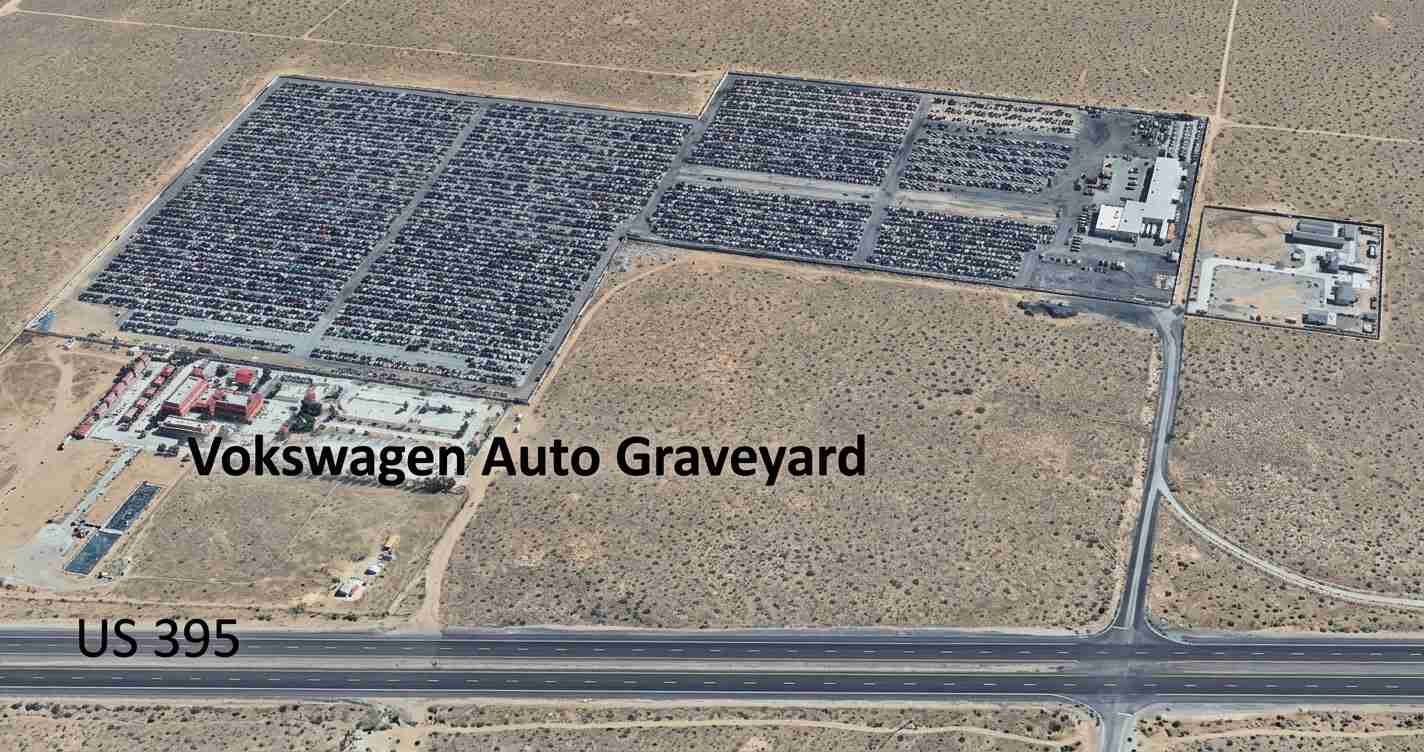
- Victorville as emblem: The Mojave site near Victorville became a visible symbol of the scandal — tens of thousands of vehicles stored in neat desert rows.
- Preservation strategy: The dry desert climate reduced corrosion, while crews performed maintenance to keep cars operable for repairs or resale.
- Legal and financial fallout: The company agreed to up to $14.7 billion in settlements, driving the buyback program and storage logistics.
What happened: the Dieselgate fraud and the recall
September 2015 brought revelations that Volkswagen had installed illegal “defeat device” software that detected emissions testing and altered performance to pass laboratory tests, while allowing far higher emissions on the road — in some cases up to 40 times the legal limit. See Volkswagen emissions scandal.
The fraud affected hundreds of thousands of U.S. vehicles — largely 2009–2015 model-year Jettas, Passats, Golfs, Beetles and Audi A3s with 2.0‑liter TDI engines — and produced a cascade of recalls, buybacks and legal actions. For details, refer to Wikipedia.
Financial consequences: The U.S. Department of Justice said Volkswagen would spend up to $14.7 billion to resolve allegations, including up to $10.03 billion for buybacks, lease terminations and consumer compensation and $2.7 billion for emissions-reduction programs; see the U.S. Department of Justice announcement.
A storage crisis — and why the Mojave Desert was chosen
Unprecedented inventory: As owners accepted buybacks, Volkswagen accumulated a vast number of vehicles it could not legally resell until remedies were approved — estimates exceeded 350,000 vehicles needing storage while fixes were developed and applied. See reporting at the CPA Journal.
The company sought large, inexpensive tracts to park cars and rented multiple sites nationwide — from an abandoned stadium in Detroit to a former paper mill in Minnesota — but the most visually striking lot became the Victorville facility in the Mojave. The choice was strategic: the extremely dry air slows rust and corrosion, preserving mechanical parts for potential resale or repair, per the CPA Journal.
Daily work in the car parks: maintenance, testing and turnover
Vehicles were actively managed, not abandoned. Volkswagen staffed maintenance crews to:
- Start engines, move vehicles and check batteries to keep cars operable.
- Document repairs, reprogram emissions systems and prepare vehicles for regulatory inspection.
- Decide between resale as certified used cars or sending older/damaged examples to scrap yards.
This operational effort balanced logistics, quality control and regulatory compliance as cars cycled through fixes, inspections and disposition; see analysis at the CPA Journal.
The sheer scale and visual impact
Aerial photos of Victorville — rows upon rows of VWs and Audis across the desert — became emblematic. The images captured a tangible consequence of corporate misconduct: a physical “car graveyard” that communicated legal, financial and logistical fallout far from headquarters.
“From the air, the sea of parked Volkswagens and Audis looked like a permanent car graveyard.”
Although dramatic, most vehicles were intended as temporary inventory: the dry climate slowed corrosion and preserved resale options, but repairs, costs and market changes meant many cars were eventually repaired and sold while others were scrapped (CPA Journal).
Legal and financial fallout
U.S. authorities demanded sweeping remediation. Volkswagen’s settlement obligations — including consumer compensation, buybacks and environmental programs — were a major driver of the storage crisis. The Justice Department summarized the financial terms that fueled buybacks and related logistics.
Those demands left long-lasting traces: fenced lots, converted industrial sites and desert parking expanses became part of the national response to fraud, visible reminders of both regulatory enforcement and the costs of deception (Wikipedia; CPA Journal).
How the Victorville site fit into the national response
Victorville served a mix of logistics, preservation and public-relations functions: protecting asset value in a dry climate, ensuring vehicles could be repaired and returned to commerce legally, and providing a centralized location for processing buybacks and dispositions. The lots were temporary fixes to an immediate crisis created by corporate misconduct (CPA Journal).
Implications for San Luis Obispo, California
Economic impact: Though Victorville is distant from San Luis Obispo, repair, resale and recycling activity rippled across California. Repaired vehicles entered used-car channels and scrapyards, affecting local supply and pricing. The settlement also funded emissions-reduction programs that could support state and local environmental projects (U.S. Department of Justice).
Political consequences: Dieselgate reinforced regulatory scrutiny of automakers and reminded civic leaders in San Luis Obispo of the importance of enforcement, consumer protections and transparent oversight (Wikipedia).
Social and cultural effects: The scandal heightened awareness of air quality and diesel pollution, influencing local discourse on corporate accountability, sustainable transportation and environmental costs. The Victorville imagery entered public conversation as shorthand for corporate failure (CPA Journal).
Practical advice: Local consumers in San Luis Obispo considering used VWs or Audis were advised to verify documentation showing vehicles were repaired and certified under the settlement. Local mechanics and dealerships needed procedures to evaluate cars affected by Dieselgate, and regulators were urged to ensure protections were enforced (CPA Journal; U.S. Department of Justice).
Sources
Preserved original references:
- Volkswagen emissions scandal — Wikipedia
- “Volkswagen to spend $14.7 billion to settle allegations” — U.S. Department of Justice
- “Volkswagen’s storage problem and the Victorville lot” — CPA Journal
Note: All facts, figures and URLs in this article reflect the referenced sources above.