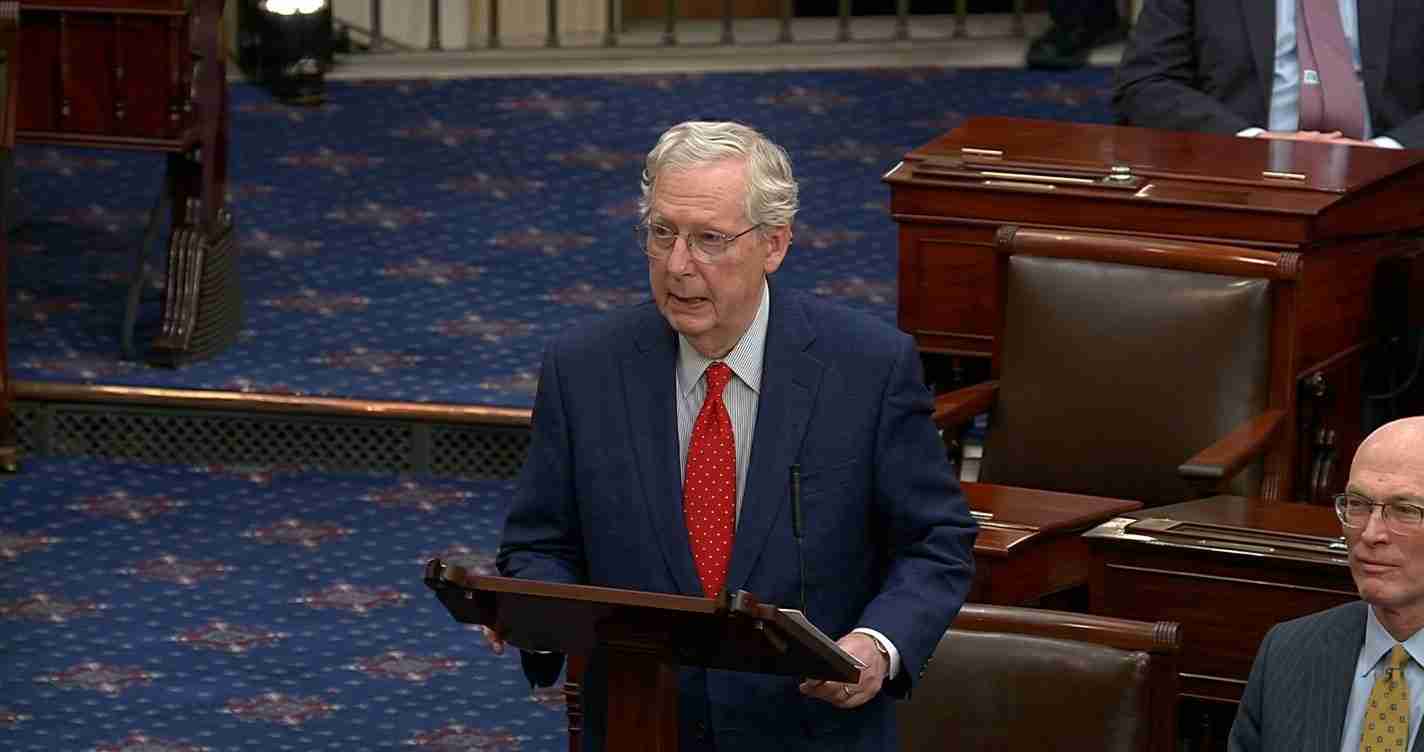
Rand Paul Holds Up Government Spending Bill Over Hemp Rules, Threatening Shutdown
Senator Rand Paul is blocking final Senate action on a House-passed spending bill unless senators vote on his amendment to remove hemp restrictions — risking delayed funding and a possible government shutdown that could stretch into next week.
Key takeaways
- Who: Senator Rand Paul of Kentucky is the lone Republican objecting to the measure.
- What: He demands a Senate vote on stripping language that restricts certain hemp products.
- Why it matters: The dispute could delay passage of the spending bill and extend a government shutdown.
- Local impact: San Luis Obispo residents and regional hemp/ag markets could see economic and service effects.
The standoff in the Senate
Senator Paul objected to the package that the House sent to the Senate. He is insisting the Senate take a vote on his amendment to remove language he says unfairly limits the use of hemp products — the core of his opposition to the spending measure now before the chamber.
Last weekend the Senate voted 60-40 to advance the House-passed spending measure; eight Democrats joined most Republicans to move the bill toward final consideration. Paul was the only Republican to vote against advancing the legislation, creating a procedural barrier to finishing the bill before the funding deadline. CBS News live coverage of the shutdown standoff
What Paul wants: hemp regulations
Paul’s demand centers on hemp regulations embedded in the current spending text. He contends that wording in the bill would restrict certain uses of hemp products and harm Kentucky farmers and small businesses that rely on hemp production and processing. He wants that language stripped and for senators to vote on the change. He frames this as fairness for farmers and a check on federal overreach. CBS News live coverage of the shutdown standoff
Paul can use standard Senate tools to slow the process. If denied a vote on his amendment, he can continue procedural objections that delay final passage and potentially push the timetable past the funding deadline.
Reactions from other senators
Some Senate Republicans signaled little appetite to take up Paul’s hemp amendment. Rep. Markwayne Mullin, speaking for the GOP conference, suggested Paul would not get broad support and quipped that if Paul wants to “plant his flag and hold the government shut down over hemp in Kentucky,” he would likely lose the fight. That skepticism complicates Paul’s path even if leadership allowed a vote. CBS News live coverage of the shutdown standoff
Procedural status and risks
Advancing the bill 60-40 was a procedural step but did not end the process. With Paul withholding support, final passage could stretch through the week and beyond, raising the risk that federal programs and services remain closed or operate under limited conditions.
Paul has a record of opposing short-term funding measures and offering amendments focused on deficits or regulatory text; past efforts like S.Amdt.999 provide context for his current approach and suggest he may face long odds clearing the Senate.
Why hemp matters to farmers
Hemp farming has expanded in states such as Kentucky, where growers and processors have invested in crops, supply chains, and product markets including fiber, seeds, and CBD products. Restrictions on product use can shrink markets and hit farm income. Paul argues the spending bill language could harm those businesses. CBS News live coverage of the shutdown standoff
Supporters of removing the language say hemp is an important rural economic driver; opponents argue some limits may be necessary for safety, consumer protection, and regulatory clarity.
Potential timeline
If Senate leaders resist Paul’s demand, he can continue to object and use procedural steps that slow action. If leaders allow a vote and the amendment fails, the bill could still pass; if the amendment were to succeed, the bill would be altered and could take longer to finalize. Either path could push final action into next week and increase the chance of a longer shutdown. CBS News live coverage of the shutdown standoff
A prolonged shutdown affects federal pay, services, and contracts — from park services and court operations to health and safety inspections — illustrating how one senator’s hold can have outsized national impact.
Implications for San Luis Obispo, California
Economic impact: A longer shutdown could delay federal contracts, interrupt payments to workers, and create uncertainty for agricultural supply chains connecting local hemp and related products to national markets.
Political consequences: Local voters and officials may hear more debate about federal farm policy and funding; candidates and representatives may be pressed to explain how they will protect regional interests.
Social effects: Residents could experience interruptions in passport processing, inspections, and federal nutrition or housing program assistance; nonprofits relying on federal grants may see delays.
Cultural relevance & practical advice: San Luis Obispo’s agricultural community could feel market uncertainty. Local growers and processors should monitor Senate action; county officials and industry groups may need to prepare guidance if federal rules change.
Sources and links
- CBS News live coverage of the shutdown standoff and Paul’s objections
- Coverage of Senate funding fights and Paul’s past opposition
- Record of Senator Paul’s amendment S.Amdt.999
This article draws on reporting and public records to explain the procedural fight over the government spending bill and the hemp regulation language at its center. The standoff shows how a single senator can press for a local industry while affecting national funding decisions and services that touch communities from Kentucky to San Luis Obispo.