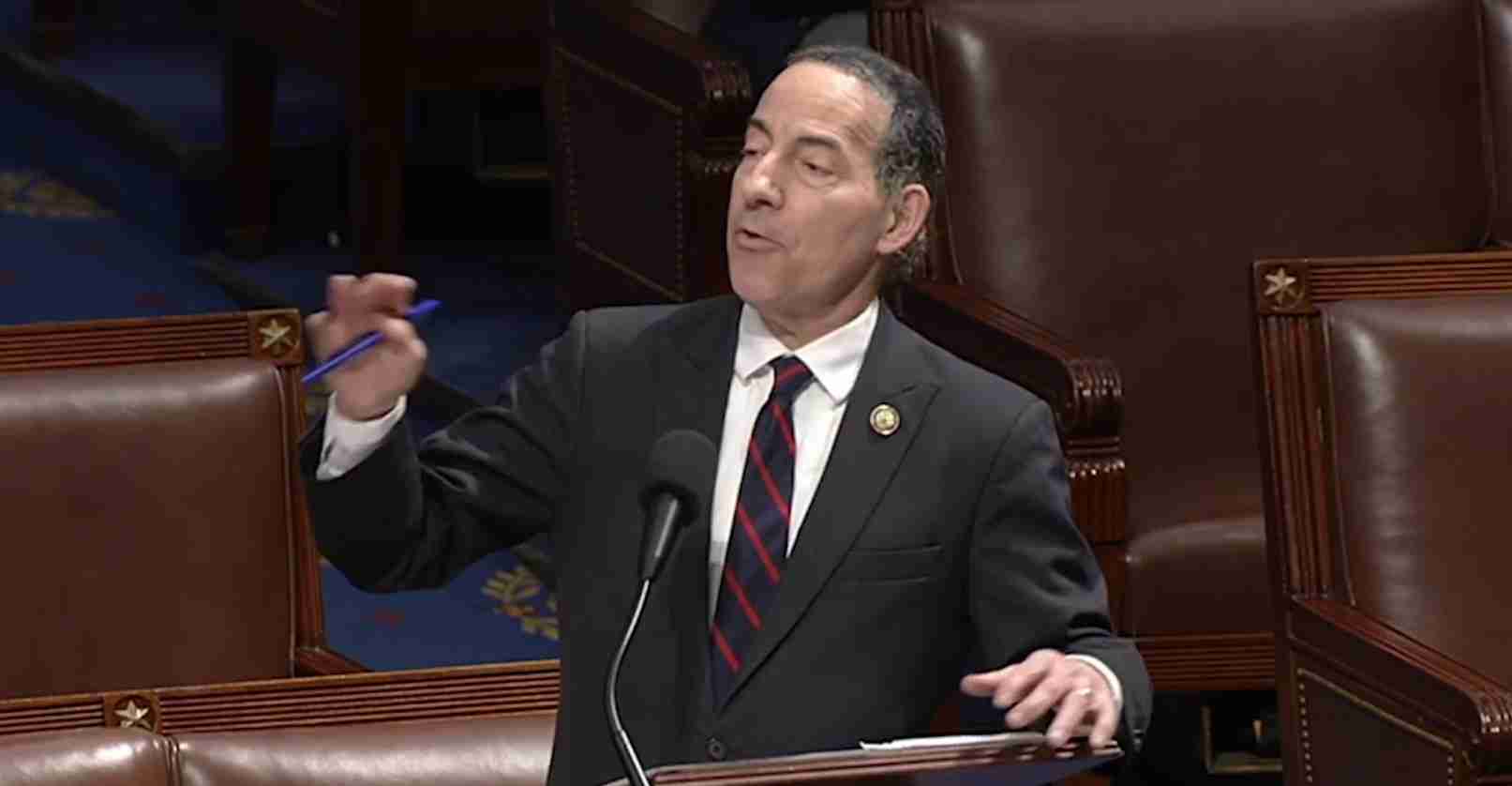
House Democrat Jamie Raskin Slammed for “Sick” Defense of Colleague After Stacey Plaskett Epstein Texts Surface
Rep. Jamie Raskin drew fierce criticism for defending Rep. Stacey Plaskett after text messages showed Plaskett exchanging messages with convicted sex offender Jeffrey Epstein during a 2019 hearing, reigniting debates over congressional ethics, accountability, and constituent contact.
- Text evidence: Records show Plaskett texted Jeffrey Epstein during a Feb. 27, 2019 House Oversight hearing, asking for advice and discussing mundane matters — a point used by Republicans to call for discipline (Fox News, Notus).
- Censure failed: A Republican-led censure effort and attempt to remove Plaskett from the House Intelligence Committee failed when three Republicans joined Democrats to oppose the measures (Notus, Axios).
- Raskin’s stance: Raskin defended Plaskett on the House floor, calling the messages routine constituent contact and urging the Ethics Committee handle any investigation (Fox News, YouTube).
What happened: the texts and the hearing
On Feb. 27, 2019, during a House Oversight Committee hearing featuring Michael Cohen, video and records show Delegate Stacey Plaskett sending and receiving texts with Jeffrey Epstein. The messages, later released by House Republicans, include exchanges where Plaskett asked Epstein for advice on questions and discussed everyday matters such as clothing choices (Fox News, Notus).
The texts were cited by House Republicans as evidence of inappropriate contact with a convicted sex offender. The release of the messages sparked calls for investigation and formal disciplinary action. Videos of the House debate show lawmakers pointing to the messages as reason for concern over ethics and public trust (Fox News video, YouTube).
Jamie Raskin’s defense and public response
Rep. Jamie Raskin rose on the House floor to defend Plaskett, identifying her as a former law student and characterizing the messages as routine constituent communication. Raskin argued Epstein was a constituent of the Virgin Islands and that no House rule forbids taking a call or text from a constituent during a hearing. He urged that the Ethics Committee handle any thorough review rather than a quick censure vote (Fox News, YouTube).
Critics called the defense “sick” and “dishonest,” arguing it downplayed a pattern of ties between Plaskett and Epstein. The White House Rapid Response team and several independent journalists blasted the remarks as an attempt to minimize serious concerns.
Evidence and reporting on deeper ties
Independent reporting cited by critics points to a broader history of connections between Plaskett and Epstein. Public court records and reporting say Plaskett worked at a law firm that represented Epstein, served on the Virgin Islands Economic Development Authority when the territory granted financial benefits tied to Epstein’s activities, and had campaign ties to Epstein associates. Critics argue those ties make the “constituent” defense less convincing (Fox News, Notus).
Journalists including Lee Fang have published records and stories arguing Plaskett’s contacts with Epstein were not limited to casual messages, and that she may have benefited from financial or professional ties. Those claims intensified criticism of Raskin for describing the exchanges as mundane constituent contact (Fox News).
The Congress censure effort and committee actions
House Republicans, led by Rep. Ralph Norman (R-S.C.), introduced a resolution to censure Plaskett alleging “inappropriate coordination with convicted sex offender Jeffrey Epstein” and sought to remove her from the House Intelligence Committee (Fox News, Notus).
When the censure vote occurred, it failed after three Republicans joined Democrats to vote against the measure. A separate effort to strip Plaskett of her Intelligence Committee seat also failed. Critics argued partisan math, not exoneration, determined the outcome; supporters insisted the House needed to make a statement about ethics (Notus, Axios).
Raskin framed the censure drive as politically motivated and urged reliance on the Ethics Committee — a point reflecting standard practice that allegations of member misconduct are typically handled by that committee. Critics counter that speed and transparency matter when public trust is at stake (YouTube, Fox News video).
Plaskett’s response
Plaskett has denied wrongdoing. She said in 2019 there was “not public knowledge” that Epstein was under federal investigation and that his ties to the Virgin Islands made interactions more likely. She characterized the exchanges as typical constituent contact and rejected claims of improper coordination (Fox News, Notus).
Her defenders say the messages were limited and do not show criminal wrongdoing; critics say context and prior history warrant a full and public Ethics review.
Broader debate: rules, ethics and public trust
The episode reopened debate about what counts as improper contact for lawmakers. Should texts with a convicted sex offender during a hearing automatically trigger discipline? Is labeling someone a constituent sufficient to explain repeated contact? What balance should there be between immediate censure votes and slower Ethics Committee probes?
Supporters of quick censure argue ethics must be enforced swiftly to maintain public trust. Opponents warn quick votes can be politicized and that the Ethics Committee should examine evidence thoroughly. The standoff shows how judgment of public officials can split along partisan lines even when facts are not in dispute.
Implications for San Luis Obispo, California
- Local trust in institutions: Voters in San Luis Obispo may grow more skeptical of national lawmakers and call for clearer rules and faster disclosures, prompting local coverage and public meetings (Fox News).
- Political messaging: Campaigns may use the episode to argue for stronger ethics rules or attack opponents’ judgment, amplifying the controversy in mailers and social media (Axios).
- Constituent expectations: The “constituent” defense raises local questions about what counts as proper constituent service and how constituencies are defined (YouTube).
- Civic engagement and oversight: The story could spur higher civic engagement and demands for transparency from local watchdogs and journalists (Notus).
- Practical effects: Local officials should review policies on staff contact and record-keeping; national attention on texting during official duties highlights the need for guidelines and training.
Sources
Reporting by Times Media Service. Links cited in this piece:
All facts, information, and URLs preserved from original reporting.