Eastern NATO allies warn Trump: “Putin is pushing the limits” — Estonia, Lithuania and Romania urge continued U.S. troop presence
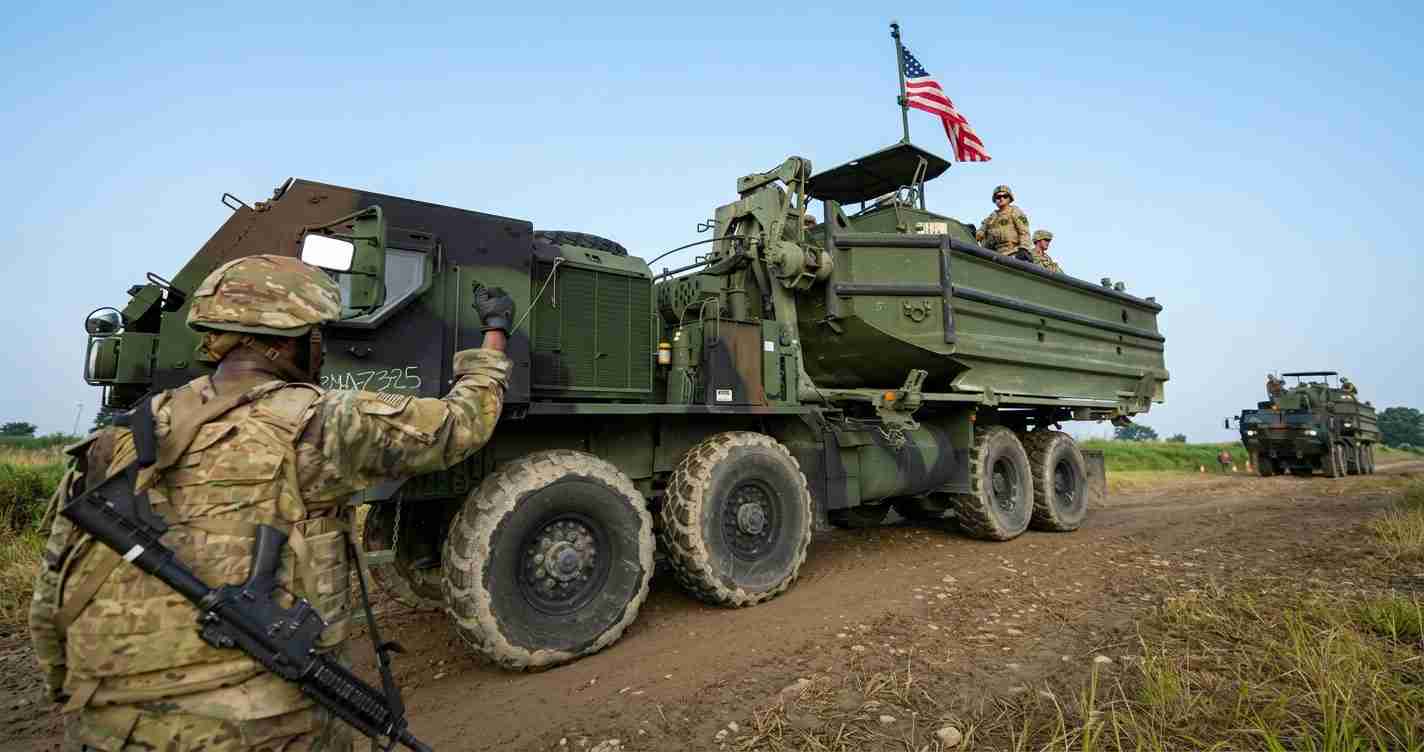
Eastern NATO members Estonia, Lithuania and Romania urgently urge the United States not to reduce forward-deployed troops, warning that Russian President Vladimir Putin is testing NATO’s resolve with air and drone incursions that could weaken Article 5 deterrence.
Key takeaways
- Visible U.S. forces are seen by Estonia, Lithuania and Romania as the strongest deterrent; they urge Washington not to reduce troop levels (Fox News).
- Repeated incursions — fighter jets, drones and cyber activity — are viewed as deliberate testing of NATO limits (see Carnegie Endowment).
- Analysts warn that a U.S. rebalance could create capability gaps in Europe, reducing deterrence and rapid-reaction options (Heinrich Böll Foundation).
What the eastern allies are saying
Estonia, Lithuania and Romania have delivered an unusually urgent message to Washington: do not reduce the visible, forward-deployed forces that have deterred Russian aggression since the Cold War. Estonian Foreign Minister Margus Tsahkna told reporters,
“Putin understands only the language of strength. His goal is the restoration of the Soviet empire,” and he called U.S. troops a clear signal of peace.
Estonian President Alar Karis has publicly warned neighbors to prepare for possible U.S. troop reductions and urged investment in local defenses; his remarks are available in video form (Estonian remarks and interview footage).
Incidents that fuel fear of a broader threat
Officials point to a pattern of Russian fighter jets and drones repeatedly entering or skirting NATO airspace over Poland and the Baltic states, often accompanied by cyber operations and disruptions at European airports. Analysts argue these are not isolated nuisances but a strategy to normalize violations and pressure NATO into accepting a lower security baseline (Carnegie Endowment).
Calls for stronger defenses and clearer rules
Estonia, Lithuania and Romania want NATO to move beyond occasional air policing toward fully integrated air and missile defense systems with clear rules of engagement. Their demands include:
- Shared command structures and coordinated intercept plans
- Integrated missile-defense layers rather than episodic fighter scrambles
- Tighter sanctions on Russia and reduced European dependence on Russian energy (Fox News)
The Biden and Trump-era debate over Europe’s defense burden
U.S. defense officials are signaling a strategic rebalance to prioritize the Indo-Pacific while pressing European allies to increase their own contributions. Some U.S. planners have suggested discussions could begin this year about reducing troop levels and repositioning assets (Heinrich Böll Foundation).
Currently, U.S. forces in Europe total roughly 80,000 personnel, supported by air and missile defense, naval power and ISR assets. Analysts warn a scaled-back footprint would create gaps in rapid reaction, air power, missile defense and logistics that Europe could not fill quickly.
Why some analysts say NATO risks becoming “worse than dormant”
Think tanks warn that unclear U.S. policy could produce a dangerous middle ground — an alliance that neither deters effectively nor spurs full European rearmament. The Carnegie Endowment calls this potentially “worse than a dormant NATO,” where rivals can test boundaries without provoking a unified response.
How a reduced U.S. footprint would affect military capability
A smaller U.S. presence would erode capabilities European allies rely on:
- Ground forces: loss of rapid reaction brigades.
- Air power: fewer strike and support aircraft, weakening deterrence.
- Naval power: reduced persistent presence in key seas and chokepoints.
- Missile defense: fewer Patriot and Aegis systems to counter strikes.
- ISR and logistics: reduced airlift, satellite coverage and supply networks (Heinrich Böll Foundation).
To compensate, European countries would likely need to accelerate defense spending, expand domestic defense production and develop systems that now depend on U.S. platforms and logistics.
Sanctions and energy policy as part of the response
Alongside military measures, the three allies are urging stronger sanctions and a reduction of European dependence on Russian energy. They argue that cutting Moscow’s access to funds and fuel is critical to constraining its military options and that economic pressure complements military deterrence (Fox News).
Implications for San Luis Obispo, California
Economic impact
San Luis Obispo County could feel indirect effects from a changed U.S. posture. Global oil and natural gas price shifts caused by sanctions or supply disruptions may raise local fuel costs, affecting residents, farmers and tourism. Local businesses relying on international shipping may face higher freight rates and delays; regional manufacturers tied to defense supply chains could see changed contracts.
Political consequences
National security debates often ripple into local politics. Expect increased public interest in federal defense spending, trade policy and election-year positions. Local officials may be asked to support veterans and military families if deployments shift.
Social effects
Heightened geopolitical tension can raise anxiety among students, immigrant communities and veterans. Cal Poly San Luis Obispo and neighboring campuses with international students may face concerns about travel and family safety; mental-health and veterans’ services could see greater demand.
Cultural relevance
San Luis Obispo’s civic values — independence, global engagement and support for service members — mean residents will watch developments closely. Local media and civic groups are likely to frame debates about U.S. military roles abroad around economic stability, environmental protection and community safety.
Practical applications for residents
- Emergency preparedness: review household and business plans and basic supplies.
- Energy conservation: reduce local energy use and support regional renewable projects to buffer fuel-price shocks.
- Civic engagement: attend briefings, university panels and city forums about implications for taxes, trade and federal grants.
- Support for veterans: increase outreach to veterans and military families if posture changes affect deployments or benefits.
Sources and further reading
- Fox News: “Putin pushing limits: Eastern allies warn Trump not to pull US troops”
- Carnegie Endowment for International Peace: “Why the U.S. security stance is worse than a dormant NATO”
- Heinrich Böll Foundation: “Getting out: How Europe can defend itself, less America”
- Estonian remarks and interview footage
Reporting draws on statements and analysis from the cited sources above. Times Media Service.