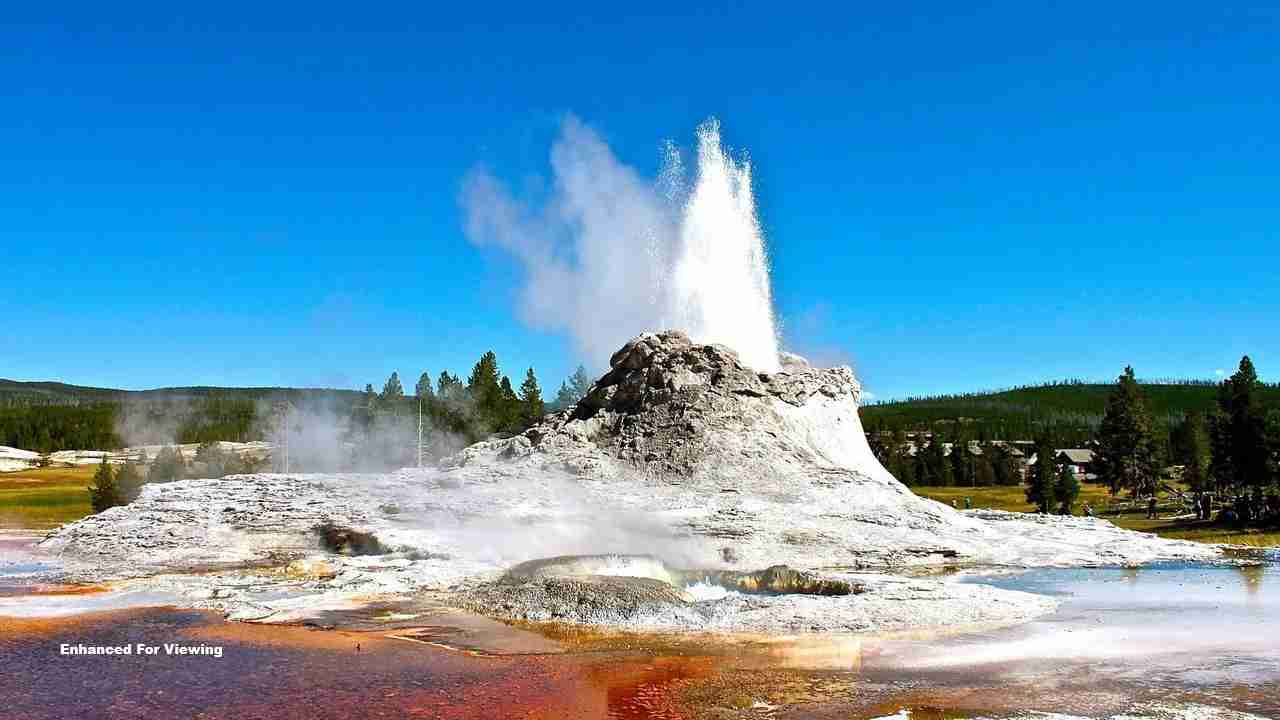
Why Steamboat Geyser Has Gone Quiet: Scientists Puzzle Over Long Pause at Yellowstone’s Norris Geyser Basin
Steamboat Geyser, Yellowstone’s tallest active geyser, has been unusually quiet since its last major eruption on April 14, 2025 — remaining dormant for more than 230 days and still puzzling geyser experts about what comes next.
- Steamboat’s major eruptions can reach over 300 feet, yet no full-scale blasts have occurred since April 14, 2025 (National Park Service).
- Annual eruption counts have declined sharply after the 2018–2020 surge; 2018–2025 totals are tracked by field observers (GeyserTimes).
- Scientists offer several plausible causes — mineral clogging, shifts in heat or plumbing, or natural cycling — but no definitive explanation yet (Cowboy State Daily).
- Monitoring continues: steam remains visible, and USGS/YVO networks keep tracking seismic, deformation and thermal signals (USGS/HANS).
Overview
Steamboat Geyser sits in the Norris Geyser Basin and is widely recognized as the world’s tallest active geyser. Major eruptions can send water more than 300 feet (91 meters) into the air. After a burst of frequent activity beginning in March 2018, the geyser’s major eruptions have declined, and the last full-scale event was on April 14, 2025. Field observers report occasional minor steam releases and small pulses, but no tall blasts since that date (The River 97.9).
History and the geyser’s unpredictable nature
Steamboat has a long record of dramatic swings between multi-decade silences and sudden, intense phases. Eruptions have been documented since at least 1878. Unlike Old Faithful, Steamboat has no steady schedule; quiet periods have varied from days to decades. Park records and historical analysis underline how quickly the feature can change when underground plumbing shifts (National Park Service).
Notable long lulls
- 1911–1961: No recorded major eruptions for 50 years (National Park Service).
- 1991–2000: Only one eruption recorded (Cowboy State Daily).
- 2014–2018: About 3.5 years of dormancy before a sudden return to frequent activity starting March 15, 2018 (National Park Service).
“Norris Geyser Basin is one of Yellowstone’s most changeable landscapes; its hot springs, geysers and fumaroles can appear, change and disappear as the underground plumbing shifts.” — Park records and geologic context (National Park Service).
Recent activity and the current quiet
The active phase that began in 2018 produced dozens of major eruptions in 2018–2020 and then tapered each year through 2024 and into 2025. In 2025 the geyser had only two recorded major eruptions, the last on April 14, which reached about 300 feet. Since then, observers have noted steam and small pulses but no full-scale eruption (GeyserTimes; The River 97.9; Outside Online).
Park and observatory monitoring continues to show steam rising from the vent, indicating the hydrothermal system is still active, not extinct. The pause in major eruptions is notable given the sustained activity during prior years, and scientists emphasize the pattern has changed without a clear cause (USGS/HANS).
Why scientists are puzzled
Forecasting geyser behavior is difficult because Steamboat’s plumbing and local geology produce erratic responses. Mike Poland, scientist-in-charge at the Yellowstone Volcano Observatory, has noted the recent slowdown breaks expected patterns. Researchers consider several plausible explanations, each with limits:
- Mineral precipitation and clogging: Minerals in hot water can build up and partially block vents, altering pressure dynamics and limiting large eruptions (The River 97.9).
- Changes in heat or water supply: Small shifts in underground heat flow, recharge, or connections with nearby hydrothermal features could reduce the energy available for major blasts (Cowboy State Daily).
- Natural cycling: Geysers commonly move between active and quiet periods; the 2018–2020 surge may simply have run its course (National Park Service).
Crucial point: there are no clear signs Steamboat is permanently dormant. Monitoring networks including USGS and YVO continue tracking seismicity, ground deformation and thermal behavior for clues (USGS/HANS).
Counting eruptions: a recent trend of decline
Observers and monitoring sites show a steady drop in annual eruptions after the peak in 2019–2020. Numbers compiled by citizen scientists and field logs:
- 2018: 32 eruptions — source: The River 97.9.
- 2019: 48 eruptions — source: The River 97.9.
- 2020: 48 eruptions — sources: The River 97.9; National Park Service.
- 2021: 20 eruptions — The River 97.9.
- 2022: 11 eruptions — The River 97.9.
- 2023: 9 eruptions — The River 97.9.
- 2024: 6 eruptions — The River 97.9.
- 2025: 2 eruptions as of April 14 — sources: The River 97.9; USGS/HANS.
Field observers and citizen scientists who log eruptions on GeyserTimes have been invaluable in tracking this decline. Their reports note minor events and steam bursts, but not the tall eruptions that once defined Steamboat.
Norris Geyser Basin dormancy and local geology
Norris Geyser Basin is among Yellowstone’s most dynamic hydrothermal areas: new vents can open, old ones can close, and thermal features frequently change as underground plumbing shifts. The basin’s history of changes after earthquakes or plumbing shifts adds context and cautions against simple explanations for the current quiet (National Park Service).
Implications for San Luis Obispo, California
Economic impact: Tourism ripples beyond the park. Residents of San Luis Obispo who plan park trips, guide businesses, or local travel agencies likely see no immediate change from Steamboat’s quiet, but high-profile attractions drive national interest in Yellowstone and can influence bookings.
Political consequences: The story is mostly scientific, not political, for San Luis Obispo’s moderate audience. However, public interest in dramatic natural events can affect advocacy for national park funding and monitoring resources (USGS/HANS).
Social and cultural effects: A quiet Steamboat may shift attention to other park features and offers a teachable moment for local schools and nature centers about geothermal systems, unpredictability, and long-term monitoring (GeyserTimes).
Practical advice: There is no safety concern tied to Steamboat’s quiet. Visitors should follow park guidance, stay on boardwalks, and check updates before travel. Tour operators may emphasize a broader Yellowstone experience — wildlife, other geyser basins, and hiking — to maintain interest (National Park Service).
Sources and further reading
- National Park Service, Steamboat Geyser overview
- GeyserTimes, Steamboat event log
- USGS/HANS Yellowstone monitoring
- The River 97.9, “Steamboat Geyser slowdown” (2025)
- Cowboy State Daily, reporting on Steamboat’s possible long pause (2025)
- Outside Online, “Steamboat Geyser stops erupting” analysis
Researchers will continue to watch Steamboat closely. For now, the world’s tallest active geyser remains quiet — a reminder that powerful natural systems can surprise scientists and visitors alike.