Newsom calls Proposition 50 a win for U.S. democracy, lashes out at Trump over ‘voter intimidation’
Gov. Gavin Newsom hailed Proposition 50’s passage as a victory for American democracy, saying it will reshape congressional districts to strengthen Democrats and push back against former President Donald Trump’s tactics ahead of the 2026 midterms.
- Proposition 50 framed as a defense of democratic norms: video remarks and video remarks capture the governor’s message.
- Redistricting to favor Democrats: Newsom said the measure will reshape congressional districts to strengthen Democratic chances and counter what he called Trump’s voter intimidation.
- National strategy ahead of 2026: He warned the maps could bolster Democrats for the 2026 midterms and help oppose the former president’s agenda.
What Newsom said on election night
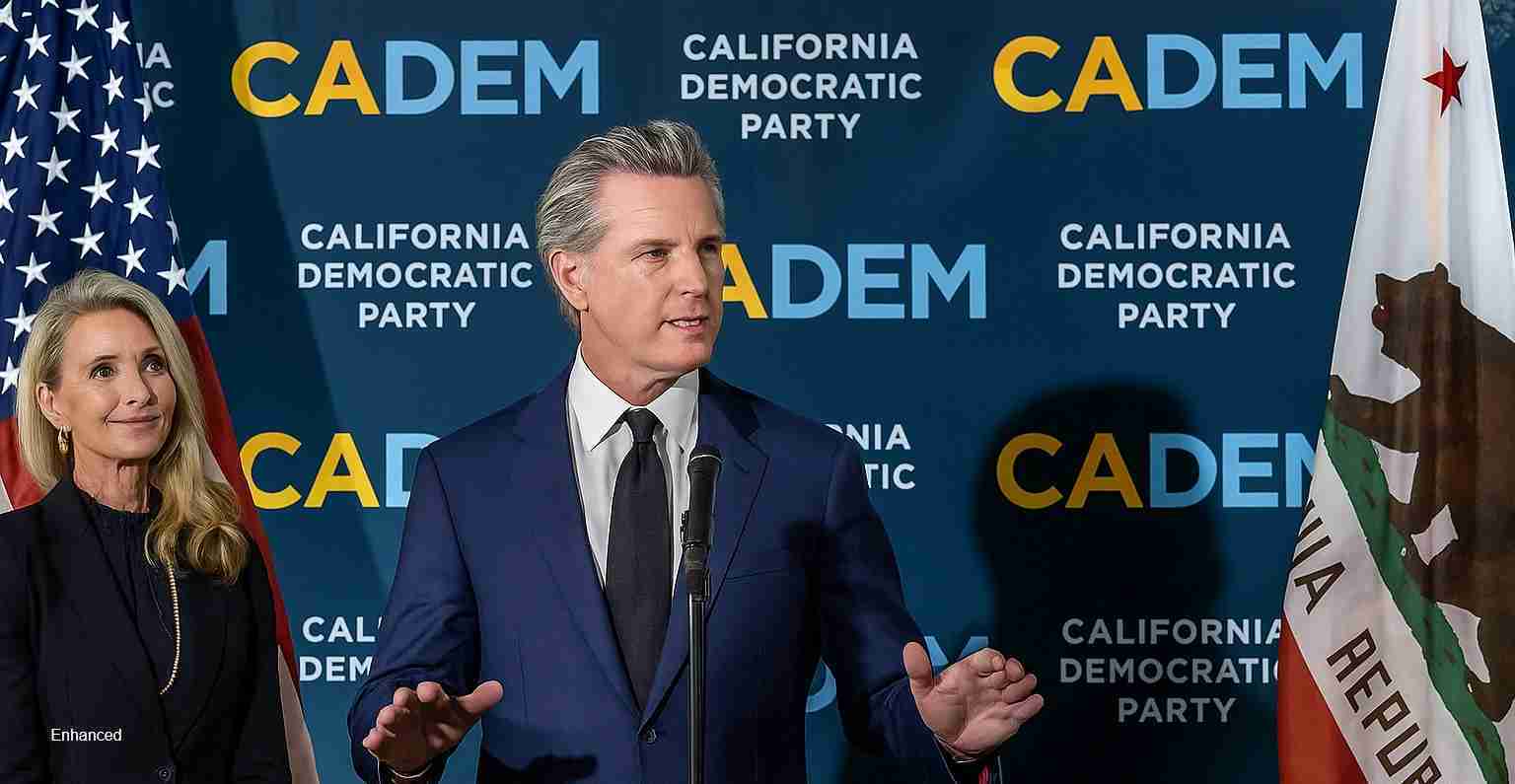
Stage and timing. Gov. Newsom addressed supporters in Sacramento after unofficial returns showed Proposition 50 passing. He opened by stressing the result was not merely partisan: This is not just a victory tonight for the Democratic Party. It is a victory for the United States of America, for the people of this country, and the principles that our founding fathers lived and died for.
(video remarks).
Redistricting impact. Newsom described Proposition 50 as empowering the Democratic-led Legislature to redraw congressional districts, saying the new maps will give Democrats an advantage in future House races and help resist policies pushed by former President Trump. He tied the change explicitly to positioning for the 2026 midterm elections (video remarks).
On Trump and voter intimidation
A sizable portion of Newsom’s remarks targeted former President Donald Trump. He accused Trump of engaging in “voter intimidation”, saying Proposition 50 was in part a rebuke of those tactics and that the vote sent a “powerful message to an historic president.” He called Trump “the most historically unpopular president in modern history in every critical category.” (video remarks; video remarks).
Constitutional framing. Newsom repeatedly invoked national themes — “In the U.S. there are no crowns, no thrones, no kings.”
— casting the vote as a stand for the republic against intimidation and urging leaders and voters in other states to defend democratic institutions (video remarks).
What Proposition 50 does
Proposition 50 replaces the congressional maps created by California’s independent Citizens Redistricting Commission with maps drawn by the state Legislature, which is controlled by Democrats. Supporters argue this allows lawmakers to push back against Republican-led redistricting in other states and produce districts more favorable to Democratic candidates (video remarks).
Critics say the measure undercuts the commission’s independence and transparency and could enable partisan map-drawing. Newsom framed the change as a corrective to outside efforts to shift power away from voters and toward partisan actors (video remarks).
National strategy and the 2026 midterms
Newsom emphasized California’s vote as part of a broader national strategy: reshaping congressional maps in the nation’s largest state, he said, can affect control of the U.S. House and national policy outcomes. “We can de facto end Donald Trump’s presidency as we know it the minute Speaker Jeffries gets sworn in as Speaker of the House,”
he said, urging continued engagement and turnout to build on the night’s gains (video remarks; video remarks).
Practical politics. More friendly districts, Newsom argued, could produce additional Democratic members of Congress who might vote to counteract policies he described as harmful. He urged supporters to view the result as one step in a longer campaign to protect democratic norms and institutions (video remarks).
Implications for San Luis Obispo, California
Economic impact
If congressional maps favor Democrats, San Luis Obispo County could see stronger alignment with Democratic federal priorities — climate resilience, coastal conservation, infrastructure funding — potentially increasing chances for federal grants supporting agriculture, tourism, emergency preparedness, and water infrastructure.
Political consequences
San Luis Obispo is politically mixed. Redistricting under Proposition 50 could redraw lines that include parts of the county, altering representation and campaign dynamics. Expect more intense federal campaigns ahead of 2026, with higher-profile visits, advertising, and outreach.
Social effects
Newsom’s focus on “voter intimidation” and support for those who feel bullied may encourage higher turnout among communities worried about safety or marginalization. Local civic groups and election officials may see increased requests for voter protection resources and education.
Cultural relevance
San Luis Obispo’s civic culture — shaped by universities, coastal communities, and agriculture — may respond to Newsom’s framing as a defense of the republic. Conversely, supporters of independent redistricting may be skeptical, making the change a topic in local debates and forums.
Practical applications for daily life
Residents could see shifts in funding priorities for farm programs, coastal erosion projects, and wildfire mitigation. Local governments and nonprofits should monitor new maps and adjust federal advocacy strategies. Voter education is critical: check registration and district information after redistricting with county election resources.
Reporting and sources
This account draws on Gov. Newsom’s election-night remarks as recorded and shared publicly. Full recordings and cited videos include Newsom remarks (video 1), Newsom remarks (video 2), Newsom remarks (video 3), and Newsom remarks (video 4).
Local readers: San Luis Obispo residents seeking details on how Proposition 50 may change districts should contact the San Luis Obispo County Elections Office or consult the state’s updated redistricting materials for maps and timelines.
(Reporting by Times Media Service)