Kim Jong Un parades “most powerful” ballistic missile in Pyongyang as China and Russia send top officials
North Korea showcased a newly presented intercontinental ballistic missile at a Pyongyang parade marking the Workers’ Party of Korea’s 80th anniversary, attended by Chinese Premier Li Qiang and Russian official Dmitry Medvedev, signaling strengthened strategic ties.
- New ICBM on display: State footage presented what officials and observers called North Korea’s most powerful ballistic missile.
- High-level guests: Chinese Premier Li Qiang and Russian Security Council Deputy Chairman Dmitry Medvedev attended, underscoring diplomatic signaling.
- Analysts cautious: Parade visuals provide clues but not independent technical verification of range, accuracy or warhead capacity.
- Local implications: San Luis Obispo-area institutions may see indirect effects via federal research, defense spending and public preparedness discussions.
What was shown at the parade
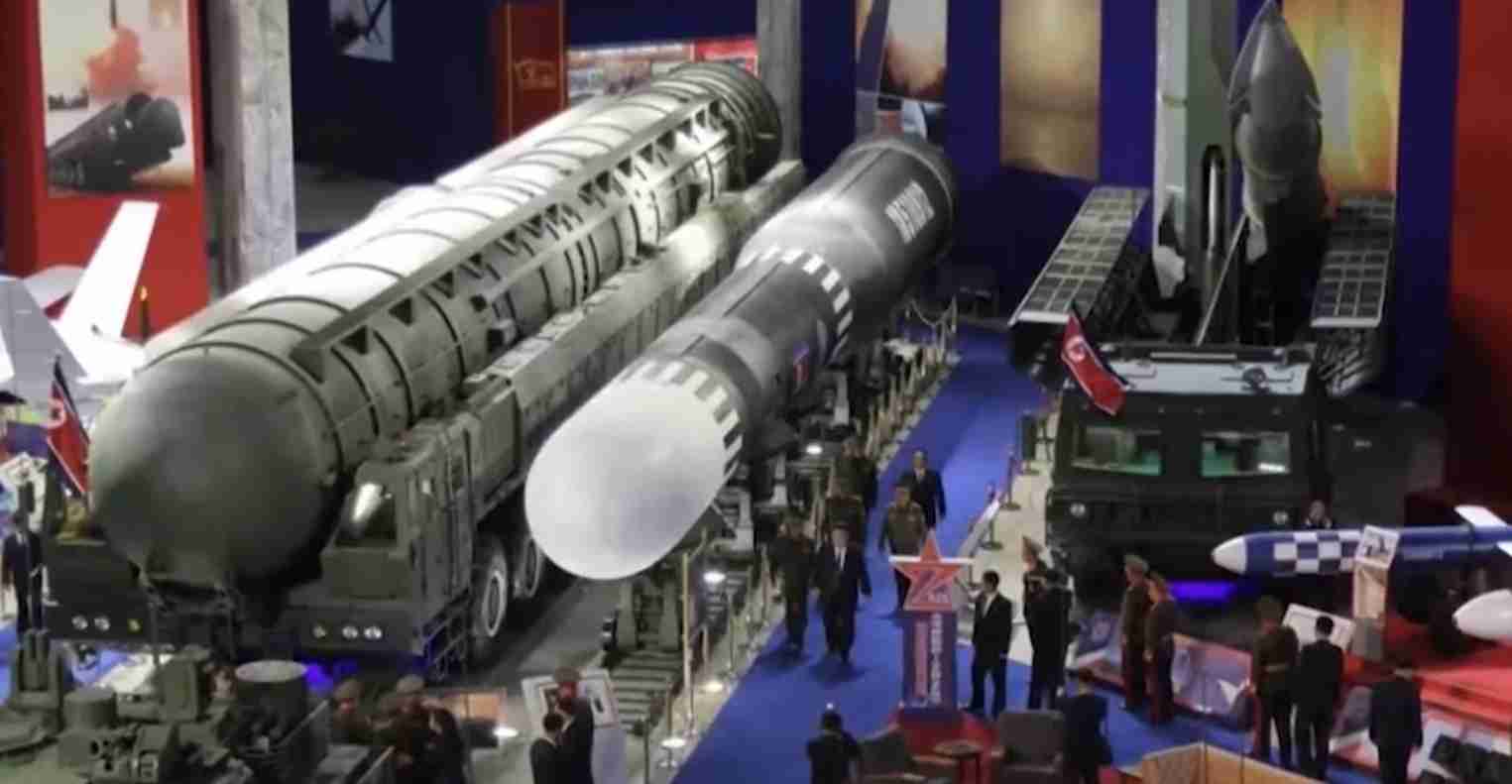
North Korea staged a large nighttime military parade in Pyongyang combining strict choreography, large crowds and heavy emphasis on weapons displays. State footage and live broadcasts focused on a newly presented intercontinental ballistic missile that state media and observers called the country’s most powerful ballistic missile. The procession placed the missile as a centerpiece, with vehicles and troops arranged to draw attention to it.
The event is documented in state video of the Pyongyang military parade, which shows lighting, pyrotechnics and staged sequencing intended to maximize dramatic effect.
Foreign leaders in attendance
Chinese Premier Li Qiang and Russian Security Council Deputy Chairman Dmitry Medvedev were shown in official viewing areas during the parade. Their attendance was emphasized in the footage as a public demonstration of diplomatic backing from two major powers, an important element of Pyongyang’s messaging strategy.
Analysts say the presence of those delegations serves as a visible sign of closer ties at a time when North Korea faces intense scrutiny over its weapons programs.
Why experts say the display matters
Observers following the live coverage described the parade as a deliberate signal to regional rivals and global powers. By showcasing a new Kim Jong Un ICBM and other equipment, Pyongyang appears to be signaling potential advances in deterrent capabilities.
“Parade displays offer technical and diplomatic cues but do not confirm operational readiness,” analysts noted during post-broadcast commentary.
- Technical signaling: Parading a larger or more advanced ICBM can imply progress in range, payload or launch readiness.
- Diplomatic signaling: Hosting Chinese and Russian officials highlights political ties that may constrain options for U.S. and allied diplomacy.
- Regional deterrence: The show of force can be intended to strengthen bargaining position and reassure domestic audiences of regime strength.
Experts cautioned that parade appearances provide visual clues but not conclusive technical data; they urged careful analysis of design trends and subsequent tests.
What remains unclear
Open-source footage and state broadcasts allow observers to analyze shape, scale and transporter-erector-launcher (TEL) platforms, but they do not provide full technical data. The exact range, accuracy and warhead capacity of the presented Kim Jong Un ICBM have not been independently verified in public reporting. Analysts must infer potential capabilities from visual cues and North Korea’s past tests.
Officials in Seoul, Tokyo, Washington and allied capitals are likely to press for additional intelligence and technical assessments. In the near term, the parade increases pressure on diplomatic channels and military planners to adjust planning and responses.
Broadcast and media coverage
The parade was covered live by state outlets and re-broadcast by international media, creating near real-time material for analysts and foreign governments to study the procession and the foreign delegation. See the live coverage and analysis for footage used by commentators and analysts to assess the displays.
Implications for San Luis Obispo, California
The parade has primarily strategic implications but could influence local economic, research and civic spheres in these ways:
- Federal research and defense spending: Shifts in U.S. defense priorities may affect grants and contracts available to institutions such as Cal Poly San Luis Obispo for missile defense, resilience and related research.
- Local businesses and contractors: Central Coast suppliers and contractors could see indirect demand changes if regional defense contracting or schedules shift.
- Public safety: There is no immediate local threat; ICBM displays are strategic and monitored nationally. Still, high-profile events often prompt review of emergency communication and alert procedures at the state and local level.
- Community engagement: The event may prompt public lectures, city briefings and panels about how global security developments affect local communities and veterans.
What local leaders can do now
- Stay informed: City and county officials should consult federal and state briefings to monitor any changes in threat assessment or funding opportunities.
- Communicate clearly: Emergency managers should continue outreach about how residents would receive alerts and instructions in extreme scenarios.
- Explore partnerships: Universities and colleges can seek grant programs tied to defense research, cybersecurity and resilience that may arise from shifting federal priorities.