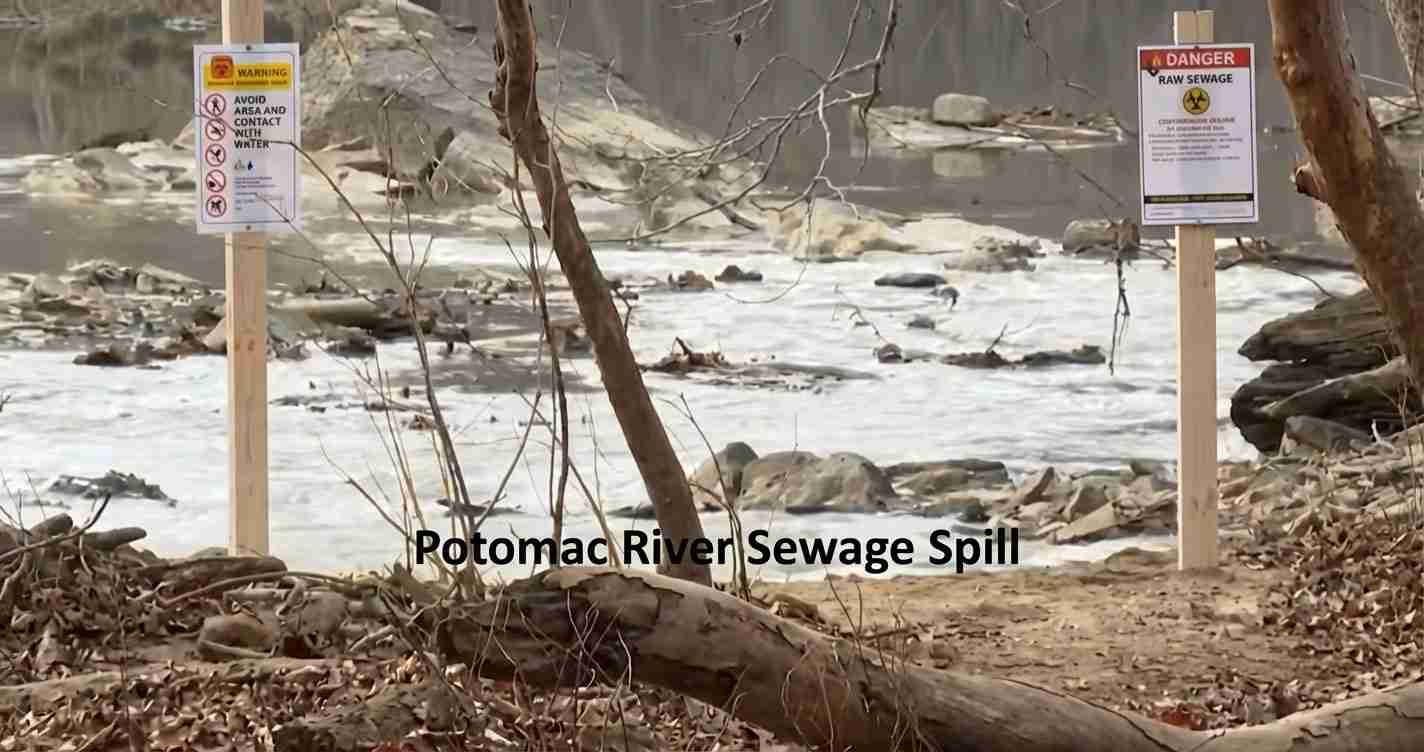
Potomac Interceptor repairs completed after massive Potomac River sewage spill; full flow restored, C&O Canal drained
DC Water announced repairs to the collapsed Potomac Interceptor are complete, restoring full flow after the January 19 sewer line failure; crews drained the C&O Canal and continue monitoring and environmental testing as restoration efforts proceed.
- Emergency repairs to the Potomac Interceptor are complete and full flow has been restored, DC Water said Saturday.
- The Jan. 19 collapse released an estimated 240 million to 300 million gallons of untreated sewage into the Potomac River; additional reporting is available from Washingtonian.
- Crews worked around the clock to stabilize the site, install bypasses, and protect the river, including pumping through the C&O Canal and installing a steel bulkhead gate.
- Health advisories and environmental testing followed dangerous E. coli spikes and shellfish closures; federal aid and multiagency support were mobilized under a disaster declaration.
Incident details
The failed line is the 72-inch-diameter Potomac Interceptor, a major sewer conduit built mainly in 1962 that carries wastewater from suburbs in Virginia and Maryland to DC Water’s Blue Plains treatment plant in Washington, D.C. The January 19 collapse released an estimated 240 million to 300 million gallons of untreated wastewater into the Potomac River over several days. At peak rates, roughly 40 million gallons spilled daily until crews contained the damaged section.
DC Water and partner agencies reported the worst of the overflow was largely stopped by late January. Cold winter conditions helped limit downstream spread, keeping much visible contamination near the collapse site and the C&O Canal, but officials warned of serious contamination close to the spill and issued public health advisories.
Emergency response and repairs
DC Water said crews worked around the clock to stabilize the site and protect the river. Emergency measures included:
- Bypass installation: A temporary bypass routed flow through the C&O Canal near Lock 10, pumping wastewater roughly 2,700 feet to undamaged pipe sections.
- Pumping and bulkhead: Extra pumps were added and a steel bulkhead gate was installed to block the damaged section so crews could remove rock and make permanent repairs.
- Site restoration: The C&O Canal was fully drained as part of the restoration.
These efforts occurred after D.C. Mayor Muriel Bowser declared a disaster emergency on Feb. 18. The declaration enabled federal assistance after President Donald Trump approved a federal disaster declaration, bringing FEMA, the EPA, and the U.S. Army Corps of Engineers into the response beginning Feb. 21. DC Water estimated immediate repair and remediation costs at roughly $20 million, with $10 million already spent and $5 million to $10 million planned for cleanup operations.
Officials say full flow has been restored to the Potomac Interceptor and that continuous monitoring and additional environmental assessments will guide longer-term restoration and remediation.
Environmental and health impacts
Water-quality testing showed dramatic increases in bacteria near the spill. E. coli counts near the collapse were measured at levels hundreds to thousands of times above EPA safety limits; some measurements were reported as high as 12,000 times the limit at the spill site, while Fletcher’s Cove in Georgetown measured about 60 times the safety threshold. Cold weather reduced downstream transport but did not eliminate risks near the damaged area.
State regulators closed shellfish beds in Charles County, and counties including Montgomery and Prince George’s issued health advisories. Advocacy groups such as Potomac Riverkeeper criticized DC Water’s cleanup plans as insufficient and called for stricter protections and a more extensive remediation program.
Political dispute over responsibility
The spill became a political flashpoint. President Donald Trump criticized Democratic leaders — including Maryland Gov. Wes Moore — suggesting local incompetence and raising concerns about lingering river impacts. Gov. Moore countered that the Potomac Interceptor sits on federal land and is managed by DC Water, an independent D.C.-based utility, and said Maryland’s role was one of assistance rather than regulatory oversight. “This is a Washington, D.C., pipe on federal land,” Moore told Fox News Digital, adding that Maryland nevertheless sent teams to support neighbors.
Local leaders and DC Water officials have emphasized the complex jurisdictional picture: the Potomac Interceptor carries wastewater from multiple jurisdictions and crosses lands managed by different agencies, complicating both blame and logistics for repair and cleanup.
Legal action
The spill prompted litigation. Recreational boater Nicholas Lailas filed a lawsuit seeking compensation for people whose property interests and enjoyment of the Potomac River were harmed by the release of untreated wastewater, arguing that river users have seen recreational and property rights impaired.
Broader context: aging infrastructure
Experts view the Potomac spill as part of a nationwide pattern of aging water infrastructure failures. The Potomac Interceptor was built in the early 1960s — similar to many older systems nationwide — and the crisis has renewed calls for substantial investment to repair, replace, and better monitor sewer systems to prevent future disasters.
Nearby cities such as Baltimore have faced large spills in recent years, highlighting the scale of the problem across jurisdictions and the need for clearer oversight, sustainable funding, and coordinated response plans.
Implications for San Luis Obispo, California
Though geographically distant, the Potomac incident offers practical lessons for San Luis Obispo County officials, residents, and policymakers.
Economic impact
Tourism and recreation: The spill underscores a nationwide risk to waterways that draw visitors. San Luis Obispo County relies on coastal and river recreation; local leaders may use this example to justify inspections and repairs to aging local sewage systems to avoid advisories that could hurt tourism.
Infrastructure funding: The estimated $20 million in immediate Potomac costs highlights potential price tags for major fixes. County officials could cite the incident when applying for state or federal grants to upgrade pipelines and treatment plants to prevent costly emergency responses later.
Political consequences
Local accountability: The jurisdictional dispute over the Potomac Interceptor may prompt San Luis Obispo leaders to clarify oversight roles for local infrastructure, ensuring quicker responses and fewer political disputes.
Preparedness focus: The federal declaration and FEMA involvement show how national resources can be mobilized; local emergency plans and coordination with state and federal agencies should be reviewed for rapid access to aid.
Social and health effects
Public confidence: High-profile spills erode trust in utilities. Local agencies should increase transparency about system conditions, testing plans, and public advisories to reassure residents.
Recreational warnings: Timely testing and clear advisories are essential; county health officials might review how quickly they can issue closures and communicate risks to residents and visitors.
Cultural relevance
San Luis Obispo residents value outdoor life and clean waterways. The Potomac spill may galvanize local support for conservation-minded funding and policies that preserve those community values.
Practical applications for residents
- Watch for advisories: Pay attention to local water-quality alerts and report visible pipeline leaks or sewage odors to public works.
- Support investments: Consider backing measures to fund sewer upgrades or monitoring programs to avoid emergency costs later.
- Emergency readiness: Prepare for service interruptions (store water, have alternative recreation plans) in case local beaches or rivers are temporarily closed.
Sources and further reading
- Wikipedia: 2026 Potomac River sewage spill
- Washingtonian: “So there’s 300 million gallons of poop water in the Potomac River. Now what?”
- KOMO/Komonews: Potomac River warns crisis from sewage spill is far from over
- WSBTV: Beyond Potomac River coverage
Reporting by Times Media Service.