
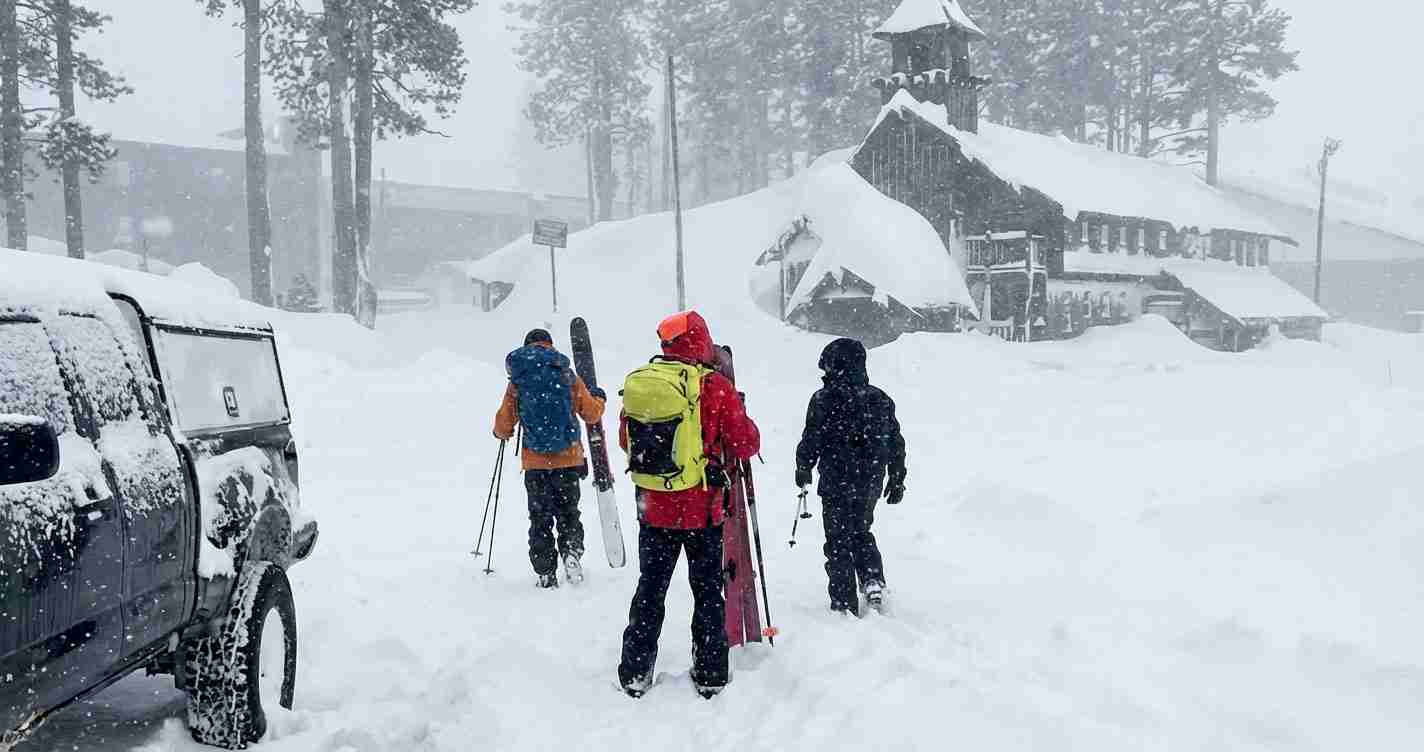
Lake Tahoe avalanche deaths: Eight backcountry skiers killed near Castle Peak in Sierra Nevada disaster
Eight backcountry skiers were killed Feb. 17, 2026, when a massive avalanche near Castle Peak above Donner Pass struck a group from Blackbird Mountain Guides during a severe Sierra Nevada storm; one person remains missing and six were rescued.
- Date & place: Feb. 17, 2026, near Castle Peak above Donner Pass in the Sierra Nevada (reported by Los Angeles Times).
- Casualties: Eight people recovered dead; a ninth is unaccounted for and presumed dead; six survivors were rescued after about six hours.
- Warnings & conditions: The Sierra Avalanche Center issued a watch, then upgraded to a warning during the storm; travel in avalanche terrain was later advised against (Sierra Avalanche Center).
- Response: Survivors used beacons and personal locators; Tahoe Nordic Search and Rescue reached the group by snowcat after hours (see video report).
What happened
A party of 15 — 11 participants and four guides from Truckee-based Blackbird Mountain Guides — set out on a planned three-day ski trek to the Frog Lake huts as a major High Sierra storm moved in. The storm dropped feet of snow across the range. Around 11:30 a.m. on Tuesday, while the group was moving on steep, near-vertical terrain in whiteout conditions, a football-field-sized avalanche overtook them, according to reporting by the Los Angeles Times.
“Avalanche!” — shouted by someone on the trip before the slide swept the group, Capt. Russell “Rusty” Greene of the Nevada County sheriff’s office said in a video report.
Survivors immediately began searching with personal avalanche beacons and locator devices and found three bodies initially. They sheltered in place until snowcats from rescue teams reached them late that afternoon, roughly six hours after the slide (video coverage).
Shift from rescue to recovery
Search and rescue teams focused first on saving lives. By the following day, crews had recovered eight bodies and continued searching for a ninth who remained unaccounted for and is now presumed dead. Officials announced the mission had formally shifted from rescue to recovery due to conditions and the status of the missing person (Los Angeles Times).
Heavy snow, high winds and poor visibility delayed operations. Investigators from the Nevada County sheriff’s office are reviewing why the trip proceeded amid the storm and whether guides had been informed of the upgraded avalanche warning before departing the huts (video report).
Who was in the group
The party mixed men and women aged roughly 30 to 55. Family and friends identified six women among the victims — Carrie Atkin, Liz Clabaugh, Danielle Keatley, Kate Morse, Caroline Sekar and Kate Vitt — describing them as skilled, well-equipped backcountry skiers and mothers who had avalanche training and trusted their guides (Los Angeles Times).
Blackbird Mountain Guides confirmed three of its guides are presumed dead. Company leadership said they were in contact with field teams about conditions and urged restraint while investigators review the incident (Los Angeles Times).
Warnings, storm and decision-making
Public bulletins show the Sierra Avalanche Center issued an avalanche watch on Feb. 15 as the group departed, warning of unstable snow and the potential for large avalanches over 24–48 hours. On Feb. 16 conditions were upgraded to a warning, and on the morning of Feb. 17 advisories cautioned that travel in or below avalanche terrain was not recommended as heavy snowfall continued and visibility worsened.
Nevada County Sheriff Shannan Moon said investigators will examine the choice to proceed with the trip given the forecast and the watch issued the prior Sunday. Whether guides had received notice of the upgraded warning before descending from the huts is a central question in the probe (video report).
How survivors were found
Immediately after the slide, survivors used personal avalanche beacons and locator gear to search. They located several victims and remained together to shelter from the storm until help arrived. About 5:30 p.m., snowcats from Tahoe Nordic Search and Rescue reached the site and evacuated survivors while recovering initial victims; road closures, including on Interstate 80, occurred as crews worked in the storm (video reports).
Community response
The deaths have hit Sierra and Bay Area ski communities hard. Sugar Bowl Academy, a private boarding school and ski program at Donner Summit, said some victims were part of its community; executive director Stephen McMahon called the losses heartbreaking and asked for privacy as families grieve (Los Angeles Times).
Local shops, clubs and communities in Truckee, Marin County and beyond have organized vigils and support networks. Friends, clubs and businesses are offering counseling, fundraisers and practical help to impacted families (video reports).
Investigations and safety questions
Authorities and federal agencies will reconstruct events, examining weather briefings, communication logs, guide decision-making, route selection, terrain, and whether the group had current avalanche forecasts. Reviews will assess training, safety plans, and adherence to industry practices. Nevada County law enforcement is leading the probe in coordination with search-and-rescue partners and the Sierra Avalanche Center (video coverage).
Implications for San Luis Obispo, California
- Public safety and recreation: The disaster underscores the need for local backcountry users to refresh avalanche training, carry rescue gear, and check forecasts before every trip; avalanche course sign-ups and beacon practice sessions may increase locally.
- Outdoor industry & guides: Guide services and outfitters should expect increased scrutiny and demand for clear pre-trip briefings, documented decision-making and stronger safety practices.
- Family & schools: Victims had ties across Northern California; schools and child-care programs may need to provide counseling and support for affected students and staff.
- Policy & outreach: The incident could prompt outreach campaigns, improved hazard signage and funding for mountain rescue training; likely emphasis will be on education and voluntary standards rather than strict travel limits.
- Cultural & economic effects: Memorials, fundraisers and community support efforts are likely; local businesses that serve outdoor recreationists should prepare to assist with training, equipment checks and community events focused on avalanche awareness.
Sources
- Los Angeles Times: “Sierra avalanche disaster victims were mothers, adventurers, sisters”
- Video reports and local coverage (Nevada County statements, survivor accounts)
- Additional video reports
- Sierra Avalanche Center advisories and public warnings
Reporting by Times Media Service; for regional updates follow local authorities and the Sierra Avalanche Center for the latest advisories and safety information.
